Flush-mounted proximity sensors, also known as shielded or embeddable sensors, are a critical component in modern industrial automation systems. These sensors are designed to be installed flush with the mounting surface, allowing them to detect objects without protruding into the operational space. This design minimizes the risk of physical damage and makes them ideal for applications where space is limited or where there is a need for a clean, unobtrusive installation.
The operational principle of flush-mounted proximity sensors is based on electromagnetic fields. Typically, these sensors utilize inductive technology to detect metallic objects. When a metal target enters the sensor's detection range, it disturbs the electromagnetic field generated by the sensor's coil. This disturbance is detected by the sensor's circuitry, which then triggers an output signal. The key advantage of the flush-mounted design is that the sensor's sensing face is shielded, which prevents the electromagnetic field from spreading laterally. This shielding allows the sensor to be mounted flush with metal surfaces without causing false triggers, as the field is directed forward rather than to the sides.
In contrast, non-flush (unshielded) proximity sensors have a wider sensing field that extends to the sides, requiring them to be installed with a clearance from surrounding metal to avoid interference. Flush-mounted sensors eliminate this need, simplifying installation and reducing the required mounting space. They are commonly used in applications such as robotic arms, conveyor systems, machine tools, and automated assembly lines, where precise and reliable object detection is essential for safety and efficiency.
When selecting a flush-mounted proximity sensor, several factors must be considered. The sensing range is typically shorter than that of non-flush sensors due to the shielding effect, so it is crucial to choose a sensor with an appropriate range for the specific application. Common sensing distances range from a few millimeters to about 20 millimeters, depending on the sensor size and technology. Material compatibility is another important consideration; while inductive sensors detect metals, capacitive flush-mounted sensors can detect non-metallic materials like plastics, wood, or liquids, though they are less common in industrial settings. Environmental factors such as temperature, humidity, and exposure to chemicals or vibrations also influence sensor selection, as many industrial-grade sensors are designed with robust housings (often made of stainless steel or nickel-plated brass) and high ingress protection (IP) ratings to withstand harsh conditions.
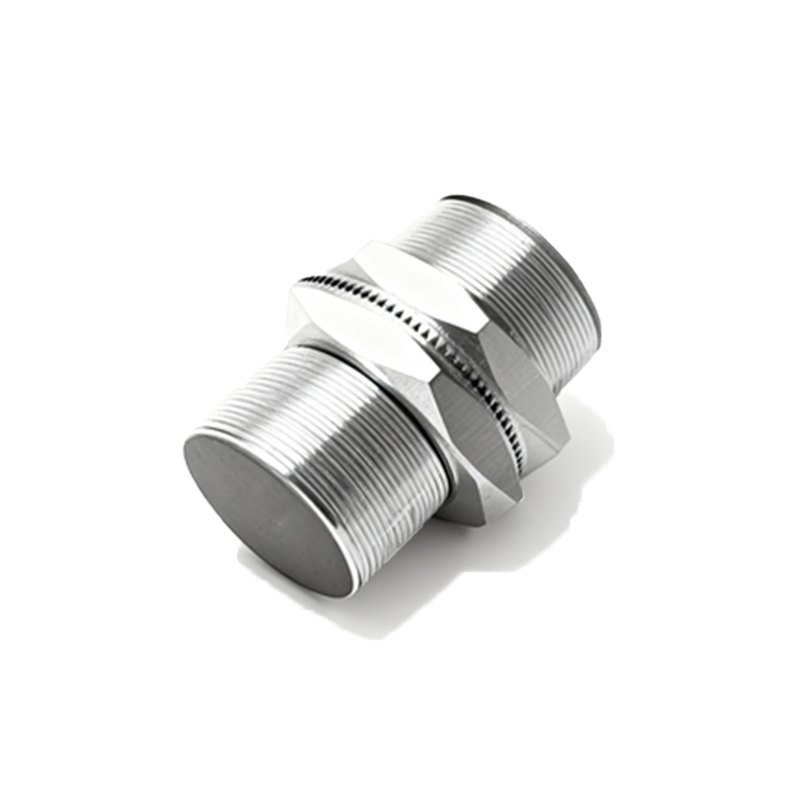
Installation and wiring of flush-mounted sensors are generally straightforward. They are typically mounted in threaded holes or with brackets, and connections are made via pre-wired cables or quick-disconnect connectors. Proper alignment and secure mounting are essential to ensure consistent performance. Additionally, many modern sensors feature LED indicators for status monitoring, adjustable sensitivity, and short-circuit protection, enhancing their usability in complex automation systems.
Despite their advantages, flush-mounted sensors have limitations. Their reduced sensing range may not be suitable for applications requiring long-distance detection. Moreover, they are primarily designed for metallic targets, which can restrict their use in diverse material handling scenarios. However, advancements in sensor technology, including the development of multi-material detection capabilities and improved shielding techniques, continue to expand their applicability.
In summary, flush-mounted proximity sensors offer a reliable and space-efficient solution for object detection in industrial automation. Their shielded design allows for flexible installation in confined spaces and metal-rich environments, contributing to enhanced system durability and operational precision. As industries increasingly adopt automation and smart manufacturing practices, the role of these sensors in ensuring seamless and safe operations becomes ever more vital. Engineers and system integrators should carefully evaluate application requirements to leverage the full benefits of flush-mounted proximity sensors in optimizing automated processes.