In the dynamic landscape of industrial automation, proximity switch sensors have long been indispensable components, providing non-contact detection of metallic and non-metallic objects with high precision and reliability. The advent of charging models, or cordless proximity sensors, marks a significant leap forward, offering unprecedented flexibility and reducing installation complexities associated with traditional wired systems. These innovative devices integrate advanced rechargeable battery technology, sophisticated power management circuits, and robust wireless communication protocols to deliver seamless, maintenance-conscious operation in diverse industrial environments.
The core advantage of a charging-type proximity sensor lies in its elimination of continuous hardwired power connections. Traditional sensors require meticulous cable routing, conduit installation, and connection to a central power supply, which can be time-consuming, costly, and restrictive in terms of sensor placement. Charging models, powered by high-capacity lithium-ion or lithium-polymer batteries, operate autonomously for extended periods—often ranging from several months to over a year on a single charge, depending on the operational duty cycle and detection frequency. This autonomy is particularly transformative for applications involving rotating machinery, mobile platforms, or temporary production setups where running cables is impractical or hazardous.
Modern charging proximity sensors incorporate intelligent energy-saving features to maximize operational longevity. They typically employ a low-power sleep mode, activating the sensing element only at predefined intervals or upon detecting vibration or movement in their vicinity. This pulsed operation drastically reduces average current consumption. Furthermore, these devices often include state-of-charge indicators, either through LED signals or via transmitted data packets, alerting maintenance personnel when a recharge is imminent. Charging is commonly achieved through standardized methods such as USB-C ports, inductive charging pads, or proprietary docking stations, designed to withstand industrial dust and moisture, often conforming to IP67 or higher ingress protection ratings.
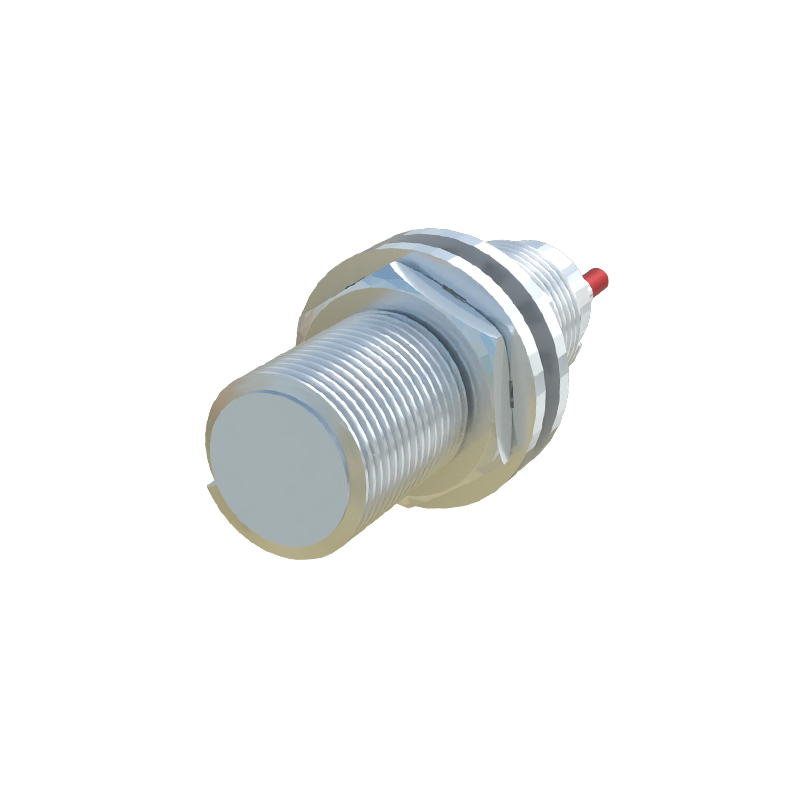
From a technical performance perspective, charging models match, and in some cases exceed, the specifications of their wired counterparts. They offer standard sensing ranges (e.g., 2mm to 30mm for inductive models detecting ferrous metals), high switching frequencies, and excellent repeatability. The integration of wireless communication, typically using industrial-grade protocols like IO-Link Wireless, Bluetooth Low Energy (BLE), or proprietary RF links, enables real-time data transmission of not just switch status but also diagnostic information such as battery health, temperature, and signal strength. This facilitates predictive maintenance and seamless integration into Industry 4.0 and Industrial Internet of Things (IIoT) ecosystems.
Application scenarios for these cordless sensors are vast and growing. In automated guided vehicle (AGV) systems, they provide collision avoidance and position verification without the hassle of trailing cables. On modular production lines and reconfigurable manufacturing cells, they allow for rapid sensor redeployment, slashing changeover times. In cleanrooms and food processing areas, the absence of cables reduces contamination risks and simplifies sanitation procedures. For heavy machinery and construction equipment, they enable condition monitoring of critical components like bearings or hydraulic cylinders in locations where power is unavailable.
Despite their benefits, selecting a charging proximity sensor requires careful consideration. Key factors include the required sensing distance, target material, environmental conditions (temperature, presence of chemicals or washdowns), the necessary communication range and data rate, and the total cost of ownership, which includes the sensor unit, charging infrastructure, and potential gateway devices for network integration. It is crucial to verify that the sensor's housing material and electronics are compatible with the operational environment to ensure long-term reliability.

In conclusion, the evolution of proximity switch sensors into charging-capable, wirelessly connected devices represents a paradigm shift in sensor technology. By removing the constraints of fixed wiring, they empower engineers to design more flexible, efficient, and intelligent automated systems. As battery technology continues to improve and wireless standards become more robust and interoperable, the adoption of these cordless sensors is poised to accelerate, driving further innovation in smart manufacturing and industrial automation. Their role in enabling agile, data-driven, and cost-effective operations solidifies their status as a cornerstone of modern industrial infrastructure.