In the realm of industrial automation, the reliable detection of metallic objects is a cornerstone of countless processes, from assembly line sequencing and robotic guidance to safety guarding and material handling. Among the diverse array of sensors engineered for this critical task, the square proximity switch stands out as a robust, versatile, and widely adopted solution. This article delves into the operational principles, key features, application considerations, and advantages of square-shaped inductive proximity sensors specifically designed for metal detection.
At its core, a square proximity switch for metal sensing operates on the principle of electromagnetic induction. The sensor contains an oscillator circuit that generates a high-frequency electromagnetic field emanating from its active face. When a metallic target enters this field, eddy currents are induced within the metal. This absorption of energy causes a change in the oscillation amplitude within the sensor. An integrated evaluation circuit detects this change and triggers a solid-state output switch, signaling the presence of the target. It is crucial to note that these inductive sensors are primarily sensitive to conductive metals, with detection capability varying based on the target material's properties; ferrous metals like iron and steel are typically detected at greater distances than non-ferrous metals like aluminum or copper.
The square form factor is a defining characteristic that offers distinct practical benefits. Unlike cylindrical sensors, square proximity switches provide a flat, broad sensing face. This geometry is exceptionally advantageous for applications requiring side-by-side mounting with minimal gaps, optimizing space utilization in control panels or machinery. The flat surface also allows for easier and more secure mounting, often utilizing standard brackets or directly onto flat machined surfaces. Housing materials are typically robust, such as nickel-plated brass, stainless steel, or high-grade plastics like PBT, ensuring resistance to mechanical impacts, cutting fluids, coolants, and industrial chemicals common in harsh manufacturing environments.
Key technical specifications demand careful consideration during selection. Sensing distance, or nominal range, is a primary parameter, typically ranging from a few millimeters to several tens of millimeters for standard square models. It is specified for a standard mild steel target. The influence of different metals is quantified by a reduction factor, which must be applied to calculate the effective sensing range for materials like aluminum or copper. Output configurations are another critical choice. Sensors are available with PNP (sourcing) or NNP (sinking) transistor outputs, as well as analog (4-20 mA, 0-10V) or IO-Link versions for continuous distance measurement. The choice depends on the control system's input card requirements. Most modern square proximity switches feature LED status indicators for power and output state, greatly aiding in installation and troubleshooting.
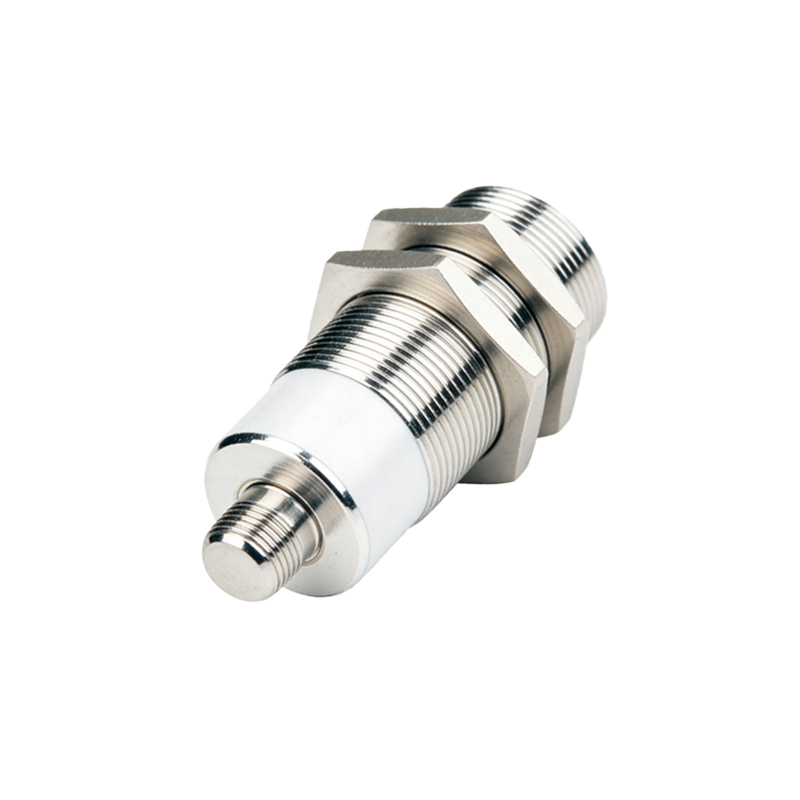
Electrical protection and environmental ratings are non-negotiable for reliability. Look for features like short-circuit protection, reverse polarity protection, and overvoltage protection to safeguard against wiring errors and electrical transients. The Ingress Protection (IP) rating, such as IP67 or IP69K, indicates the level of protection against dust and water ingress, making many square sensors suitable for washdown areas in food and beverage or pharmaceutical industries. Operating temperature ranges are also specified to ensure performance in both cold storage and hot factory settings.
Application scenarios for square metal sensors are extensive. They are ideal for end-of-stroke detection on pneumatic cylinders with square profiles, position verification of machine tool pallets, counting metallic parts on conveyors, and monitoring the presence of fixtures or tools. Their flat design makes them perfect for embedding into machinery where a flush-mounted, low-profile sensor is needed to avoid physical damage. In packaging machinery, they detect metallic components on film-wrapped products. For safety, they can be used as part of a non-contact interlock system.
The advantages of using a square proximity switch are compelling. Their durability and long operational life, owing to the absence of mechanical moving parts, result in minimal maintenance. They offer high switching frequency, enabling detection of rapidly moving objects. Their operation is unaffected by target surface color, dust (non-metallic), or ambient light, providing consistent performance. The square shape, in particular, offers superior mounting stability and space efficiency in multi-sensor arrays.
In conclusion, the square proximity switch is an indispensable component in the industrial sensor toolkit for metal detection. Its design harmonizes practical mounting benefits with the robust, non-contact sensing reliability of inductive technology. By meticulously selecting a sensor based on the specific metal target, required sensing range, environmental conditions, and electrical interface, engineers can ensure seamless integration and dependable operation, thereby enhancing the efficiency, safety, and intelligence of automated systems. As Industry 4.0 advances, these sensors continue to evolve, with integrated smart diagnostics and network connectivity, further solidifying their role in the connected factory of the future.