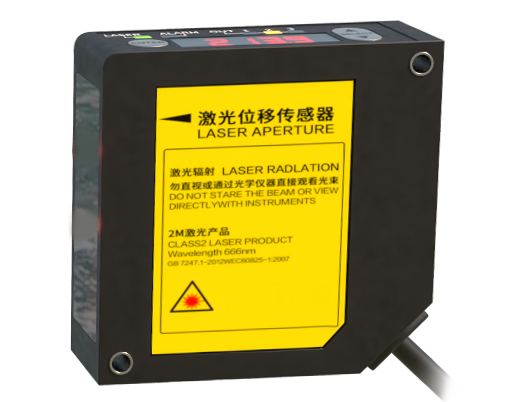
In the realm of industrial automation and precision measurement, ILS (Integrated Laser Sensor) systems have emerged as a cornerstone technology. These sensors utilize laser light to perform non-contact, high-accuracy detection, measurement, and positioning tasks. Their operation is fundamentally based on the principle of triangulation or time-of-flight measurement, depending on the specific model and intended application. In a typical triangulation-based ILS sensor, a laser diode projects a focused beam onto a target surface. The reflected light is then captured by a receiving element, such as a position-sensitive detector (PSD) or a CMOS/CCD array. By calculating the angle of the reflected beam, the sensor's internal processor can determine the exact distance to the target with remarkable resolution, often in the micron range. This non-contact methodology is crucial for inspecting delicate, hot, moving, or otherwise inaccessible objects without risk of damage or wear.
The applications of ILS laser sensors span a vast array of industries, underscoring their versatility and reliability. In automotive manufacturing, they are indispensable for tasks like weld seam inspection, gap and flush measurement between body panels, and precise part positioning on assembly lines. The electronics industry relies on them for measuring component heights, verifying solder paste deposition, and inspecting PCB flatness. In logistics and packaging, ILS sensors ensure correct box dimensions, detect label presence, and control filling levels. Furthermore, they play a critical role in robotics for guidance and obstacle detection, and in quality control labs for dimensional analysis and surface profiling. Their ability to provide real-time, feedback data makes them integral to closed-loop control systems, enhancing overall production efficiency and product consistency.
When selecting an ILS laser sensor for a specific application, several key parameters must be carefully evaluated. The measuring range defines the minimum and maximum distances over which the sensor can operate accurately. Resolution, often confused with accuracy, refers to the smallest detectable change in distance the sensor can report. Accuracy itself is the deviation between the measured value and the true value under specified conditions. The spot size of the laser beam is critical; a smaller spot allows for higher resolution on small features but may be more sensitive to surface irregularities. Response time or sampling rate determines how quickly the sensor can update its output, which is vital for high-speed production lines. Environmental factors such as ambient light immunity, operating temperature range, and ingress protection (IP) rating are equally important for ensuring stable performance in harsh industrial settings. Modern ILS sensors often come with advanced features like integrated controllers, programmable logic, multiple output options (analog, digital, IO-Link, Ethernet), and sophisticated software for data analysis and visualization.

The integration of ILS sensors into a larger automation framework requires consideration of mounting, alignment, and communication protocols. Proper mechanical fixturing is essential to minimize vibration and thermal drift effects. Calibration against known standards ensures long-term measurement fidelity. As Industry 4.0 and smart factory concepts evolve, ILS sensors are increasingly becoming intelligent data nodes, contributing to predictive maintenance and big data analytics. Their continued development focuses on achieving even higher speeds, greater robustness, and enhanced connectivity, solidifying their position as an essential tool for engineers seeking to optimize precision, quality, and throughput in modern manufacturing and beyond. Their role in enabling automation and ensuring stringent quality standards cannot be overstated, making a thorough understanding of their capabilities a valuable asset for any technical professional in the field.