In the rapidly evolving landscape of industrial automation, the demand for high-precision, reliable sensing technology has never been greater. Duke Laser Sensors have emerged as a pivotal solution, offering unparalleled accuracy and durability in a wide array of demanding applications. These sensors utilize advanced laser technology to perform non-contact measurement, detection, and positioning tasks with exceptional consistency, even in challenging environments characterized by dust, vibration, or extreme temperatures.
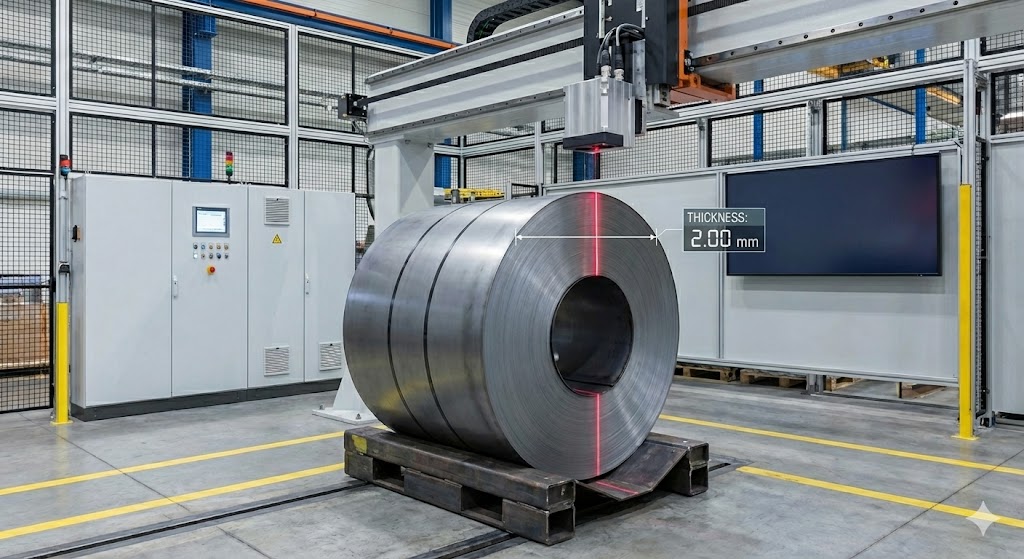
The core technology behind Duke Laser Sensors involves the emission of a focused laser beam towards a target. The sensor then analyzes the reflected light using sophisticated photodetectors and onboard processing algorithms. This allows for precise measurement of distance, displacement, thickness, or presence. Common models include time-of-flight (ToF) sensors for long-range distance measurement and triangulation sensors for high-accuracy, short-range applications. The key advantage lies in their ability to deliver micron-level precision without physical contact, eliminating wear and tear and ensuring longevity.
One of the primary applications of Duke Laser Sensors is in quality control and inspection on production lines. They are extensively used to measure component dimensions, verify assembly completeness, detect surface defects, and ensure precise positioning of robotic arms. In the automotive industry, for instance, these sensors are crucial for checking gap dimensions between body panels or ensuring the correct placement of electronic components. Their high-speed response enables real-time feedback, allowing for immediate process adjustments and minimizing waste.
Beyond manufacturing, Duke Laser Sensors play a vital role in logistics and material handling. They are employed in automated guided vehicles (AGVs) for navigation and obstacle detection, in warehouse systems for pallet dimensioning and inventory management, and on conveyor belts for sorting and package profiling. Their robustness ensures reliable operation around the clock, a critical factor for maintaining supply chain efficiency.
When selecting a Duke Laser Sensor for a specific task, engineers must consider several technical parameters. These include measurement range, resolution, repeatability, response time, and the type of output signal (e.g., analog voltage, current, or digital IO-Link). Environmental factors such as the target material's color, reflectivity, and surface texture also significantly influence performance. Duke typically offers a range of models with different laser classes (usually Class 2, safe for incidental viewing), housing materials (e.g., stainless steel for harsh conditions), and connectivity options to integrate seamlessly into existing PLC or SCADA systems.
Installation and alignment are critical steps for optimal performance. Proper mounting ensures the laser beam is perpendicular to the target surface, and environmental interferences like ambient light or reflective backgrounds are mitigated. Regular maintenance, though minimal, involves keeping the lens clean and verifying calibration periodically to sustain measurement integrity.
The integration of smart features, such as IO-Link communication, represents a significant advancement in Duke's product line. IO-Link enables parameterization, remote diagnostics, and condition monitoring, facilitating predictive maintenance and reducing downtime. This digital transformation aligns with Industry 4.0 principles, allowing sensors to become intelligent data points within a connected factory ecosystem.
In conclusion, Duke Laser Sensors stand as a testament to engineering excellence in the field of industrial sensing. Their combination of precision, reliability, and adaptability makes them an indispensable tool for engineers striving to enhance automation efficiency, product quality, and operational safety. As industries continue to push the boundaries of automation, the role of such advanced sensing technology will only become more central to achieving operational excellence and competitive advantage.