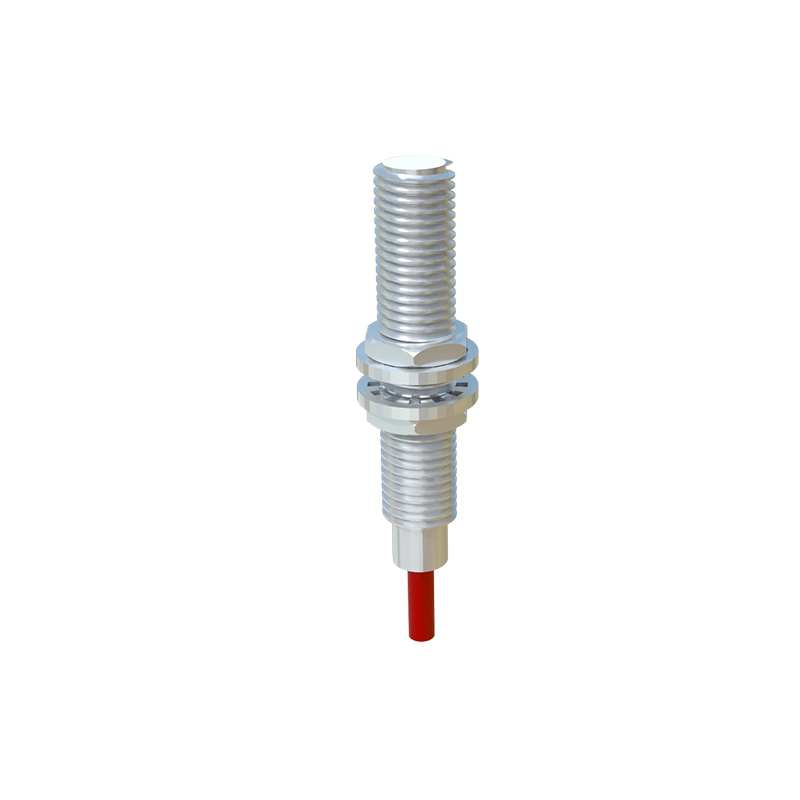
Proximity sensors are indispensable components in modern industrial automation, providing non-contact detection of objects within a defined sensing range. Their ability to function without physical contact eliminates mechanical wear, ensures high reliability, and enables rapid response times, making them critical for applications like position verification, counting, and end-of-travel detection. This article provides a comprehensive overview of the primary classifications of proximity sensors and analyzes their key performance parameters to guide selection for specific industrial environments.
The fundamental classification of proximity sensors is based on their underlying detection technology. The most prevalent types include Inductive, Capacitive, Ultrasonic, and Photoelectric sensors. Each type operates on distinct physical principles, defining its ideal application scope.
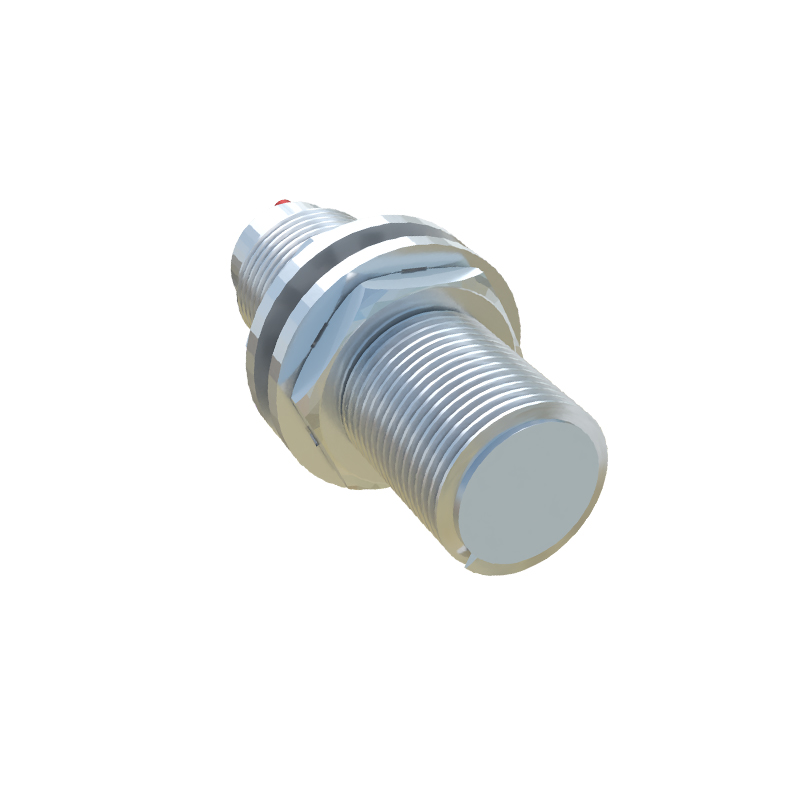
Inductive proximity sensors are the workhorses of metal detection. They generate an electromagnetic field from a coil in the sensor head. When a metallic target enters this field, eddy currents are induced in the target, causing a change in the oscillation amplitude within the sensor. This change is detected and triggers a switching output. Their performance is highly dependent on the target metal's properties; ferrous metals like steel are detected at the rated sensing distance, while non-ferrous metals like aluminum or copper typically have a reduced sensing range, often 60-70% of the nominal value. Key advantages include exceptional robustness against environmental contaminants like dust, oil, and coolants, high switching frequencies (often up to several kHz), and long operational life. They are predominantly used in machine tools, automated assembly lines, and robotic systems for detecting metal parts, pistons, or gear teeth.
Capacitive proximity sensors can detect both metallic and non-metallic materials, including liquids, plastics, glass, and wood. They function by generating an electrostatic field. The presence of any material with a dielectric constant different from air alters the capacitance of the sensor's circuit, triggering an output state change. A significant feature is their ability to sense through certain non-metallic barriers, allowing for applications like liquid level detection inside a plastic tank. However, they are more susceptible to environmental factors like humidity and temperature variations compared to inductive types. Their sensing distance is generally shorter and can be influenced by the target material's density and dielectric constant. Common applications include level control of granular solids or liquids, detection of plastic caps on bottles, and paper or wood product counting.
Ultrasonic sensors utilize sound waves beyond the human hearing range. They operate on either the echo time measurement principle (time-of-flight) or the Doppler effect principle. In the prevalent time-of-flight method, the sensor emits an ultrasonic pulse and measures the time for the echo to return from a target. This allows for precise distance measurement, not just presence detection. They are effective for detecting objects of virtually any material, shape, or color, and are largely unaffected by ambient light or dust. Performance can be degraded by factors that affect sound wave propagation, such as extreme temperature gradients, high air turbulence, or soft, sound-absorbing surfaces. They are ideal for challenging applications like bulk material level sensing, transparent object detection, parking assistance systems, and loop control in conveyor systems.
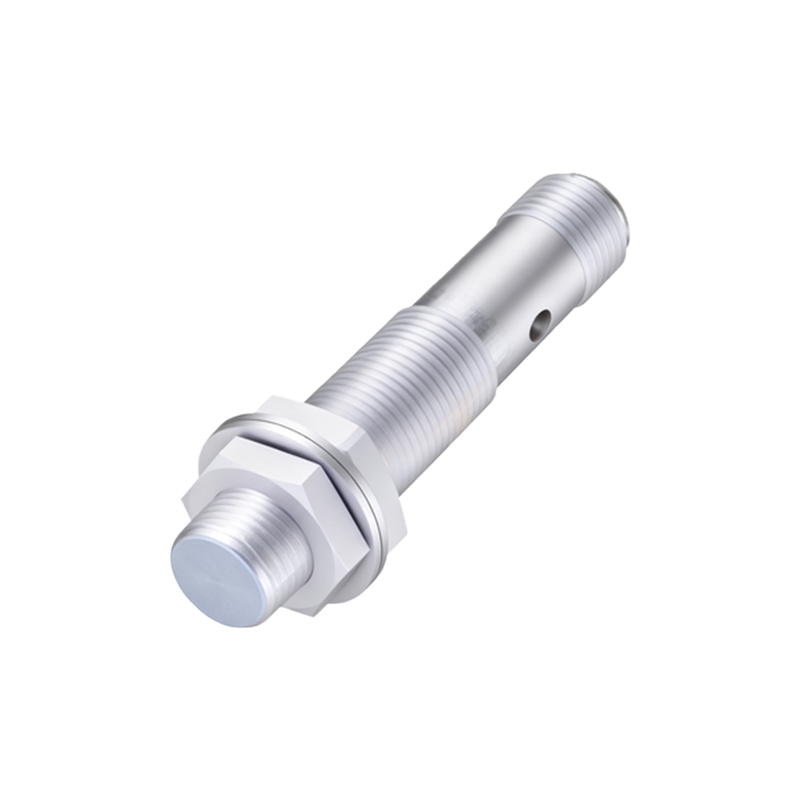
Photoelectric sensors employ a light beam, typically infrared, visible red, or laser. They are categorized by their operating mode: through-beam, retro-reflective, and diffuse reflective. Through-beam models, with separate emitter and receiver units, offer the longest sensing ranges and highest reliability. Retro-reflective types use a single unit and a reflector, while diffuse reflective sensors detect light reflected directly from the target itself. Photoelectric sensors excel at long-range detection and can sense extremely small objects. Their performance is highly dependent on the target's surface properties (color, reflectivity) and can be adversely affected by ambient light interference, dirt accumulation on lenses, and certain environmental conditions like fog or steam. They are ubiquitous in packaging, material handling, and electronic assembly for detecting labels, transparent films, and precise part positioning.
When evaluating performance, several critical parameters must be considered beyond the basic sensing technology. The rated operating distance (Sn) is the nominal sensing range under standardized conditions. The assured operating distance (Sa), typically 0.81Sn or 0.9Sn, is the range within which reliable operation is guaranteed, accounting for supply voltage and temperature tolerances. Hysteresis is the difference between the switch-on and switch-off points, which prevents output chatter when a target is at the sensing edge. Switching frequency defines how quickly the sensor can respond to consecutive targets. Environmental ratings for IP (Ingress Protection) and NEMA enclosures are crucial for durability against dust and water. Output configuration (PNP/NPN, NO/NC, analog) must be compatible with the control system (PLC). Finally, factors like temperature range, short-circuit and overload protection, and EMC (Electromagnetic Compatibility) immunity are vital for