In industrial automation and precision measurement systems, sensors play a critical role in ensuring operational accuracy, safety, and efficiency. However, these sensitive electronic components are increasingly vulnerable to damage from laser radiation—a hazard often overlooked in many engineering environments. Lasers, whether from alignment tools, cutting systems, or communication devices, emit highly concentrated beams of coherent light that can inflict irreversible harm on optical, thermal, and even non-optical sensors. This article explores the mechanisms of laser-induced sensor damage, common failure modes, and practical prevention strategies grounded in engineering principles.
Lasers damage sensors through multiple physical mechanisms, primarily depending on the sensor type and laser parameters. For optical sensors like photodiodes, CCDs, or CMOS imagers, the threat is most direct. Even low-power visible or infrared lasers can saturate the sensor’s photodetectors, causing temporary blindness or permanent burnout due to localized overheating. The energy density (measured in W/cm²) is key: a focused beam raises temperature rapidly, melting microstructures or doping layers. In non-optical sensors—such as capacitive, inductive, or piezoelectric units—damage may occur indirectly. Stray laser light can heat enclosures, distorting mechanical parts or altering material properties, while electromagnetic interference from pulsed lasers can induce voltage spikes, frying sensitive circuitry.

Industrial settings often use Class 3B or Class 4 lasers for welding, cutting, or LiDAR. These high-power sources pose significant risks. A common scenario involves misaligned laser paths accidentally striking vision sensors on robotic arms. The result is not just sensor failure but cascading system errors—for instance, a damaged infrared temperature sensor in a laser welding station may provide false readings, leading to poor weld quality or safety hazards. Fiber-optic sensors are particularly susceptible, as laser overexposure can cause fiber core degradation, increasing attenuation or causing complete signal loss.
Prevention begins with risk assessment. Engineers should map laser zones and sensor placements, ensuring physical barriers or beam blocks isolate sensitive equipment. Using optical filters—such as narrowband pass filters or neutral density filters—can attenuate specific laser wavelengths while permitting operational light transmission. For electronic sensors, shielding and proper grounding mitigate electromagnetic interference. Regular maintenance checks, including inspecting sensor windows for coating damage and calibrating after potential exposure, are essential.
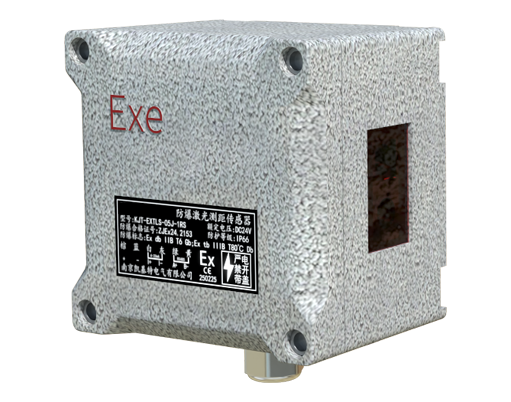
Moreover, selecting sensors with built-in protection features adds resilience. Some modern photodetectors incorporate automatic gain control or hard-coated optics that reflect specific laser lines. Integrating hardware interlocks that shut down lasers when sensor housings are opened further reduces accidental exposure. Training personnel on laser safety protocols, such as never aiming lasers near sensor arrays, complements technical measures.
In summary, laser-induced sensor damage is a preventable issue with serious implications for productivity and safety. By understanding the interaction between laser energy and sensor materials, engineers can design robust systems that withstand industrial environments. Proactive protection—combining spatial planning, optical filtering, and electronic safeguards—ensures sensors maintain accuracy and longevity, supporting uninterrupted automation and measurement integrity.