Capacitive proximity sensors are versatile and reliable components widely used in industrial automation and control systems. Unlike their inductive counterparts that detect only metals, capacitive sensors can detect a vast range of materials, including liquids, plastics, glass, wood, and granular substances. This capability makes them indispensable in diverse applications, from level detection in silos to part presence verification on non-metallic assembly lines.
The fundamental operating principle is based on changes in capacitance. A capacitive sensor essentially forms one plate of a capacitor, with the target object acting as the other plate. The sensor generates an electrostatic field. When a target enters this field, it alters the dielectric constant and thus the capacitance of the system. The sensor's internal oscillator circuit detects this change. Once the capacitance reaches a predetermined threshold, the sensor's output state switches, signaling the presence or absence of the target.
Key design elements include the sensing face, oscillator, trigger circuit, and output switching device. Modern sensors often feature adjustable sensitivity, allowing engineers to fine-tune the sensing range and ignore unwanted background materials, such as a container wall. This is crucial for applications like detecting the liquid level inside a plastic tank. The sensing range is typically shorter than that of inductive sensors for metallic targets but is sufficient for most material handling tasks.
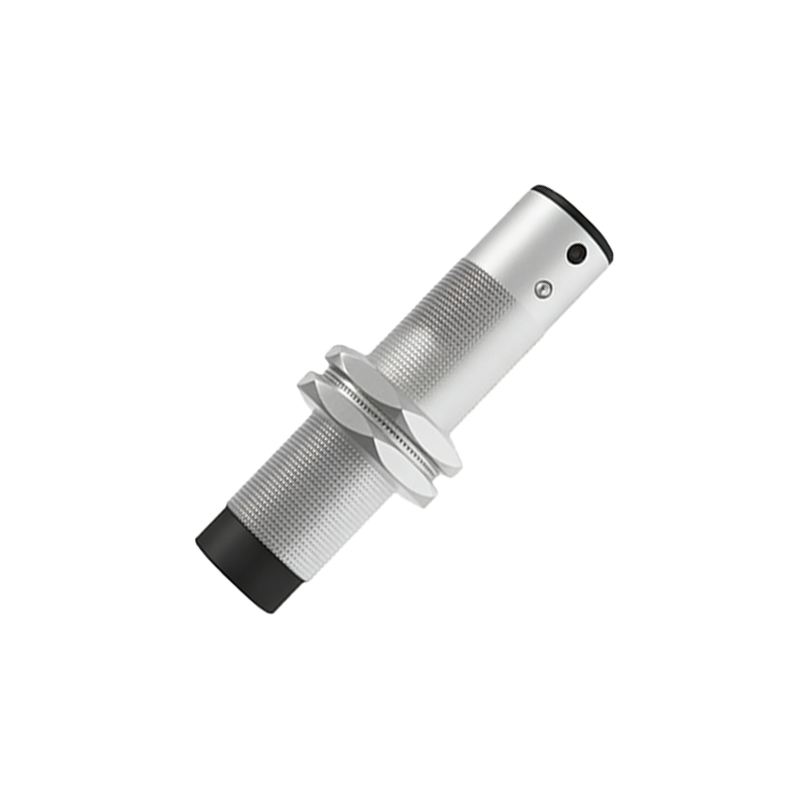
The selection and application of capacitive sensors require careful engineering consideration. First, the material properties of the target are paramount. Conductive materials like metals or water cause a significant change in capacitance and are easily detected. Non-conductive materials have a lower dielectric constant, resulting in a reduced effective sensing range. Engineers must consult reduction factor curves provided in datasheets to determine the actual sensing distance for specific materials.
Environmental factors pose significant challenges. Condensation, dust, oil mist, or other contaminants adhering to the sensing face can cause false triggering, as the sensor cannot distinguish between the contaminant and the actual target. Selecting sensors with robust housings (e.g., PTFE-coated faces) designed for harsh environments is essential. Temperature fluctuations can also affect the oscillator's performance, so operating temperature ranges must be observed.
Electrical installation and interference must be managed. Most industrial capacitive sensors operate on DC (10-30V DC) or AC (20-250V AC) supplies with NPN (sinking) or PNP (sourcing) transistor outputs. Proper shielding and grounding are critical to minimize the effects of electromagnetic interference (EMI) from nearby motors or frequency drives. Maintaining adequate clearance between the sensor and the mounting surface (as specified by the manufacturer) prevents the metal mount from influencing the field and reducing performance.
Typical industrial applications are extensive. In packaging, they detect the presence of plastic bottles or cardboard boxes. In food and beverage, they monitor powder levels in hoppers or control fill levels of liquids. In woodworking, they sense wood panels. A specialized application is touch-sensitive control, where the sensor detects a human finger through a glass or plastic panel, enabling sleek, sealed operator interfaces.
Troubleshooting often involves checking three areas: power supply, sensor adjustment, and environmental effects. A stable power voltage within the sensor's rating is the first checkpoint. Next, the sensitivity potentiometer should be adjusted correctly—increased until the target is reliably detected, then slightly reduced to ensure stability against background interference. Finally, the sensing face should be inspected and cleaned of any buildup.
In conclusion, capacitive proximity sensors offer a unique solution for non-contact detection of non-metallic and metallic objects. Their successful implementation hinges on a deep understanding of the target material's properties, the operating environment, and correct electrical installation. By carefully considering these factors, engineers can leverage the flexibility of capacitive sensing to create robust, efficient, and innovative automation solutions across countless industries, ensuring reliable operation in challenging conditions where other sensor types may fail.