In the realm of automation and smart technology, the ability to detect the presence or absence of an object without physical contact is fundamental. This is the core function of a proximity sensor. Among the various frameworks and competitions that push the boundaries of physics and engineering, the International Young Physicists' Tournament (IYPT) has often featured problems that explore the underlying principles of such sensors. While "IYPT proximity sensor" is not a specific commercial product, it refers to the conceptual exploration and innovative implementations of proximity sensing inspired by or developed for IYPT challenges. This article delves into the physics, common types, and real-world applications of these sensors, highlighting the spirit of inquiry that the IYPT fosters.
At its heart, a proximity sensor works by emitting a field or a beam of electromagnetic radiation or by looking for changes in a local field. The sensor detects the presence of an object, often termed a "target," when it enters this field. The key is that no physical contact is needed. The nature of the emitted field defines the primary types of proximity sensors. Inductive sensors generate an oscillating electromagnetic field and are sensitive to conductive metals. When a metal object enters this field, it induces eddy currents within the target, which in turn dampens the oscillator's amplitude, signaling detection. These are workhorses in industrial automation for counting metal parts or ensuring machine safety.
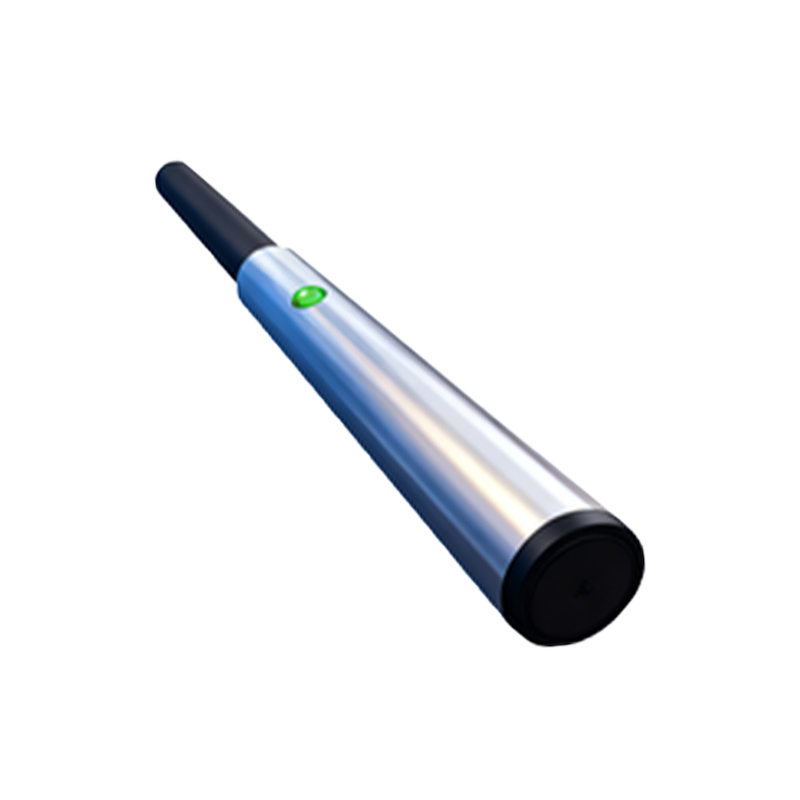
Capacitive sensors operate on a different principle. They can detect both metallic and non-metallic materials like liquids, plastics, or wood. They work by measuring changes in capacitance. The sensor and the target act as two plates of a capacitor. As the target approaches, the capacitance increases, and the sensor's circuitry triggers an output. This makes them ideal for level detection in tanks or touch-sensitive interfaces.
Optical proximity sensors, including infrared (IR) types, use a light emitter and a photodetector. The presence of an object is detected either by the interruption of a light beam (through-beam) or by the reflection of light back to the sensor (reflective). Ultrasonic sensors emit high-frequency sound waves and measure the time it takes for an echo to return. They are excellent for distance measurement and detecting objects regardless of color or material.
The connection to the IYPT lies in the tournament's problem-driven approach. A past IYPT problem might ask participants to investigate the factors affecting the range and sensitivity of a homemade capacitive sensor or to design an optical sensor that can distinguish between different surface textures. This encourages a deep, practical understanding of the physics—Faraday's law for inductive types, dielectric properties for capacitive, and wave optics or acoustics for optical and ultrasonic sensors. Participants must build, calibrate, and characterize their sensors, grappling with real-world issues like noise, environmental interference, and signal processing.
This foundational knowledge translates directly into powerful applications. In consumer electronics, capacitive proximity sensors turn off smartphone screens when held to the ear during a call, saving power. In automotive systems, they are crucial for parking assistance and blind-spot detection. Advanced manufacturing relies heavily on inductive and optical sensors for precise positioning, quality control, and robotic guidance. The development of the Internet of Things (IoT) has further expanded their use into smart homes for lighting control and into agriculture for monitoring equipment and inventory.
Looking forward, the evolution of proximity sensing is tightly linked to trends like miniaturization, increased intelligence, and sensor fusion. Modern sensors are becoming smaller, more energy-efficient, and integrated with microcontrollers for onboard data processing. The future may see wider adoption of LiDAR for high-resolution 3D proximity mapping in autonomous vehicles and robotics. Furthermore, the integration of multiple sensor types (e.g., combining a capacitive touch sensor with an optical gesture sensor) creates more robust and context-aware systems, a complex systems-engineering challenge that would be a fitting topic for a future IYPT.
In conclusion, the study of proximity sensors within contexts like the IYPT is more than an academic exercise. It is a gateway to understanding a critical technology that enables modern automation and interaction. From the basic principles of electromagnetism and wave propagation to their sophisticated applications in industry and daily life, these sensors exemplify how fundamental physics drives innovation. The experimental and problem-solving skills honed through such explorations are invaluable, preparing young scientists and engineers to contribute to the next generation of smart, responsive technologies.