In the realm of industrial automation and machine control, proximity sensors are indispensable components for non-contact detection. Among the diverse types available, the square proximity switch sensor with an NPN output configuration stands out for its robust design and specific electrical characteristics, making it a preferred choice in numerous applications. This article delves into the technical specifications, operating principles, wiring methodologies, and practical considerations for engineers integrating these sensors into their systems.
A square proximity switch sensor, as the name implies, features a cuboid housing, typically constructed from materials like nickel-plated brass, stainless steel, or high-grade plastics such as PBT. This form factor offers advantages in mounting, especially in applications where space constraints or specific panel designs are a concern. The "square" design often provides more surface area for labeling and can be easier to secure in certain fixtures compared to cylindrical models. Internally, these sensors operate on the principle of electromagnetic induction. They generate a high-frequency oscillating electromagnetic field from a coil within the sensing face. When a metallic target (usually ferrous, but specific models detect non-ferrous metals) enters this field, eddy currents are induced in the target, causing a change in the oscillation amplitude. This change is detected by the sensor's circuitry, triggering a switching action.
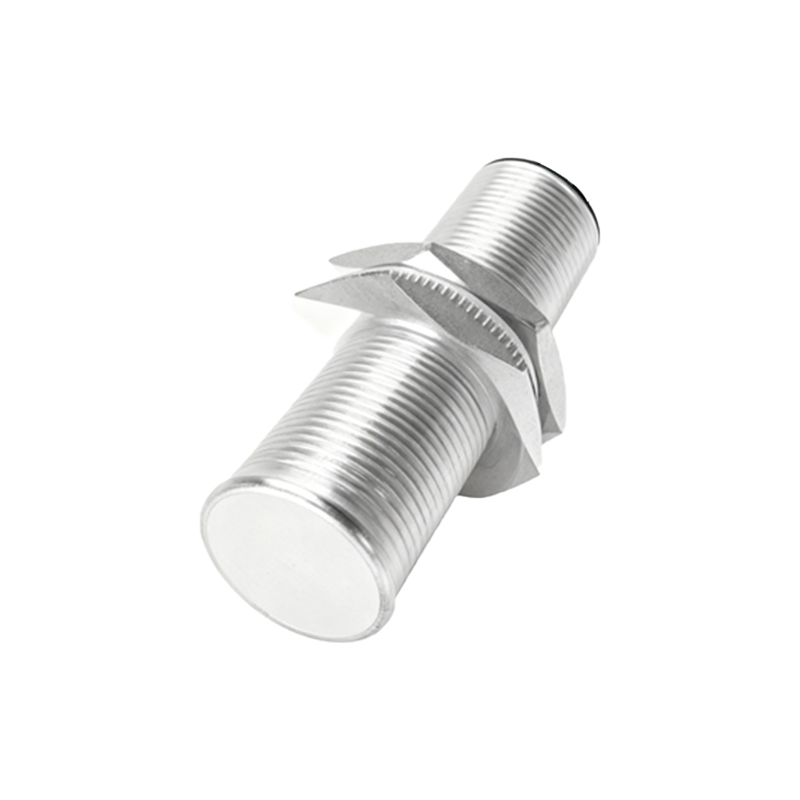
The output configuration is a critical differentiator. An NPN output sensor is characterized by its switching behavior relative to the common or ground potential. In an NPN proximity sensor, the output transistor is an NPN type. In its normal state (no target detected), the output signal line is in a high-impedance state (effectively open). When a target is detected, the internal transistor switches ON, connecting the output signal line to the negative supply voltage (0V or common). This action effectively "sinks" current to ground. Therefore, an NPN output is often described as a "sinking" output. The load (e.g., a PLC input, relay coil, or indicator lamp) must be connected between the positive supply voltage (+V, typically 10-30V DC) and the sensor's output wire. When the sensor activates, it completes the circuit to ground, allowing current to flow through the load.
Wiring an NPN square proximity sensor typically involves three wires, commonly color-coded as brown, blue, and black according to international standards (IEC). The brown wire connects to the positive DC supply voltage (+V). The blue wire connects to the negative supply or common (0V). The black wire is the switched output signal line. It is paramount to consult the specific sensor's datasheet, as wire colors and functions can vary by manufacturer. A key advantage of the NPN configuration is its compatibility with many programmable logic controllers (PLCs) and control systems that are designed to accept sinking inputs. When connecting to a PLC digital input module, the PLC's input point is internally connected to a positive voltage via a pull-up resistor. The NPN sensor, when active, pulls this point to ground, signaling a logic LOW or 'ON' state to the PLC. Engineers must ensure the sensor's supply voltage, switching current, and voltage drop specifications align with the load requirements.
Selecting the right square NPN proximity sensor requires careful evaluation of several parameters. The sensing distance, or nominal range, is specified for a standard target (often a square of mild steel). This distance is typically shorter for non-ferrous metals. The mounting style—flush (non-flush) or non-flush—affects the sensing characteristics. Flush-mounted sensors can be embedded in metal without interference from the surrounding material, whereas non-flush sensors offer longer sensing ranges but require a clear metallic-free zone around the sensing face. Environmental factors are crucial; many square sensors boast high ingress protection ratings like IP67 or IP69K, making them resistant to dust, water jets, and washdowns common in food processing or automotive industries. Temperature range, resistance to chemicals, and electrical noise immunity (often denoted by standards like NAMUR or with built-in surge protection) are also vital for reliable operation in harsh industrial environments.
Common applications for these sensors are extensive. They are used for position detection of machine parts, end-of-travel limits on actuators, counting objects on conveyors, detecting the presence of a pallet or tool, and in safety interlock systems. The square shape is particularly beneficial in automated assembly lines, packaging machinery, and material handling equipment where consistent and reliable detection is needed in compact, structured layouts.
In conclusion, the square proximity switch sensor with NPN output represents a versatile and reliable solution for metallic object detection. Its sinking output logic, durable construction, and standardized wiring make it a fundamental building block in control system design. For engineers, a thorough understanding of its operation, correct wiring practices, and careful attention to datasheet specifications are essential