In the realm of industrial automation and control systems, proximity sensors play a pivotal role in enabling non-contact detection of objects. These devices are essential for ensuring precision, safety, and efficiency in various applications, from manufacturing lines to robotics. But what exactly is the classification of proximity sensors? This article delves into their categorization based on operating principles, output types, and application domains, providing a comprehensive overview for engineers and industry professionals.
Proximity sensors are broadly classified into several categories based on their sensing technology. The most common types include inductive, capacitive, ultrasonic, magnetic, and optical sensors. Each type operates on distinct physical principles, making them suitable for specific environments and materials.
Inductive proximity sensors are widely used in industrial settings for detecting metallic objects. They function by generating an electromagnetic field, and when a metal target enters this field, it induces eddy currents that alter the sensor's oscillation. This change triggers an output signal, allowing for precise detection without physical contact. These sensors are ideal for harsh environments due to their robustness and resistance to dust, moisture, and vibrations. Common applications include position sensing in machinery, conveyor systems, and automotive assembly lines.
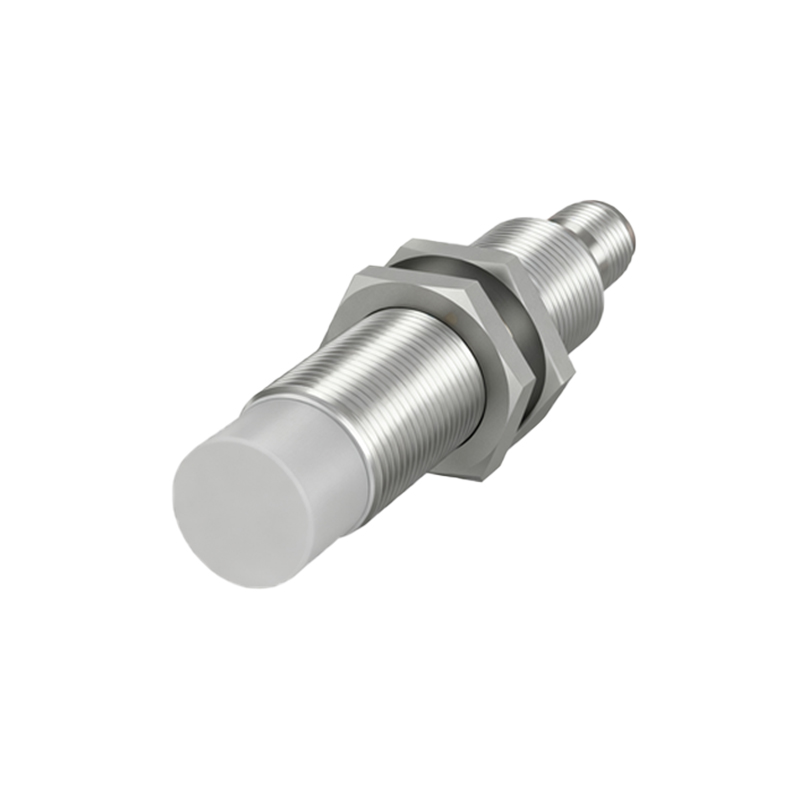
Capacitive proximity sensors, on the other hand, can detect both metallic and non-metallic materials, such as plastics, liquids, or granular substances. They work by measuring changes in capacitance caused by the presence of an object within an electrostatic field. This versatility makes them valuable in industries like food processing, packaging, and material handling, where diverse materials need monitoring. However, they may be sensitive to environmental factors like humidity, requiring careful calibration.
Ultrasonic proximity sensors utilize sound waves beyond the human hearing range to detect objects. They emit ultrasonic pulses and measure the time taken for echoes to return, calculating distance based on sound speed. These sensors are effective for detecting objects regardless of color, transparency, or material composition, making them suitable for level measurement, obstacle detection in robotics, and automated guided vehicles (AGVs). Their performance can be affected by temperature variations or acoustic interference, but advancements in technology have improved their reliability.
Magnetic proximity sensors rely on magnetic fields to detect ferromagnetic objects, such as permanent magnets or magnetized targets. They are often used in applications where other sensors might fail, such as in high-temperature or corrosive environments. Examples include valve position sensing, door closure systems, and safety interlocks. Their simplicity and durability contribute to their popularity in automotive and aerospace industries.
Optical proximity sensors, including infrared and laser types, use light beams to detect objects. They consist of an emitter and a receiver; when an object interrupts the light beam, the sensor triggers an output. These sensors offer high accuracy and fast response times, ideal for counting, sorting, and precision alignment tasks. However, they can be influenced by ambient light or reflective surfaces, necessitating proper shielding and setup.
Beyond technology-based classification, proximity sensors are also categorized by output types, such as digital (e.g., NPN, PNP) or analog (e.g., 4-20 mA, 0-10 V). Digital outputs provide simple on/off signals, while analog outputs offer continuous data proportional to distance, enabling more nuanced control. Selection depends on the control system requirements, with digital outputs being common for basic detection and analog for precise measurement.
In terms of application domains, proximity sensors are integral to Industry 4.0 and smart manufacturing. They facilitate real-time monitoring, predictive maintenance, and automated decision-making, enhancing productivity and reducing downtime. For instance, in robotic arms, proximity sensors ensure accurate positioning and collision avoidance, while in logistics, they optimize inventory management through object tracking.
When choosing a proximity sensor, engineers must consider factors like sensing range, environmental conditions, target material, and cost. Inductive sensors excel with metals in tough settings, capacitive sensors handle diverse materials, ultrasonic sensors offer long-range detection, magnetic sensors endure extreme conditions, and optical sensors provide high precision. Understanding these classifications helps in selecting the right sensor for optimal performance.
In conclusion, proximity sensors are a diverse group of devices classified by operating principles, output types, and applications. Their evolution continues with innovations like IoT integration and miniaturization, driving efficiency in modern industries. By grasping their classifications, professionals can leverage these sensors to build smarter, safer, and more responsive automated systems.