In the realm of industrial automation and control, metal proximity sensors are indispensable components. These non-contact devices detect the presence or absence of metallic objects without any physical contact, enabling precise control, counting, positioning, and safety functions in machinery and production lines. Their reliability, long service life, and resistance to harsh environments make them a cornerstone of modern manufacturing, packaging, automotive, and material handling systems. This guide delves into the primary types of metal proximity sensors, explaining their operating principles, key characteristics, and typical applications.
The most prevalent and widely used type is the Inductive Proximity Sensor. Its operation is based on the principle of electromagnetic induction. The sensor generates an oscillating electromagnetic field from its active face via a coil. When a metallic object (ferrous or non-ferrous) enters this field, eddy currents are induced on the surface of the target. These eddy currents cause a load on the oscillator, leading to a change in the oscillation amplitude. This change is detected by the sensor's circuitry, which subsequently triggers a solid-state output switch (typically PNP or NPN). Inductive sensors are excellent for detecting all metals, though their sensing range varies with the target material; ferrous metals like iron and steel are detected at the nominal range, while non-ferrous metals like aluminum or copper require a reduced sensing distance. They are robust, cost-effective, and ideal for detecting metal parts, position limits on cylinders, or high-speed counting.
A specialized subset of the inductive sensor is the Ferrous Metal (or Ferrous-Only) Proximity Sensor. These sensors are specifically designed to detect only ferromagnetic metals, primarily iron and steel. They often utilize a magneto-resistive or a specially tuned inductive principle that is sensitive to the magnetic properties of ferrous materials while largely ignoring non-ferrous metals like aluminum, brass, or stainless steel (austenitic). This selectivity is crucial in applications where the background or non-target objects are made of non-ferrous metals, preventing false triggers. Common uses include detecting teeth on steel gears, monitoring ferrous components on conveyor belts carrying mixed materials, or in automotive assembly lines.
For applications requiring detection of all metals at a longer range or through non-metallic barriers, Capacitive Proximity Sensors can be employed, though they are not exclusively for metals. They function by generating an electrostatic field. Any object, metallic or non-metallic, that enters this field alters the capacitance of the system, triggering the output. When tuned for metals, they are highly effective. However, their sensitivity can also be affected by moisture, dust, or other materials, which may require careful calibration. They are less common for pure metal detection compared to inductive types but are valuable where versatility is needed.
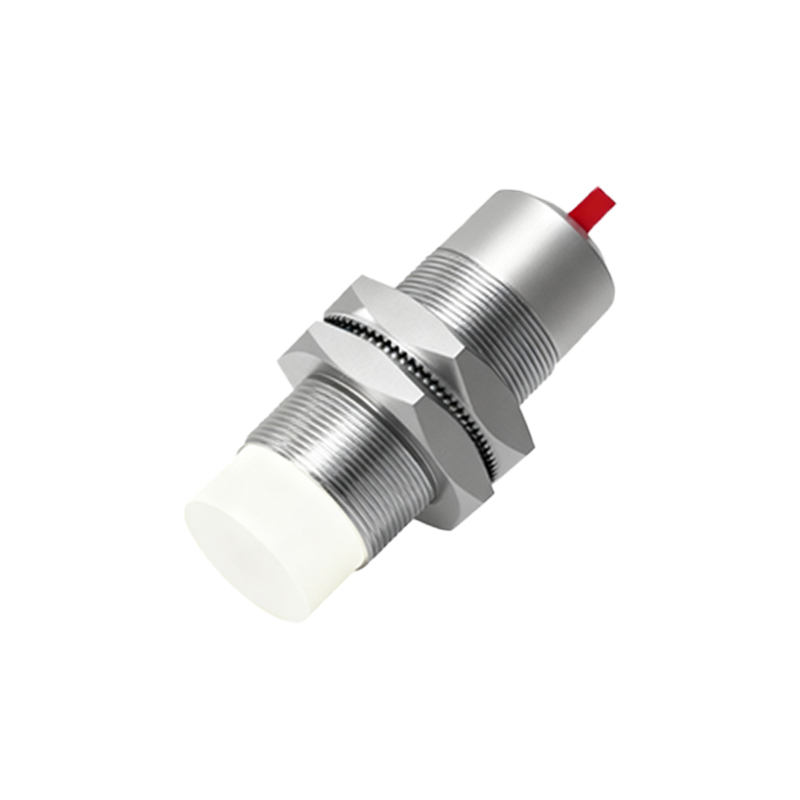
While not strictly "proximity sensors" in the same electronic sense, Magnetic Proximity Sensors (Reed Switches or Hall Effect Sensors) are vital for detecting the presence of a magnetic field, often from a permanent magnet attached to a moving metal part. Reed switches use hermetically sealed ferromagnetic reeds that close or open in the presence of a magnet. Hall Effect sensors produce a voltage change when exposed to a magnetic field. These are perfect for detecting the position of piston magnets in pneumatic cylinders or in speed sensing on rotating shafts with magnetic encoders. They are highly reliable for detecting the presence of a magnet through non-magnetic metals like aluminum housings.
High-Frequency Oscillation (HF) Type Sensors represent another advanced category. They operate at much higher frequencies than standard inductive sensors. This allows for superior performance in detecting non-ferrous metals and even small metal tags or thin foils. They are less affected by the material's electromagnetic properties and more by its conductivity, making them suitable for specialized applications in electronics manufacturing or foil detection in packaging.
Selecting the right metal proximity sensor depends on several factors: the target material (ferrous, non-ferrous, or both), the required sensing distance, the operating environment (temperature, presence of chemicals or washdown needs), the output type needed (digital, analog, IO-Link), and the physical size and mounting constraints. Shielded (flush-mountable) sensors allow side-by-side mounting without interference, while unshielded (non-flush) sensors offer longer sensing ranges.
In conclusion, from the ubiquitous inductive sensor to the selective ferrous-only and magnetic types, the variety of metal proximity sensors provides engineers with a precise toolkit for automation challenges. Understanding their distinct operating principles is key to implementing reliable, efficient, and safe industrial control systems that keep production lines moving smoothly and intelligently.