In recent years, laser quantum sensors have emerged as a transformative technology in the field of precision measurement and industrial automation. These sensors leverage the principles of quantum mechanics, particularly quantum entanglement and superposition, to achieve unprecedented levels of accuracy and sensitivity. Unlike traditional sensors that rely on classical physics, laser quantum sensors utilize photons—particles of light—to detect minute changes in physical quantities such as magnetic fields, gravitational waves, temperature, and pressure. The core mechanism involves emitting laser beams that interact with quantum states, allowing for measurements at the atomic or subatomic scale. This capability is revolutionizing industries ranging from aerospace and defense to healthcare and environmental monitoring.
One of the most significant advantages of laser quantum sensors is their immunity to electromagnetic interference. In industrial environments where electrical noise is prevalent, this feature ensures reliable data acquisition without signal degradation. For instance, in manufacturing plants, these sensors can monitor machinery vibrations with nanometer precision, enabling predictive maintenance and reducing downtime. Additionally, in the energy sector, laser quantum sensors are used to inspect pipelines for leaks or corrosion by detecting subtle changes in magnetic fields, thereby enhancing safety and efficiency. The medical field also benefits from this technology, with applications in advanced imaging systems that provide high-resolution scans for early disease detection.
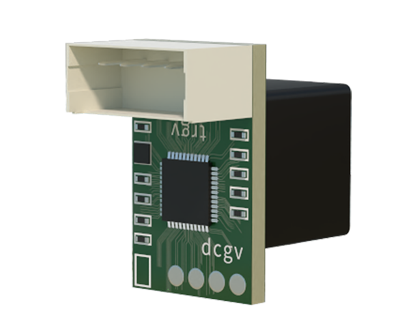
The development of laser quantum sensors has been driven by advancements in photonics and materials science. Key components include ultra-stable lasers, cryogenic cooling systems, and quantum dots, which help maintain coherence in quantum states. Researchers are continually improving sensor designs to make them more compact, cost-effective, and scalable for mass production. For example, recent prototypes have integrated silicon photonics, allowing for chip-based sensors that can be deployed in Internet of Things (IoT) networks. This miniaturization opens up new possibilities for real-time monitoring in smart cities, where sensors can track air quality, seismic activity, or infrastructure integrity with minimal power consumption.

Despite their potential, challenges remain in widespread adoption. Laser quantum sensors often require controlled environments to minimize quantum decoherence, which can be a barrier in harsh industrial settings. However, ongoing innovations in error correction algorithms and robust packaging are addressing these limitations. Moreover, the high initial cost of these sensors is gradually decreasing as manufacturing techniques evolve. Industry collaborations between academic institutions and corporations are accelerating commercialization, with pilot projects demonstrating tangible returns on investment through improved operational efficiency and reduced waste.
Looking ahead, the future of laser quantum sensors appears promising. As quantum computing and communication networks expand, these sensors will play a crucial role in enabling secure data transmission and ultra-precise navigation systems. In defense applications, they could enhance stealth technology by detecting stealth aircraft through gravitational anomalies. Environmental scientists also envision using distributed sensor networks to monitor climate change indicators, such as melting glaciers or ocean currents, with unparalleled detail. Ultimately, laser quantum sensors represent a paradigm shift in measurement science, offering a pathway to smarter, more sustainable industrial practices. By harnessing the power of quantum phenomena, industries can achieve levels of precision once thought impossible, paving the way for innovations that will shape the next decade of technological progress.
