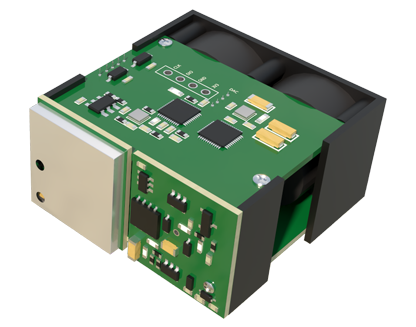
In the realm of industrial automation and precision measurement, laser sensor beams stand as a cornerstone technology. Their ability to provide non-contact, high-speed, and exceptionally accurate detection has revolutionized processes across manufacturing, robotics, and quality control. At its core, a laser sensor operates by emitting a focused beam of coherent light—typically from a laser diode—towards a target. The sensor then analyzes the properties of the reflected or interrupted beam to gather critical data, such as presence, distance, dimensions, or surface characteristics.
The fundamental principle hinges on the unique properties of laser light: coherence, monochromaticity, and low divergence. Unlike standard light, a laser beam can travel long distances with minimal spreading, maintaining a small, intense spot. This allows for precise targeting and measurement. The most common operational modes include through-beam, retro-reflective, and diffuse reflective sensing. Through-beam sensors, consisting of separate emitter and receiver units, offer the longest sensing ranges and highest reliability, as they detect the direct interruption of the beam. Retro-reflective types use a single unit and a reflector, detecting when the beam bouncing back from the reflector is blocked. Diffuse reflective sensors, also a single unit, detect light scattered back directly from the target itself, offering flexibility for varied applications but with shorter ranges and potential sensitivity to target color or finish.
Key specifications define a laser sensor's capability. These include sensing distance, spot size, repeatability, and response time. For instance, in semiconductor fabrication, a sensor with a micron-level spot size and nanosecond response is crucial for aligning wafers. In logistics, a robust diffuse sensor with a longer range might be used to detect packages on a high-speed conveyor. The choice of visible red laser or Class 1 or 2 infrared laser is also critical, depending on the need for beam visibility for alignment versus eye safety or immunity to ambient light interference.
The applications are vast and transformative. In automotive assembly, laser sensors perform precise gap and flush measurement between body panels. In electronics, they verify component placement on PCBs with incredible speed. They guide robotic arms for pick-and-place operations, control web tension in printing, and ensure fill levels in packaging. Advanced versions, like laser displacement sensors, use triangulation or time-of-flight principles to provide precise profile scanning and 3D contour mapping, essential for reverse engineering and quality inspection.
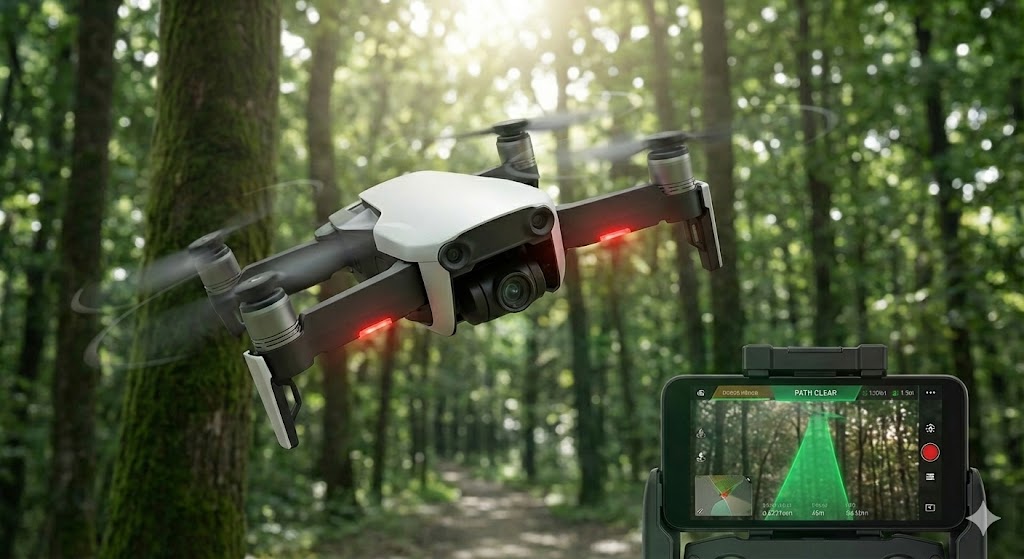
However, successful implementation requires careful consideration of environmental factors. Ambient light, particularly from other lasers or strong industrial lighting, can cause interference. The target's properties—its color, reflectivity, texture, and angle—significantly impact the signal strength in diffuse sensing modes. For challenging surfaces like shiny metals or dark, absorbent materials, sensors with background suppression or polarized filters are employed to ensure stable detection. Regular maintenance, including lens cleaning to prevent dust accumulation, is vital for sustained accuracy.
Looking ahead, the evolution of laser sensor technology continues. Innovations are leading to smarter sensors with integrated IO-Link communication for real-time parameter adjustment and diagnostics. Miniaturization is opening new applications in compact machinery and wearable devices. Furthermore, the integration of laser sensing with vision systems and AI is creating powerful solutions for complex inspection tasks, pushing the boundaries of what automated systems can perceive and accomplish. As Industry 4.0 advances, the laser sensor beam remains an indispensable tool, its focused light illuminating the path toward greater efficiency, quality, and intelligence in industrial operations.