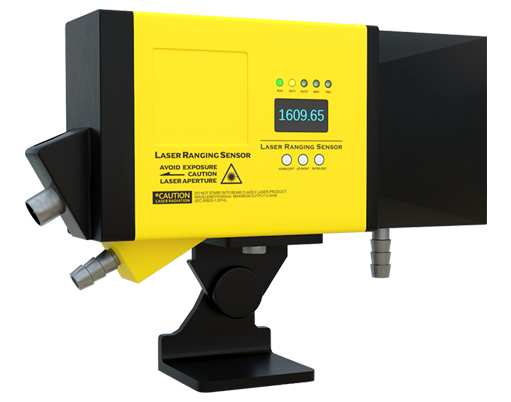
The automotive industry is undergoing a transformative shift towards autonomous driving, a revolution fundamentally powered by advancements in perception systems. At the core of this evolution are LiDAR (Light Detection and Ranging) and a suite of complementary sensors, which together form the "eyes" of a self-driving vehicle. These technologies are critical for creating a detailed, real-time understanding of the vehicle's environment, enabling safe navigation without human intervention.
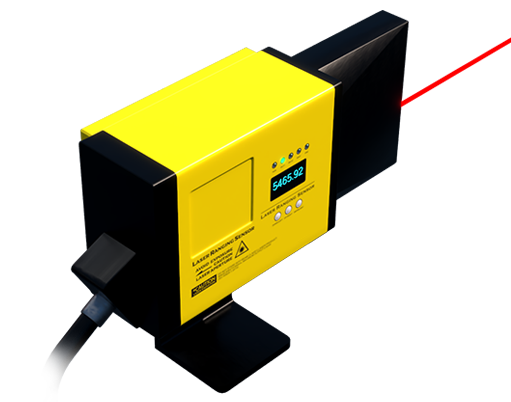
LiDAR has emerged as a pivotal technology for high-definition 3D mapping. It operates by emitting rapid pulses of laser light and measuring the time it takes for each pulse to reflect off objects and return to the sensor. This data generates a precise point cloud—a three-dimensional map of the surroundings with exceptional accuracy in distance measurement. Modern automotive LiDAR systems are rapidly evolving from bulky, mechanically rotating units to more compact, solid-state designs. Solid-state LiDAR, with no moving parts, offers greater reliability, longer lifespan, and the potential for seamless integration into vehicle body panels. Key performance metrics include range (often exceeding 200 meters for long-range variants), angular resolution, frame rate, and performance under adverse weather conditions like fog or heavy rain. The rich spatial data from LiDAR is indispensable for identifying pedestrians, cyclists, vehicles, and road geometry with high fidelity, especially in complex urban scenarios.
However, LiDAR is not a standalone solution. A robust autonomous driving system relies on sensor fusion—the intelligent combination of data from multiple sensor modalities. Cameras provide high-resolution 2D images essential for color, texture, and pattern recognition, such as reading traffic signs, lane markings, and traffic light signals. Radar (Radio Detection and Ranging) excels in directly measuring the speed of objects (using the Doppler effect) and performs reliably in poor visibility conditions where LiDAR and cameras may struggle. Ultrasonic sensors are typically used for close-range applications like parking assistance. The fusion of these data streams, processed by powerful onboard computers and sophisticated algorithms, creates a comprehensive, redundant, and reliable environmental model. This redundancy is a cornerstone of functional safety; if one sensor type is compromised, others can compensate.
The current technological trajectory focuses on several key areas. First is cost reduction, particularly for LiDAR, to enable widespread adoption in consumer vehicles. Second is improving computational efficiency for real-time sensor data processing and fusion. Third is enhancing AI and machine learning algorithms for better object classification and prediction of dynamic behaviors. Fourth is addressing edge cases and improving performance in all weather and lighting conditions. Finally, standardization and regulatory frameworks are evolving to ensure the safety and interoperability of these systems.
Looking ahead, the synergy between LiDAR, cameras, radar, and other sensors will only deepen. Innovations like 4D imaging radar (adding elevation measurement to traditional radar) and more compact, higher-performance solid-state LiDAR are on the horizon. The ultimate goal is to achieve a level of perception that matches or surpasses human capability, enabling fully autonomous vehicles to operate safely and efficiently on public roads. The journey is complex, but the continuous innovation in automotive LiDAR and sensor technologies is steadily paving the way for that future.