In the rapidly evolving landscape of electronic devices, sensors play a pivotal role in enhancing user experience and functionality. Among these, environmental light sensors and laser autofocus sensors have become integral components in a wide array of applications, from smartphones and cameras to automotive systems and smart home devices. This article delves into the technical principles, applications, and future trends of these two critical sensor technologies.
Environmental light sensors, also known as ambient light sensors (ALS), are designed to detect the intensity of light in the surrounding environment. These sensors typically utilize photodiodes or phototransistors to convert light energy into electrical signals. The primary function of an ALS is to automatically adjust the brightness of a display, such as that on a smartphone, tablet, or laptop, based on ambient lighting conditions. This not only improves visibility and reduces eye strain but also contributes to energy efficiency by optimizing backlight power consumption. Advanced ALS units can distinguish between natural and artificial light sources, enabling more precise adjustments. In automotive applications, these sensors are used to control dashboard illumination and headlight systems, enhancing safety during night driving or in tunnels. The integration of ALS in IoT devices, such as smart lighting systems, allows for automated control based on daylight availability, promoting energy conservation.
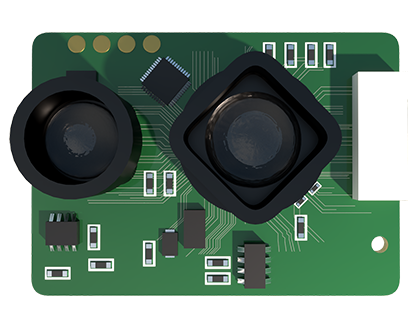
On the other hand, laser autofocus sensors represent a significant advancement in imaging technology. These sensors employ laser beams, often using time-of-flight (ToF) or phase detection methods, to measure the distance between the sensor and the subject. By emitting a laser pulse and calculating the time it takes for the reflection to return, the sensor can accurately determine depth information, enabling rapid and precise autofocus in cameras and smartphones. This technology is particularly beneficial in low-light conditions or when capturing fast-moving objects, where traditional contrast-based autofocus systems may struggle. Laser autofocus sensors are widely adopted in mobile photography, allowing for instant focus locking and improved image clarity. Beyond consumer electronics, they are utilized in robotics for obstacle detection, in industrial automation for precision measurement, and in automotive systems for features like adaptive cruise control and parking assistance.
The synergy between environmental light sensors and laser autofocus sensors is evident in modern devices. For instance, in a high-end smartphone, the ALS optimizes screen brightness for viewing comfort, while the laser autofocus ensures sharp photos regardless of lighting scenarios. This combination enhances overall device performance and user satisfaction. From a technical perspective, both sensors rely on semiconductor materials and microfabrication techniques, driving innovations in miniaturization and power efficiency. Recent developments include the integration of these sensors with artificial intelligence (AI) algorithms, enabling predictive adjustments and smarter functionality.
Looking ahead, the future of environmental light sensors and laser autofocus sensors is poised for further growth. Trends indicate a move toward multispectral ALS capable of detecting specific light wavelengths for health monitoring applications, such as tracking circadian rhythms. Laser sensors are evolving with the adoption of VCSEL (vertical-cavity surface-emitting laser) technology, offering higher accuracy and lower power consumption. As the demand for augmented reality (AR), autonomous vehicles, and smart cities increases, these sensors will play a crucial role in enabling seamless interactions and enhanced automation. Engineers and developers continue to explore new materials, such as perovskites for light sensing and silicon photonics for laser systems, to push the boundaries of performance.

In conclusion, environmental light sensors and laser autofocus sensors are foundational technologies that drive innovation across multiple industries. Their ability to adapt to environmental conditions and provide precise measurements makes them indispensable in today's electronic ecosystem. As technology advances, we can expect these sensors to become even more sophisticated, contributing to smarter, more efficient, and user-centric devices. Understanding their principles and applications is essential for professionals in the electrical and electronics fields to leverage their full potential in future designs.