In the high-precision world of laser technology, from industrial cutting and welding to medical devices and scientific research, maintaining optimal performance is paramount. One critical, yet often overlooked, component enabling this stability is the capacitive sensor. Unlike their inductive or optical counterparts, capacitive sensors offer unique advantages for non-contact measurement and control within laser systems, directly impacting beam quality, positioning accuracy, and overall system reliability.
At its core, a capacitive sensor operates by detecting changes in capacitance—the ability of a system to store an electrical charge. A typical sensor consists of a probe (one electrode) and the target object (the other electrode), forming a capacitor. The dielectric material, usually air, lies between them. When the distance to the target changes, the capacitance changes proportionally. This change is converted by sophisticated electronics into a highly precise, linear voltage or digital signal. For laser applications, this principle is leveraged for several key functions: vibration monitoring of optical mounts and benches, precise positioning of focusing lenses or mirrors, and gap control in laser welding or additive manufacturing heads.

The benefits of integrating capacitive sensors into laser systems are substantial. First and foremost is their exceptional resolution and accuracy, capable of detecting sub-nanometer displacements. This is crucial for stabilizing optical paths where even micron-scale vibrations can degrade beam focus and coherence. Secondly, they are inherently non-contact, eliminating any risk of mechanical wear or added mass on sensitive, fast-steering mirrors or delicate stages. Furthermore, capacitive sensors exhibit excellent frequency response, allowing them to track rapid vibrations or dynamic motions in real-time, which is essential for active damping systems. Their performance is largely unaffected by the material properties of the target, as long as it is conductive, making them versatile for various internal components.
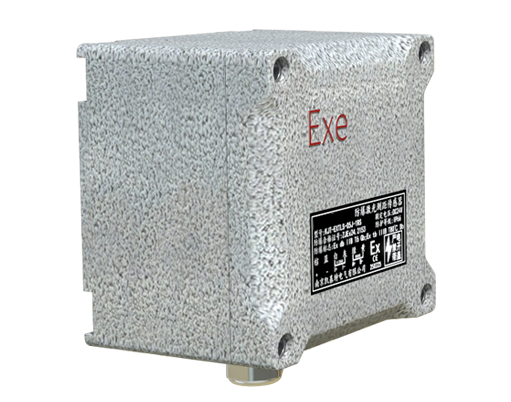
Specific applications abound. In laser machining centers, capacitive sensors are deployed to monitor the runout and thermal drift of the spindle or the nozzle-to-workpiece distance, ensuring consistent cut depth and weld penetration. Within the laser resonator itself, they can measure cavity mirror alignment, maintaining optimal lasing conditions. For ultrafast or high-power laser systems, where thermal lensing can shift focal points, capacitive sensors provide feedback for adaptive optics, dynamically adjusting lens positions to compensate. In precision metrology using interferometric techniques, the stability of the reference frame is often guarded by capacitive sensors detecting floor or table vibrations.

Selecting the right capacitive sensor for a laser application requires careful consideration of several parameters. The measurement range must suit the application, from a few microns for mirror alignment to several millimeters for gap sensing. Bandwidth is critical; a sensor must have a frequency response exceeding the highest vibration frequency needing detection. Environmental factors are also key. While capacitive sensors are sensitive to humidity, dust, or oil mist contaminating the dielectric gap, many are available with robust housings or protective coatings for harsh industrial environments. The electronics must also be chosen to minimize noise, often opting for differential or shielded designs to reject electromagnetic interference common in facilities with high-power drivers and pulsed lasers.
Integration involves more than just mounting the probe. Proper installation is critical to avoid errors from stray capacitance. Cables should be fixed and shielded, and the sensor should be grounded according to the manufacturer's specifications. The target surface area and flatness must be adequate, and the system requires careful calibration. The output signal is typically fed into a laser system's programmable logic controller (PLC) or dedicated motion controller, forming a closed-loop feedback system that continuously corrects position or triggers alarms if thresholds are exceeded.
In conclusion, capacitive sensors serve as the silent guardians of precision in modern laser systems. Their ability to provide nanometer-scale, non-contact measurements of displacement and vibration addresses fundamental challenges in thermal management, mechanical stability, and dynamic control. As laser applications push toward finer tolerances and higher powers, the role of advanced sensing, including capacitive technology, will only grow in importance. Engineers and system integrators must understand their operating principles and selection criteria to fully harness their potential, ensuring that the laser's transformative power is delivered with unwavering accuracy and reliability.