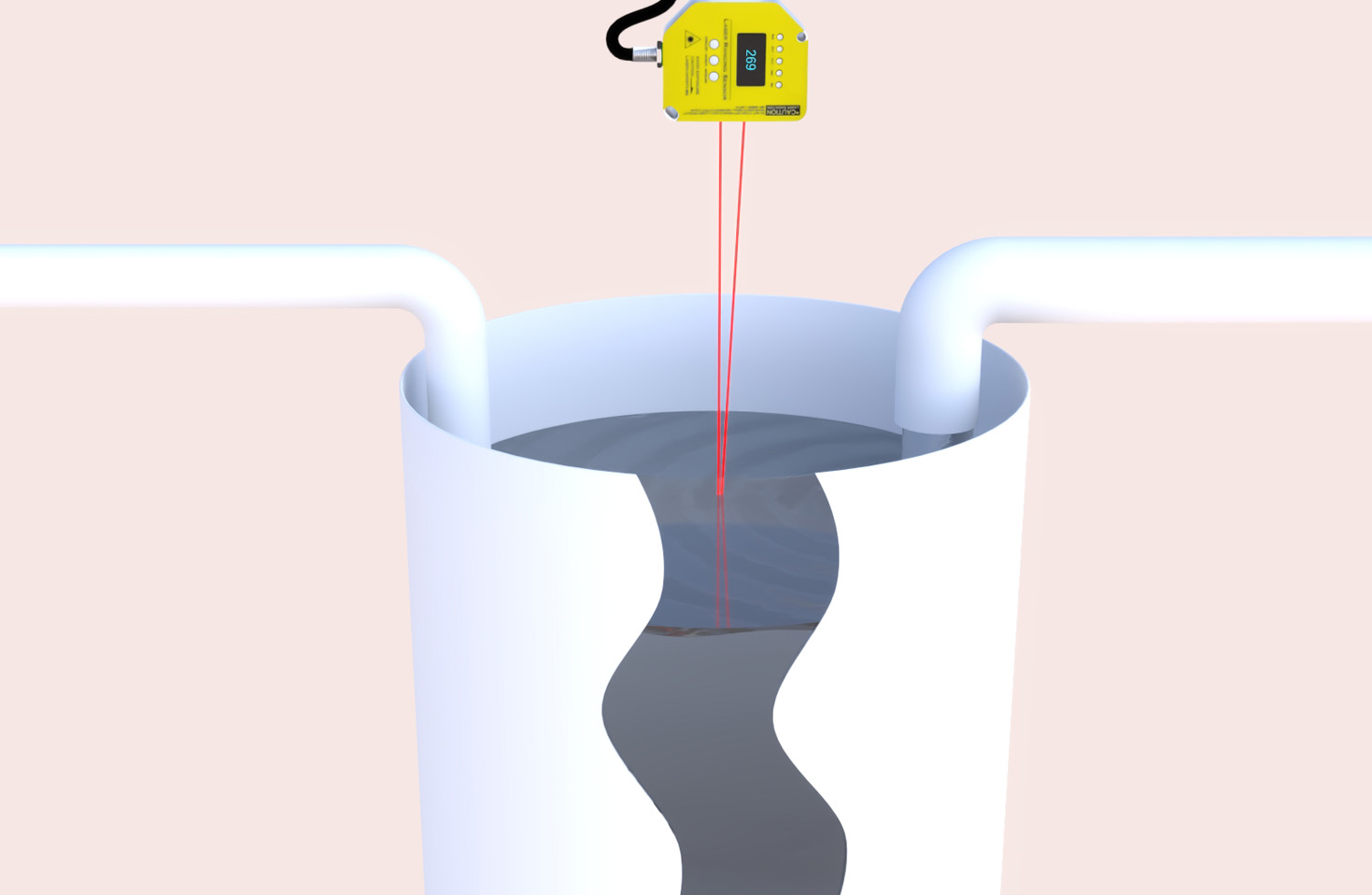
Laser sensor technology has emerged as a cornerstone of modern industrial automation, robotics, and smart systems. For electrical engineers and industry professionals, understanding the investment landscape surrounding laser sensor stocks requires a blend of technical insight and market analysis. This article delves into the core technologies, key market drivers, and the financial performance of leading companies in this sector.
At its heart, a laser sensor is a device that uses laser light to detect, measure, or profile objects with high precision. The fundamental operating principles often involve time-of-flight (ToF), triangulation, or interferometry. Time-of-flight sensors calculate distance by measuring the round-trip time of a laser pulse, making them ideal for long-range applications like autonomous vehicle LiDAR. Triangulation sensors, using a laser emitter, a receiver, and known geometric angles, excel in high-accuracy, short-to-medium range measurements common in manufacturing quality control. Interferometric sensors provide nanometer-level precision for vibration analysis and semiconductor fabrication. The performance metrics critical for engineers include resolution, repeatability, linearity, and sampling rate, all of which are continuously being pushed by advancements in laser diode efficiency, detector sensitivity, and signal processing algorithms.
The market for laser sensors is propelled by several powerful, interconnected trends. The relentless drive toward Industry 4.0 and smart factories is a primary catalyst. Laser sensors are indispensable for robotic guidance, precise assembly, non-contact inspection, and predictive maintenance on production lines. The automotive sector, particularly the development of Advanced Driver-Assistance Systems (ADAS) and autonomous driving, has created massive demand for LiDAR sensors. Furthermore, the expansion of consumer electronics, where laser sensors enable features like facial recognition and augmented reality, represents a significant growth avenue. Emerging applications in healthcare (e.g., surgical navigation), logistics (automated sorting), and aerospace are further broadening the market base.
From an investment standpoint, the laser sensor ecosystem comprises several types of companies. Pure-play sensor manufacturers focus exclusively on designing and producing advanced laser sensing components and systems. These firms often compete on technological edge, patent portfolios, and customization capabilities. Larger industrial automation conglomerates offer laser sensors as part of comprehensive automation solutions, providing stability through diversified revenue streams. Additionally, semiconductor companies are crucial players, supplying the underlying photonic chips, detectors, and integrated circuits that form the sensor's core.

Evaluating laser sensor stocks necessitates analyzing both technical moats and financial health. Key factors for investors include a company's research and development (R&D) expenditure as a percentage of revenue, its growth in key verticals like automotive or industrial IoT, profit margins, and order backlog. Intellectual property, particularly patents related to specific measurement techniques or miniaturization, can create significant competitive barriers. Supply chain resilience for critical components like specialized lenses and laser diodes is another vital consideration. Market sentiment is also influenced by macroeconomic cycles in manufacturing and capital expenditure.
The future trajectory of laser sensor technology points toward greater integration, intelligence, and miniaturization. The convergence of sensing and edge computing is leading to "smart sensors" with onboard data processing, reducing latency in closed-loop control systems. Developments in VCSEL (Vertical-Cavity Surface-Emitting Laser) arrays are enabling more compact and cost-effective 3D sensing solutions. Furthermore, the integration of multiple sensing modalities—combining laser data with vision or inertial measurement—is creating more robust perception systems for complex environments.

For the electrical engineering professional, engaging with this sector, whether through project specification, R&D, or investment, demands a continuous update on both the physics of light-based measurement and the dynamics of the global high-tech supply chain. The companies that successfully translate incremental technical advancements into reliable, scalable, and cost-effective solutions are positioned to capture enduring value in an increasingly automated world.