In the realm of industrial automation and precision measurement, the Laser Sensor 400 series stands as a pivotal technology, offering unparalleled accuracy and reliability. This article delves into the core principles, diverse applications, and critical selection parameters for engineers and technical professionals considering its implementation.
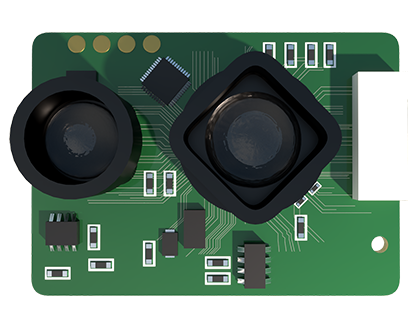
At its heart, the Laser Sensor 400 operates on the principle of optical triangulation or time-of-flight measurement, depending on the specific model. In a typical triangulation-based sensor, a laser diode emits a focused beam of visible red or infrared light onto the target surface. The reflected light is then captured by a high-resolution position-sensitive detector (PSD) or a CMOS/CCD array at a specific angle. Any displacement of the target alters the position of the reflected spot on the detector. This minute change is processed by sophisticated onboard electronics to calculate the exact distance or presence of the object with micron-level precision. Models utilizing time-of-flight technology measure the phase shift or the direct time delay of a pulsed laser beam to determine distance, making them ideal for longer ranges.

The applications of the Laser Sensor 400 are vast and transformative across multiple sectors. In automotive manufacturing, these sensors are indispensable for robotic guidance, weld seam tracking, and precise gap and flush measurement between body panels. The electronics industry relies on them for component placement verification, solder paste inspection, and wafer alignment. Within logistics and packaging, they facilitate high-speed object counting, box dimensioning, and level detection in silos. Furthermore, their non-contact nature makes them perfect for measuring delicate, hot, or fast-moving objects where physical probes would fail or cause damage. Advanced versions with integrated background suppression filters excel in detecting objects regardless of surface color or reflectivity, a common challenge in varied production environments.
Selecting the appropriate Laser Sensor 400 model requires a meticulous analysis of several key parameters. First, define the required measuring range and resolution. A model with a 20-100mm range and 2µm resolution suits fine detail inspection, while a 0.1-10m range model with millimeter resolution is better for bulk material handling. The spot size is crucial; a smaller spot allows for higher resolution on detailed features. Consider the target's properties: dark, absorbent surfaces may require a sensor with higher laser power or a specialized receiver, while shiny surfaces might need a diffused laser model to avoid specular reflection errors. The response time or sampling rate must match the application's speed—high-speed production lines demand sensors with kHz-level frequencies.

Environmental robustness is non-negotiable in industrial settings. Look for sensors with high Ingress Protection (IP) ratings (e.g., IP67) for resistance to dust and water, robust housing to withstand vibration, and stable performance across a wide operating temperature range. The output interface is another critical decision point; common options include analog (4-20mA, 0-10V), digital (IO-Link, RS-232), and industrial Ethernet protocols (Profinet, EtherNet/IP), which facilitate seamless integration into existing control systems for real-time data acquisition and process adjustment.
Installation and alignment are foundational to optimal performance. Ensure the sensor is mounted securely on a stable platform, minimizing external vibrations. The laser beam must be perpendicular to the target surface under normal operating conditions to avoid cosine error. Utilize the sensor's built-in teaching function or configuration software to set reference points, thresholds, and output logic accurately. Regular maintenance, primarily keeping the lens clean from dust and oil mist, is essential to preserve long-term accuracy and prevent signal degradation.
In conclusion, the Laser Sensor 400 represents a cornerstone of modern industrial sensing technology. Its ability to deliver precise, non-contact measurements in challenging environments drives efficiency, quality, and automation. A successful deployment hinges on a thorough understanding of its operating principle, a clear mapping of application requirements to sensor specifications, and adherence to best practices in installation and integration. As Industry 4.0 advances, these sensors will continue to evolve, offering even greater intelligence and connectivity for the smart factories of the future.