Proximity switches and sensors are fundamental components in modern industrial automation, providing non-contact detection of objects to enhance efficiency, safety, and reliability. Understanding how to control these devices is essential for engineers and technicians working with automated systems. This article explores the principles, wiring methods, and integration techniques for effectively controlling proximity sensors in various applications.
Proximity sensors operate based on different technologies, primarily inductive, capacitive, and photoelectric types. Inductive sensors detect metallic objects using electromagnetic fields, while capacitive sensors can sense both metallic and non-metallic materials by measuring changes in capacitance. Photoelectric sensors use light beams to detect objects. Each type requires specific control approaches tailored to its operating mechanism.
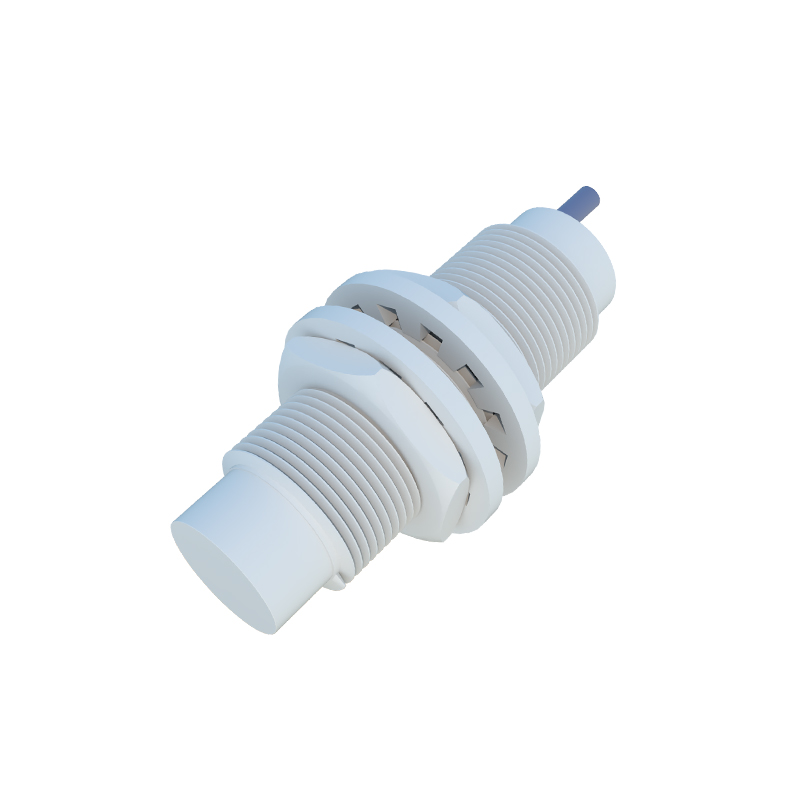
To control a proximity sensor, start with proper power supply connections. Most industrial proximity sensors operate on DC (typically 12-24V DC) or AC (110-230V AC) power. Ensure the voltage matches the sensor's specifications to prevent damage. For DC sensors, polarity is crucial; connect the positive wire to the positive terminal and the negative wire to the negative terminal. AC sensors, however, are not polarity-sensitive.
Wiring configurations vary between two-wire, three-wire, and four-wire sensors. Two-wire sensors are simple, acting like a switch in series with the load, but they may have higher leakage currents. Three-wire sensors are more common, with separate wires for power, ground, and output. The output can be either NPN (sinking) or PNP (sourcing), which determines how the sensor interfaces with controllers like PLCs (Programmable Logic Controllers). NPN outputs switch the negative side, while PNP outputs switch the positive side. Choose based on the control system's requirements. Four-wire sensors often include dual outputs (e.g., one NPN and one PNP) for flexible integration.
Once wired, the sensor's output signal must be processed. When an object enters the sensing range, the sensor triggers an output signal—either a digital on/off state or an analog value proportional to distance, depending on the sensor type. Connect this output to a control device such as a PLC, relay, or microcontroller. For digital sensors, the PLC reads the signal as a binary input to execute programmed logic, like starting a conveyor or activating a robotic arm. Analog sensors require analog input modules to interpret continuous signals for precise positioning or monitoring.
Programming the control system is the next step. In PLCs, use ladder logic or structured text to define actions based on sensor inputs. For example, a simple program might turn on a motor when a sensor detects a part on a production line. Incorporate timers, counters, and interlocks to handle complex sequences. Ensure proper debouncing or filtering in software to avoid false triggers from electrical noise or rapid object movements.
Environmental factors significantly impact control reliability. Install sensors away from sources of interference like motors, transformers, or high-frequency devices to prevent electromagnetic interference. Adjust sensitivity settings, if available, to avoid unintended activation. For inductive sensors, consider the sensing distance and material type; ferrous metals are detected at longer ranges than non-ferrous metals. Capacitive sensors may need calibration for different materials, while photoelectric sensors require clean lenses and alignment.
Maintenance and troubleshooting are vital for sustained operation. Regularly check wiring for loose connections or damage, and clean sensor faces to prevent false readings. Use diagnostic tools like multimeters to verify voltage levels and output signals. If a sensor fails, consult datasheets for error codes or LED indicators—many sensors have built-in diagnostics to simplify fault-finding.
In summary, controlling proximity switches involves selecting the right sensor type, ensuring correct wiring and power, integrating with control systems through appropriate outputs, and programming logic for desired operations. By mastering these steps, engineers can optimize automation processes for improved productivity and safety in industrial settings.