In the realm of industrial automation and control systems, proximity sensors stand as fundamental components for non-contact detection. Among the various configurations available, two-wire proximity sensors have gained widespread adoption due to their simplicity and cost-effectiveness. This article delves into the operational principles, key advantages, common applications, and critical selection criteria for these essential devices.
At its core, a two-wire proximity sensor functions as a switch that detects the presence or absence of a target object without physical contact. Unlike their three-wire or four-wire counterparts, which have separate power, ground, and signal wires, two-wire sensors integrate the switching function directly into the power supply line. They are typically connected in series with the load (such as a PLC input, relay, or indicator lamp) and the power source. When no target is present, a small leakage or quiescent current flows through the sensor, insufficient to activate the load. Upon detecting a valid target within its sensing range, the internal switching element (often a solid-state device) closes, allowing the full operating current to pass through, thereby energizing the connected load.
The primary advantage of this design is its remarkable simplicity in wiring and installation. This reduces material costs, minimizes potential connection errors, and saves valuable space in control panels. Two-wire sensors are inherently compatible with standard AC or DC control circuits, making them versatile for retrofitting into existing systems. Furthermore, they often feature reverse polarity protection and short-circuit protection, enhancing overall system robustness. However, designers must be mindful of the residual current when the sensor is in the "off" state. This current must be lower than the minimum holding current of the load to prevent unintended activation. Additionally, the voltage drop across the sensor when "on" must be considered to ensure the load receives adequate voltage for proper operation.
Two-wire proximity sensors are predominantly available in three sensing technologies: inductive, capacitive, and ultrasonic. Inductive sensors are the most common, used to detect metallic objects. They generate an electromagnetic field; when a metal target enters this field, it causes a change in oscillation amplitude, triggering the switch. Capacitive sensors can detect both metallic and non-metallic materials (like plastics, wood, or liquids) by sensing changes in capacitance caused by the target's dielectric properties. Ultrasonic sensors emit high-frequency sound waves and measure the time for the echo to return, suitable for detecting objects at greater distances or of various materials, but are less common in a simple two-wire format.

The applications for two-wire proximity sensors are vast and span numerous industries. In manufacturing, they are used for part presence verification on conveyor lines, end-of-travel detection for machine tools, and counting operations. In automotive assembly, they monitor the position of robotic arms and confirm component placement. Packaging machinery utilizes them to detect product levels, wrapper positions, and seal integrity. Their simple wiring makes them ideal for applications where space is constrained or where a large number of sensors are required, such as in complex material handling systems.
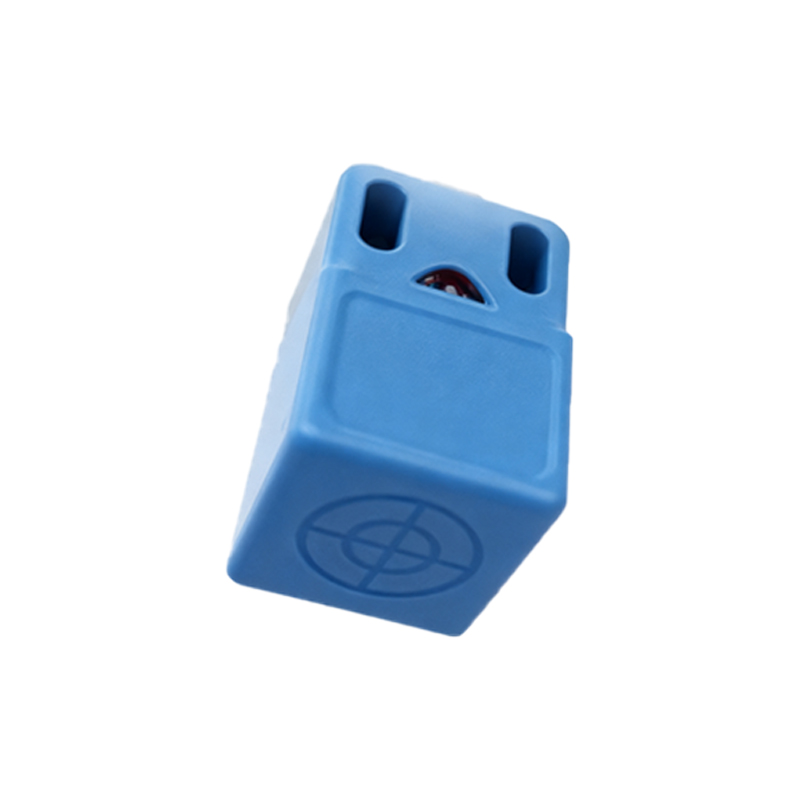
Selecting the appropriate two-wire proximity sensor requires careful consideration of several parameters. First, determine the sensing technology based on the target material. Next, define the required sensing distance, always choosing a sensor with a nominal range slightly greater than the application needs to account for installation tolerances and environmental factors. The housing material is critical; cylindrical metal (e.g., stainless steel) or plastic (e.g., PBT) housings offer different levels of resistance to mechanical stress, chemicals, and temperature extremes. The electrical specifications are paramount: ensure the sensor's operating voltage range (e.g., 10-30V DC, 20-250V AC) matches the supply, and that its maximum switching current and leakage current are compatible with the load. Environmental ratings, such as IP67 for dust and water ingress protection, are essential for harsh conditions. Finally, consider the output type—while two-wire sensors are inherently normally open (NO) or normally closed (NC), confirming this configuration is necessary for correct logic in the control circuit.
In conclusion, two-wire proximity sensors offer a reliable, economical, and straightforward solution for countless detection tasks in industrial automation. Their integration of power and signal into two wires simplifies design and maintenance. By understanding their operating principle, acknowledging their limitations regarding leakage current, and meticulously matching sensor specifications to the application requirements, engineers can effectively leverage these components to build robust, efficient, and cost-effective control systems. As technology advances, modern two-wire sensors continue to offer improved performance, smaller sizes, and enhanced diagnostic capabilities, solidifying their role as indispensable tools in the engineer's arsenal.