In the realm of industrial automation and precision engineering, the demand for accurate angular measurement has never been greater. Multi-point laser angle sensors represent a significant leap forward in this domain, offering unparalleled precision, reliability, and versatility. Unlike traditional single-point sensors, these advanced systems utilize multiple laser beams to measure angles across several points on a target surface simultaneously. This capability is revolutionizing quality control, alignment processes, and robotic guidance in sectors ranging from aerospace and automotive manufacturing to semiconductor fabrication and civil engineering.
The core technology behind a multi-point laser angle sensor typically involves the emission of several coherent laser beams from a single transmitter unit. These beams are projected onto a target, which could be a machine part, a structural component, or a specialized reflective surface. A high-resolution receiver, often equipped with a precision optical sensor like a CCD or CMOS array, detects the reflected beams. By analyzing the precise position of each laser spot on the sensor array, sophisticated onboard algorithms calculate the angular displacement or tilt of the target with extreme accuracy. The use of multiple points provides a robust dataset, allowing the system to compensate for surface irregularities, vibrations, or minor misalignments that could skew a single-point measurement. This results in a more stable and trustworthy reading.
One of the primary advantages of this technology is its application in real-time monitoring and closed-loop control systems. For instance, in the assembly of aircraft wings or automotive chassis, even a minute angular deviation can lead to catastrophic failures or performance issues. Multi-point laser sensors can be integrated into production lines to continuously monitor the alignment of critical components. If a drift beyond the specified tolerance is detected, the system can instantly send a correction signal to an actuator or robotic arm, ensuring that the assembly remains within perfect specification. This not only enhances product quality but also drastically reduces waste and rework.
Furthermore, these sensors are indispensable in the field of robotics, particularly for robotic arms used in precise pick-and-place operations or welding. By providing real-time feedback on the orientation of the end-effector or the workpiece, the sensor enables the robot to adjust its path dynamically, achieving sub-micron level accuracy. This is crucial in electronics manufacturing, where components are becoming increasingly miniaturized.
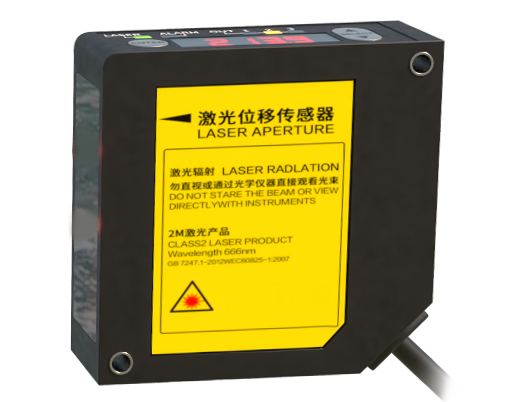
The design and implementation of multi-point laser angle sensors also address several challenges faced by older technologies. They are largely immune to electromagnetic interference, a common issue in factory environments filled with motors and welders. Their non-contact nature means there is no wear and tear from physical probing, leading to lower maintenance costs and higher longevity. Modern iterations are also becoming more compact, energy-efficient, and capable of operating in harsh conditions involving dust, oil, or extreme temperatures, thanks to robust housing and protective windows.

Looking ahead, the integration of multi-point laser angle sensors with Industry 4.0 frameworks and the Industrial Internet of Things (IIoT) is a natural progression. Sensor data can be fed into centralized analytics platforms, enabling predictive maintenance, process optimization, and deeper insights into manufacturing trends. As machine learning algorithms become more advanced, these sensors will not only measure angles but also predict potential misalignments before they occur, ushering in a new era of proactive industrial management.
In conclusion, multi-point laser angle sensors are a cornerstone technology for modern precision industry. By providing simultaneous, high-accuracy angular measurements across multiple points, they deliver the data integrity and reliability necessary for the most demanding applications. Their continued evolution promises to further push the boundaries of what is possible in automation, manufacturing, and beyond, solidifying their role as an essential tool for engineers dedicated to excellence and innovation.
