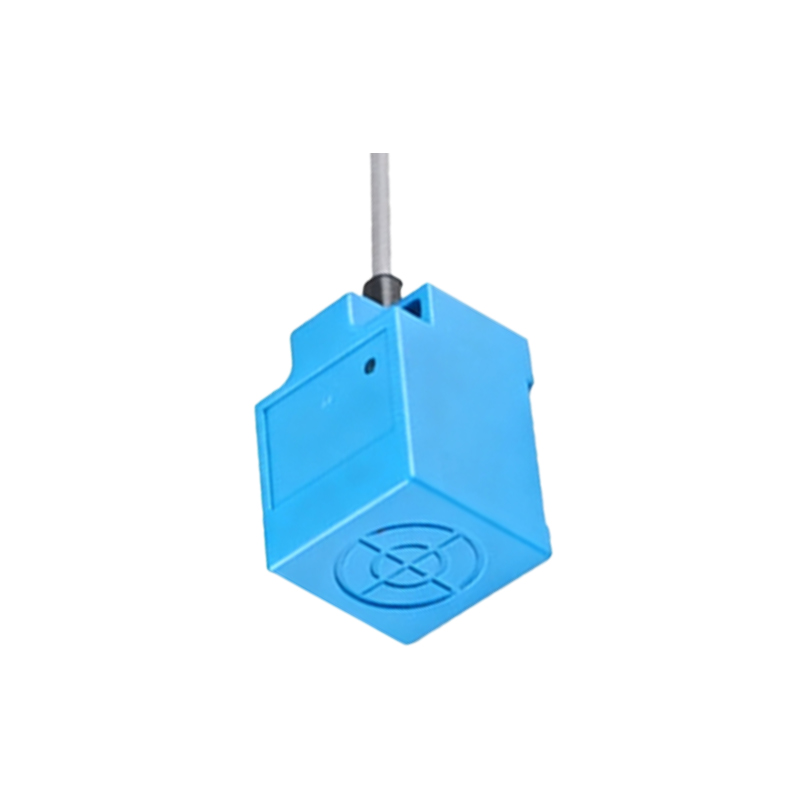
Arc-shaped proximity switch sensors represent a specialized category within industrial automation, designed to detect the presence or absence of objects within a specific curved sensing range. Unlike standard cylindrical or rectangular sensors, their unique crescent or arc-like housing allows for installation in tight or uniquely contoured spaces where traditional sensors might not fit or perform optimally. This design is particularly advantageous in applications involving rotating machinery, curved conveyor tracks, or around the peripheries of circular platforms.
The operational principle of an arc-shaped proximity switch typically relies on electromagnetic, inductive, or capacitive sensing technology. Inductive variants, the most common for metal detection, generate an electromagnetic field from the active face of the sensor. When a metallic target enters this field, it causes a change in oscillation amplitude, which the sensor's circuitry detects, triggering a solid-state output signal. The "arc" shape does not alter this core physics but shapes the detection field to follow a contour, often providing a wider or more directed sensing area along a curve. Key internal components visible in detailed cutaway images include the ferrite core with its wound coil, the oscillator circuit, the trigger circuit, and the output amplifier, all encapsulated within a robust, often PVC or nickel-plated brass housing rated for IP67 or higher against dust and moisture ingress.
Examining technical diagrams and real-world application photos reveals critical specifications. The sensing range, while dependent on the specific model and target material, is a primary consideration. For inductive arc sensors, this range is typically shorter for non-ferrous metals compared to steel. The housing's curvature radius (R) is a defining geometric parameter, and installation notes emphasize maintaining the recommended clearance from metal mounting surfaces to prevent false triggering. Output configurations include NPN (sinking) or PNP (sourcing) transistor outputs, as well as NO (Normally Open) or NC (Normally Closed) contact logic, providing flexibility for integration with PLCs (Programmable Logic Controllers) or other control systems.
The application portfolio for these sensors is extensive. In packaging machinery, they monitor the position of curved cams or the presence of bottles on a circular indexing table. In automotive assembly, they verify the placement of components on rotating welding jigs. In material handling, they act as non-contact limit switches for curved robotic arm paths or detect metallic goods on arched sections of conveyor systems. Their non-contact nature ensures wear-free operation and high reliability over millions of cycles.
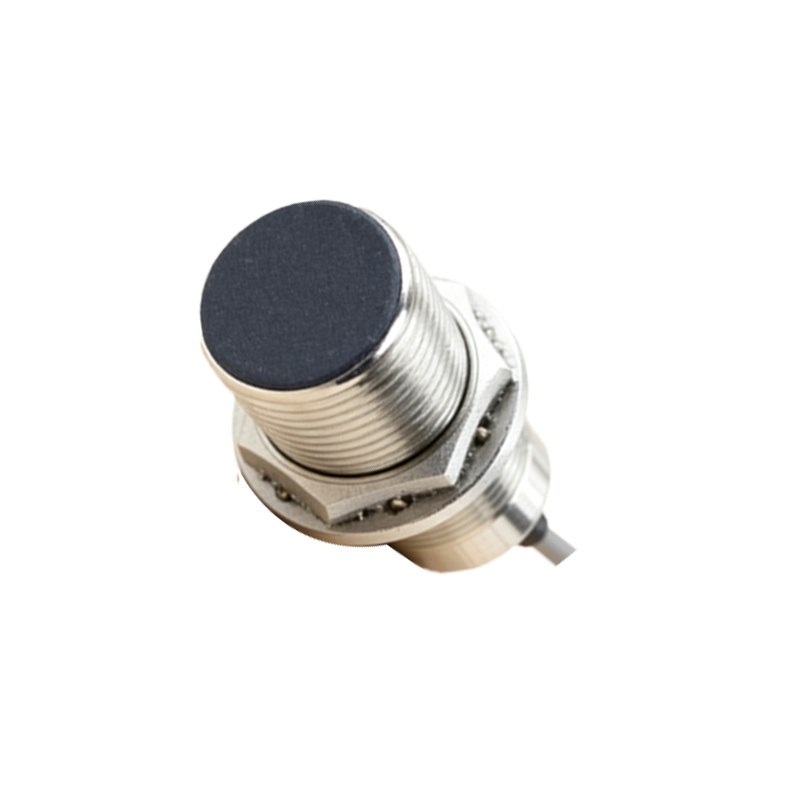
Selecting the correct arc-shaped proximity sensor requires analyzing several factors beyond shape. The target material (steel, aluminum, copper), required sensing distance, operating voltage (commonly 10-30V DC), environmental conditions (temperature, exposure to coolants or chemicals), and required electrical output must all align with the sensor's datasheet specifications. Furthermore, understanding the meaning of LED indicator lights shown in product images—steady on for power, flashing for output activation or fault conditions—is vital for commissioning and troubleshooting.
In conclusion, the arc-shaped proximity switch sensor is a testament to purposeful design in industrial sensing. Its form factor solves spatial challenges while delivering reliable, non-contact object detection. High-quality product photographs, dimensional drawings, and application schematics are indispensable tools for engineers, providing the visual context needed to properly specify, install, and maintain these devices, thereby ensuring seamless operation within complex automated systems.