In the realm of industrial automation and process control, laser sensors have become indispensable tools for precision measurement, detection, and alignment. However, their deployment in high-temperature environments—such as those found in metal processing, glass manufacturing, power generation, and aerospace applications—poses significant engineering challenges. The performance and longevity of a laser sensor are critically dependent on its ability to withstand sustained thermal stress without degradation in accuracy or reliability. This article delves into the core engineering principles, material science, and design strategies that enable laser sensors to operate reliably in extreme temperatures.
The fundamental challenge of high-temperature operation lies in the sensitivity of core components. The laser diode itself, typically the light source, experiences shifts in its wavelength and output power as temperature fluctuates. This phenomenon, known as thermal drift, can introduce substantial measurement errors. Furthermore, the photodetector responsible for receiving the reflected or diffused laser light is also thermally sensitive. Its responsivity and noise characteristics change with temperature, affecting the signal-to-noise ratio and, consequently, the sensor's resolution and detection limits.
To combat these issues, engineers employ a multi-faceted approach beginning with advanced thermal management. Passive cooling systems, utilizing heat sinks made from materials with high thermal conductivity like aluminum or copper alloys, are the first line of defense. For more demanding applications, active cooling systems such as integrated Peltier coolers or even liquid cooling loops may be implemented. These systems actively pump heat away from the sensitive laser and detector assemblies, maintaining them within a specified operational temperature window, often significantly lower than the ambient environment.
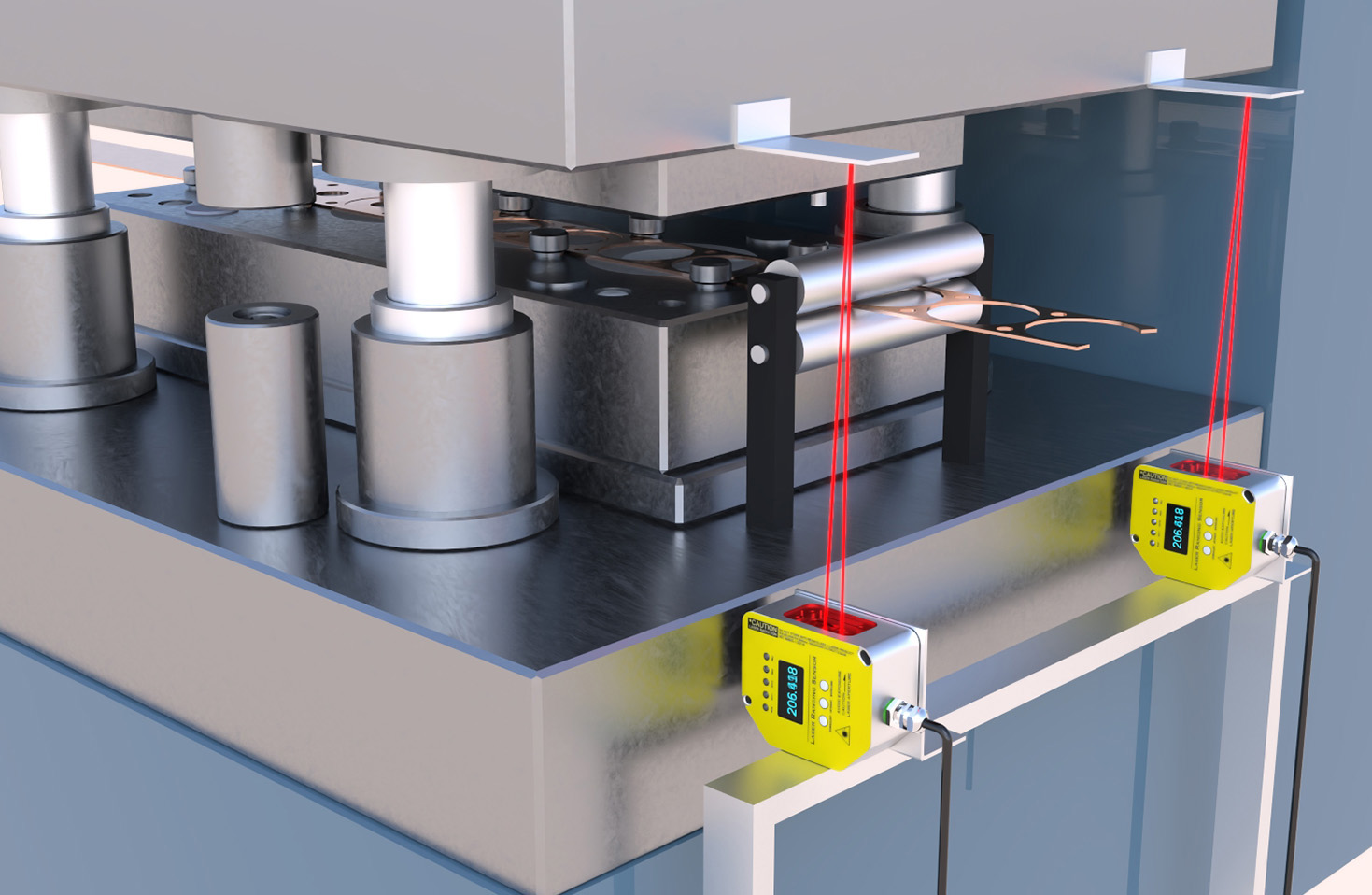
Material selection is paramount. The sensor housing and optical windows must be constructed from materials that not only withstand high temperatures but also maintain structural integrity and optical clarity. Specialty glasses, sapphire, or quartz are commonly used for lenses and protective windows due to their high melting points and low thermal expansion coefficients. For the housing, stainless steel alloys (e.g., 316 stainless) or nickel-based superalloys are preferred for their corrosion resistance and strength at elevated temperatures. These materials prevent warping, sealing failure, and contamination ingress.
At the electronic level, signal conditioning is crucial. Modern high-temperature laser sensors incorporate sophisticated onboard electronics with temperature compensation algorithms. These algorithms, often based on pre-calibrated look-up tables or real-time thermal feedback from embedded sensors, dynamically adjust the sensor's output. They correct for known thermal effects on the laser's wavelength and the detector's response, ensuring that the final measurement data remains accurate regardless of the ambient thermal conditions. This electronic compensation is a software-hardware co-design achievement that is critical for precision in volatile environments.
Another critical design consideration is the protection of the optical path. In high-temperature settings, convection currents and thermal radiation can distort the laser beam. Additionally, airborne contaminants like soot, dust, or molten splash can coat optical surfaces. Engineers address this through purged housings, where a continuous flow of clean, dry air or inert gas (like nitrogen) creates positive pressure inside the sensor, keeping contaminants out. For the most extreme applications, the sensor may be housed in a water-cooled jacket, physically isolating it from the hostile environment while allowing the laser beam to pass through a cooled viewing port.

The applications demanding such robust sensors are numerous. In steel mills, laser sensors monitor the thickness and profile of red-hot slabs. In glass tempering furnaces, they ensure precise positioning and defect detection on moving sheets of glass at temperatures exceeding 600°C. In automotive engine test beds, laser-based displacement sensors measure component deformation under thermal load. Each application dictates a specific set of temperature tolerances, response times, and physical form factors, driving continuous innovation in sensor design.
In conclusion, the development of high-temperature laser sensors is a testament to interdisciplinary engineering. It converges optics, thermodynamics, materials science, and electronics into a single, robust package. While the core principle of laser triangulation or time-of-flight measurement remains constant, the execution for extreme environments requires meticulous attention to thermal management, material resilience, and intelligent signal processing. As industrial processes push toward higher efficiencies and temperatures, the evolution of these sensors will continue, enabling safer, more precise, and more automated operations in the world's most challenging thermal landscapes.