Proximity sensors are indispensable components in modern industrial automation, robotics, and safety systems. Their ability to detect the presence or absence of objects without physical contact has revolutionized numerous applications. However, the performance, reliability, and suitability of a proximity sensor for a specific task are largely determined by its classification according to established industry standards. Understanding these classification standards is crucial for engineers, system integrators, and procurement specialists to ensure optimal system performance, safety, and cost-effectiveness.
The classification of proximity sensors is primarily governed by international standards set by bodies such as the International Electrotechnical Commission (IEC) and the International Organization for Standardization (ISO). These standards provide a common framework for specifying sensor characteristics, ensuring interoperability, and facilitating global trade. One of the most fundamental classifications is based on the sensing technology employed. The main categories include Inductive, Capacitive, Ultrasonic, Photoelectric, and Magnetic sensors.
Inductive proximity sensors, standardized under norms like IEC 60947-5-2, are designed to detect metallic objects. Their classification further details key parameters such as sensing distance, which is standardized as the nominal sensing distance (Sn). Factors like target material (steel, aluminum, copper), target size, and installation conditions (flush or non-flush) critically affect this distance. The standard also defines the operating frequency, temperature range, and protection classes (e.g., IP67, IP69K) for environmental resilience.
Capacitive sensors, also referenced in IEC standards, can detect both metallic and non-metallic materials. Their classification emphasizes sensitivity adjustment capabilities and the influence of the target's dielectric constant. For harsh environments, standards specify robust housing materials and shielding techniques to prevent false triggering from contaminants like dust or moisture.
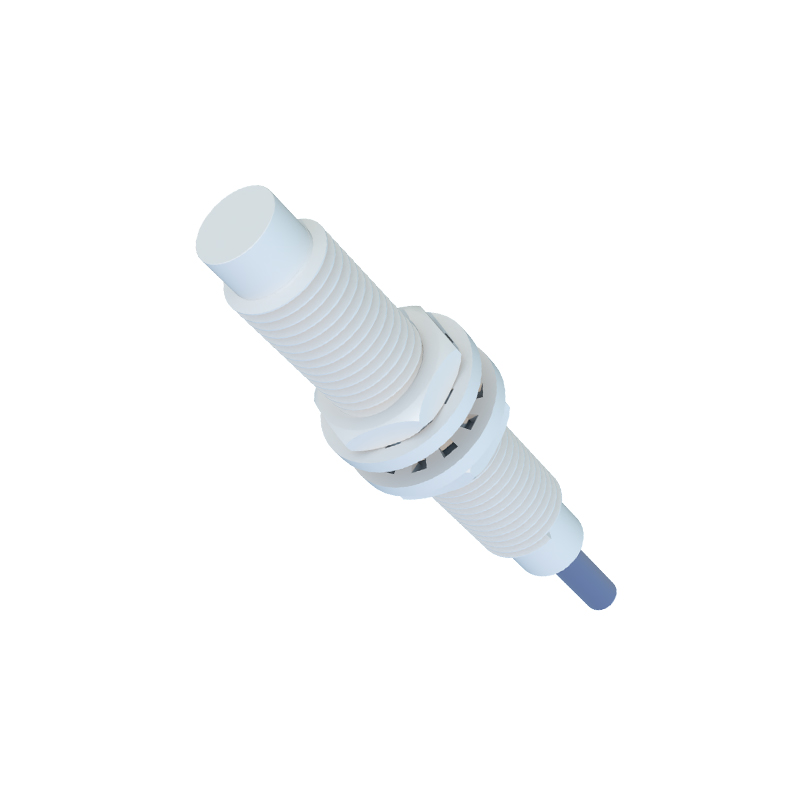
Photoelectric sensors represent a broad category with multiple sub-types: through-beam, retro-reflective, and diffuse reflective. Standards like those from ISO define their performance based on light source (LED, laser), wavelength, beam pattern, and response time. A critical classification parameter is the "light-on/dark-on" operation mode. Furthermore, for safety-related applications, photoelectric sensors must comply with stringent standards like IEC 61496 (Safety of machinery - Electro-sensitive protective equipment), which defines types (e.g., Type 2, Type 4) based on performance and reliability levels for preventing hazardous machine motion.
Ultrasonic sensors are classified by their operating frequency (typically 40-400 kHz), beam angle, and resolution. Standards address their performance in varying environmental conditions, such as temperature fluctuations or airborne particles, which can affect sound wave propagation.
Beyond technology, a critical classification axis is the output configuration. This includes definitions for digital outputs (NPN vs. PNP, sinking vs. sourcing), analog outputs (4-20 mA, 0-10 V), and IO-Link digital communication for Industry 4.0 applications. Standards ensure electrical compatibility with programmable logic controllers (PLCs) and other control systems.
Performance and accuracy classifications are paramount. This includes repeatability (the consistency of detection at the same point), hysteresis (the difference between the switch-on and switch-off points), and response time. For example, a high-speed inductive sensor for counting applications will have a classification denoting a very fast response time (in microseconds), as per relevant IEC performance criteria.
Environmental and durability ratings form another essential layer of classification. The Ingress Protection (IP) code, per IEC 60529, classifies protection against solids and liquids. For industrial settings, IP67 (dust-tight and protected against temporary immersion) is common. Additionally, standards like NEMA 250 or specific industry norms (e.g., for food and beverage or chemical plants) may apply. Operating temperature range, shock, and vibration resistance are also standardized parameters.
Finally, for functional safety applications where sensor failure could lead to a hazardous situation, sensors are classified according to Safety Integrity Levels (SIL) as per IEC 61508 or Performance Levels (PL) as per ISO 13849. These classifications quantify the probability of dangerous failure and dictate design requirements for redundancy, diagnostics, and fault tolerance.
In conclusion, the classification of proximity sensors is a multi-dimensional matrix defined by international standards. It encompasses the core sensing principle, electrical and performance characteristics, environmental robustness, and safety integrity. A deep understanding of these standards empowers professionals to decode sensor datasheets accurately, compare products from different manufacturers on a like-for-like basis, and select the precise sensor that guarantees reliability, efficiency, and safety in any given industrial application. Specifying a sensor by its standardized classifications is not merely a technical exercise; it is a fundamental practice for building resilient and future-proof automated systems.