Laser sensors have become indispensable tools in modern industrial automation, offering unparalleled precision, speed, and reliability. Their ability to perform non-contact measurement and detection makes them ideal for a wide range of challenging environments where traditional sensors fall short. This article explores several concrete, real-world applications of laser sensors, highlighting their transformative impact on efficiency, quality control, and safety.
In the automotive manufacturing sector, laser sensors are critical for ensuring precision and consistency. They are extensively used for robotic guidance in welding and assembly lines. A laser displacement sensor, for instance, can precisely measure the gap and flush between car body panels in real-time, providing feedback to robotic arms for adjustments. This ensures perfect alignment before welding or adhesive application, significantly reducing rework and material waste. Furthermore, laser profile scanners are employed for 100% inline inspection of critical components like engine blocks or transmission housings. They create a detailed 3D profile of the part and compare it against a digital master model, instantly identifying microscopic deviations, cracks, or imperfections that could lead to failure. This level of quality control was unattainable with manual inspection or older technologies.
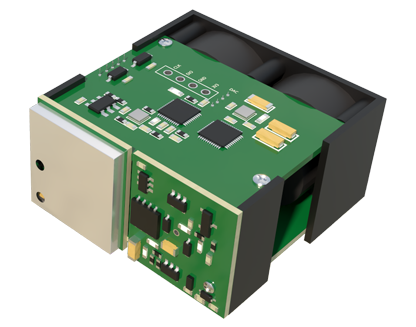
The electronics and semiconductor industry relies heavily on laser sensors for their micron and sub-micron level accuracy. During the production of printed circuit boards (PCBs), laser sensors perform vital tasks such as solder paste inspection (SPI). A laser triangulation sensor scans the deposited solder paste on the PCB pads, measuring its volume, height, and alignment. Any deviation from the specified parameters can cause defects like bridging or insufficient solder, leading to faulty connections. By catching these errors immediately after the stencil printing process, manufacturers can correct the process before valuable components are placed and reflowed, dramatically improving yield rates. Similarly, in chip assembly, laser sensors are used for precise height measurement during die bonding and wire bonding processes, ensuring the delicate silicon die is perfectly positioned.
Logistics and packaging have been revolutionized by laser measurement technology. A prime example is the use of laser dimensioning systems in warehouses and distribution centers. These systems, often consisting of multiple laser scanners, instantly measure the length, width, and height of a parcel on a conveyor belt. This data is used not only for calculating shipping costs accurately but also for optimizing pallet loading and storage space. Another key application is barcode reading. Laser barcode scanners can read codes from various surfaces and angles at high speeds, even if the labels are damaged, dirty, or poorly printed. This ensures seamless tracking and sorting of millions of packages daily, forming the backbone of modern e-commerce fulfillment.
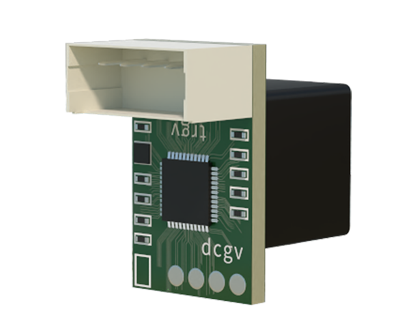
In the realm of material handling and robotics, laser sensors provide the "eyes" for automated systems. Safety laser scanners create invisible protective fields around hazardous machinery or autonomous mobile robots (AMRs). If a person or object breaches this field, the system triggers an immediate stop, preventing accidents. For navigation, AMRs use LiDAR (Light Detection and Ranging) sensors, which emit laser beams to create a real-time, 360-degree map of their surroundings. This allows them to navigate dynamic environments, avoid obstacles, and optimize paths without the need for fixed guides or magnetic tapes, enabling flexible and efficient intralogistics.
The food and beverage industry also benefits from laser sensor technology, particularly for level detection and contamination control. In silos or tanks containing powders, grains, or liquids, laser level sensors provide continuous, non-contact measurement without being affected by dust, foam, or changing material properties. This ensures optimal inventory management and process control. For quality inspection, laser-based systems can detect foreign objects like glass, metal, or plastic fragments within packaged products by analyzing the laser's reflection or transmission pattern, safeguarding consumer health and brand reputation.
These examples merely scratch the surface of laser sensor applications. From monitoring tire tread wear and rail track alignment to guiding agricultural harvesters and performing medical device calibration, their versatility is boundless. The ongoing advancements in laser technology, including the development of faster, more compact, and more intelligent sensors, promise to unlock even more innovative applications. As Industry 4.0 and smart factory concepts continue to evolve, the integration of laser sensors with IoT platforms and AI-driven analytics will further enhance predictive maintenance, process optimization, and overall operational intelligence, solidifying their role as a cornerstone of industrial automation.