In the realm of industrial automation and control systems, proximity detection is a fundamental function. Two key components often discussed in this context are proximity sensors and proximity switches. While the terms are sometimes used interchangeably in casual conversation, they represent distinct devices with unique operational principles, applications, and output characteristics. A clear understanding of their differences is crucial for engineers and technicians to select the appropriate component for a given task, ensuring optimal system performance, reliability, and cost-efficiency.
At its core, a proximity sensor is a device that detects the presence or absence of an object within its sensing range without physical contact. It converts this detection into an electrical signal. The output from a proximity sensor is typically analog or a digital signal that can convey more information than a simple on/off state, such as distance, position, or even material composition in some advanced models. Common technologies employed in proximity sensors include inductive, capacitive, ultrasonic, and photoelectric principles. Inductive sensors detect metallic objects, capacitive sensors can detect both metallic and non-metallic materials, ultrasonic sensors use sound waves for detection over longer ranges, and photoelectric sensors utilize light beams. The output signal from these sensors, often a voltage or current proportional to the distance (e.g., 0-10V DC, 4-20mA), is fed into a programmable logic controller (PLC) or other data acquisition system for processing. This allows for precise monitoring and control, such as determining the exact position of an object on a conveyor or measuring the thickness of a material.
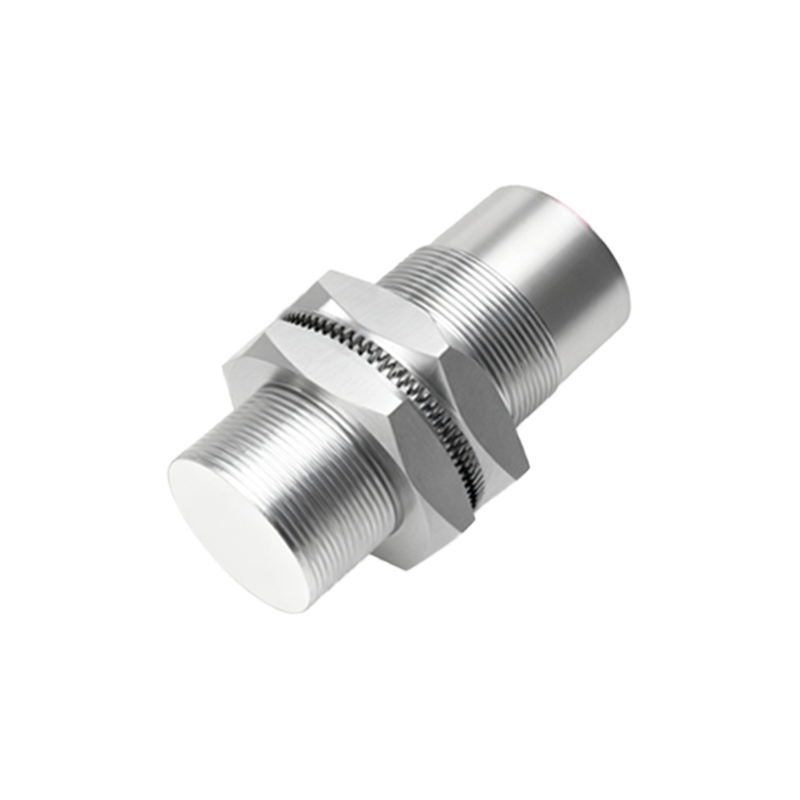
In contrast, a proximity switch is essentially a binary device. It is a type of proximity sensor configured specifically to act as a switch. Its primary function is to detect the presence of an object within a predefined sensing distance and provide a discrete on/off output signal. When an object enters the detection zone, the switch changes state—typically from open to closed (NO) or from closed to open (NC)—much like a mechanical limit switch, but without any physical contact. The output is a clean, digital signal, most commonly a solid-state relay (SSR) output or a transistor output (NPN or PNP sourcing/sinking). This signal is ideal for direct interfacing with control circuits to start or stop a process, actuate a solenoid, trigger an alarm, or count objects. Proximity switches are predominantly based on inductive or capacitive technologies for robust industrial environments. They are characterized by their simple "detect or not detect" functionality, fixed sensing range, and high-speed switching capability.
The key distinction lies in the nature and application of the output. A proximity sensor provides a variable output that can be interpreted for continuous measurement, offering granular data about the target. A proximity switch provides a definitive, two-state command signal used for decision-making in a control loop. For instance, a capacitive proximity sensor might be used to monitor the level of a liquid in a tank by providing a continuous analog signal corresponding to the distance from the sensor to the liquid surface. A proximity switch, on the other hand, would be installed at a specific point in the tank to trigger a pump when the level falls below a certain point, sending a simple "on" signal.
Selection criteria depend heavily on the application requirements. If the task involves precise positioning, continuous monitoring, or measuring variations, a proximity sensor with an analog output is the appropriate choice. Its flexibility comes with a generally higher cost and the need for more complex signal interpretation. For applications requiring simple presence detection, object counting, position verification, or end-of-travel limits, a proximity switch is perfectly suited. It offers robustness, simplicity, ease of installation, direct compatibility with digital inputs, and often a lower cost. Environmental factors such as target material, required sensing distance, operating temperature, and the presence of contaminants like dust or oil also influence the choice between inductive, capacitive, or other sensing technologies within each category.
In summary, while all proximity switches are derived from proximity sensing technology, not all proximity sensors function as switches. The proximity sensor is the broader category encompassing devices that sense and provide information, whereas the proximity switch is a specific application-oriented subset designed to provide a clean switching action. Recognizing this difference—between providing information (sensor) and executing a direct control action (switch)—enables professionals in electrical engineering and industrial automation to design more efficient, intelligent, and reliable control systems. Proper selection minimizes integration issues and maximizes the longevity and effectiveness of the automation solution.