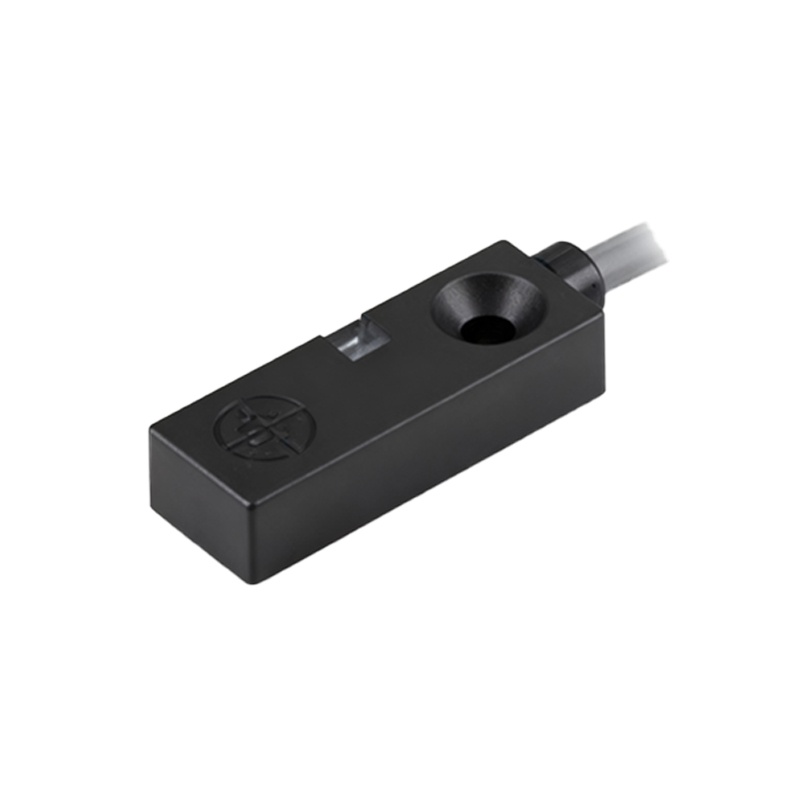
In the realm of industrial automation and electrical engineering, proximity sensors are indispensable components for non-contact detection and measurement. Their ability to sense the presence or absence of an object without physical contact ensures reliability, longevity, and precision in countless applications, from assembly lines to safety systems. Understanding the core measurement methods employed by these sensors is crucial for selecting the right technology for a given task. This guide delves into the fundamental operating principles and measurement techniques of the most common proximity sensor types.
The primary function of a proximity sensor is to detect a target object within its sensing range and convert this detection into an electrical signal. The measurement method fundamentally depends on the physical principle the sensor utilizes. The most prevalent technologies are inductive, capacitive, ultrasonic, and photoelectric sensors.
Inductive Proximity Sensors are the workhorses for detecting metallic objects. Their operation is based on the principle of electromagnetic induction. The sensor contains a coil that generates a high-frequency oscillating electromagnetic field. When a conductive metal target enters this field, eddy currents are induced on the target's surface. These eddy currents draw energy from the sensor's oscillator, causing a change in the oscillation amplitude. An internal circuit measures this change and triggers a solid-state switch output. The key measurement here is the dampening of the oscillation amplitude. The sensing distance is highly dependent on the target material's conductivity and permeability; ferrous metals like steel are typically detected at greater distances than non-ferrous metals like aluminum or copper. Factors such as target size, shape, and the presence of other metals can influence the effective sensing range.
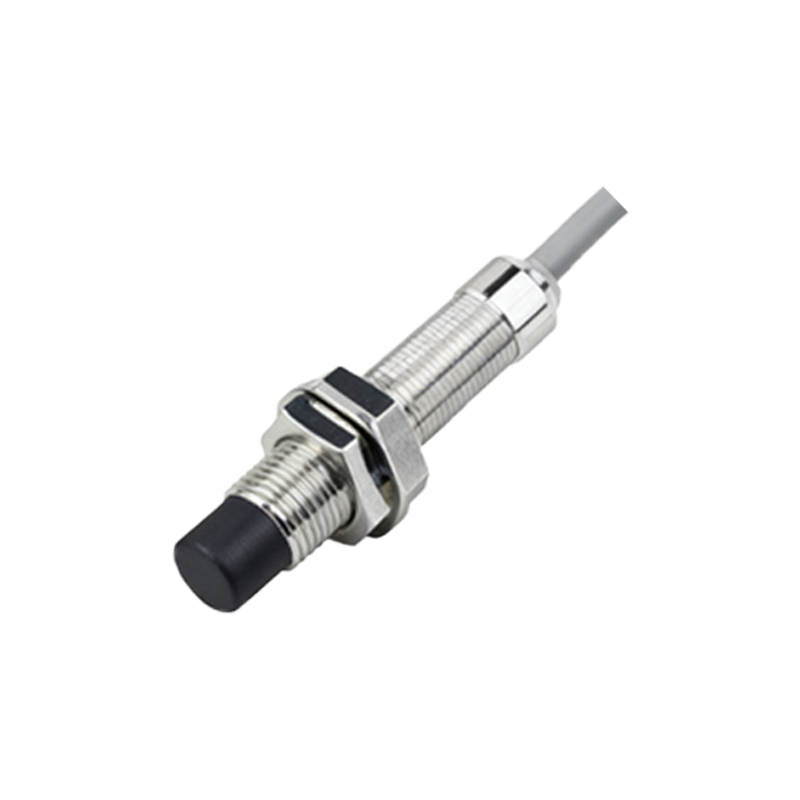
Capacitive Proximity Sensors can detect both metallic and non-metallic materials, including liquids, plastics, wood, and granules. They operate by generating an electrostatic field. The sensor acts as one plate of a capacitor, with the target object acting as the other plate. As the target approaches, the capacitance between the sensor face and the target increases. An internal oscillator is designed to start oscillating only when this capacitance reaches a specific threshold. The sensor measures the change in capacitance to determine the presence of the target. This makes them ideal for applications like level detection in tanks (liquid or solid), material handling, and detecting non-metallic objects. However, they can be susceptible to false triggers from environmental factors like humidity or contaminants on the sensor face.
Ultrasonic Proximity Sensors measure distance by employing sound waves beyond the human hearing range. They consist of a transducer that emits high-frequency ultrasonic pulses and then listens for the echo reflected from a target object. The sensor's electronics calculate the time interval between the emitted pulse and the received echo. Since the speed of sound in air is known, the distance to the target is precisely determined using the formula: Distance = (Speed of Sound × Time of Flight) / 2. This time-of-flight (ToF) measurement allows these sensors to provide analog or digital outputs corresponding to specific distances. They are excellent for detecting objects of virtually any material, shape, or color, and are widely used in distance measurement, object profiling, and level sensing in challenging environments. Temperature variations can affect the speed of sound and must often be compensated for.
Photoelectric Sensors use light beams to detect objects. They comprise a light emitter (usually an LED) and a receiver. The measurement method varies with the sensing mode. In the through-beam mode, the emitter and receiver are separate units. An object is detected when it interrupts the light beam. This method offers the longest sensing range and high reliability. In the retro-reflective mode, a single housing contains both emitter and receiver, and a reflector bounces the light back. Detection occurs when the beam is broken. The diffuse (proximity) mode also uses a single unit, but it detects light reflected directly off the target itself. Here, the sensor measures the intensity of the reflected light. The target's color, reflectivity, surface texture, and size directly impact the effective sensing distance. Advanced versions use background suppression or fixed-field teaching to ignore objects beyond a set distance.
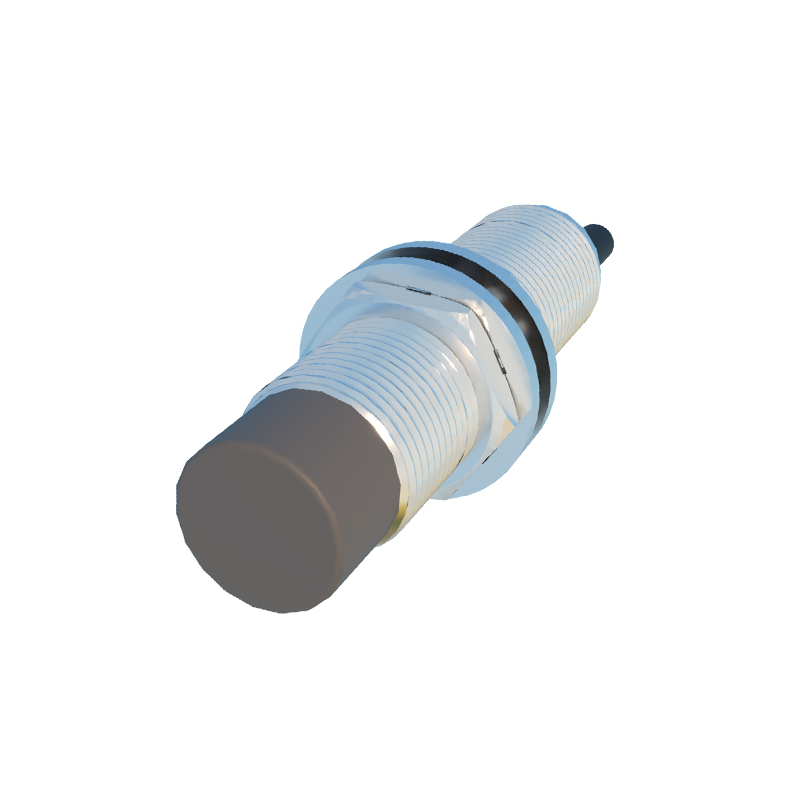
Selecting the appropriate measurement method involves a careful analysis of the application requirements. Key parameters include: target material, required sensing distance, environmental conditions (dust, moisture, temperature), required output type (discrete ON/OFF or analog), response speed, and installation constraints. For instance, an inductive sensor is perfect for counting steel gears, a capacitive sensor for detecting a plastic bottle cap, an ultrasonic sensor for measuring the fill level of a gravel bin, and a photoelectric through-beam for high-speed registration mark detection on a packaging machine.
In conclusion, the efficacy of a proximity sensor in any measurement task hinges on a deep understanding of its underlying physical principle. Whether relying on electromagnetic field disturbance, capacitance change, ultrasonic echo timing, or