In the realm of industrial automation and electronic design, micro proximity sensors are indispensable components. Understanding their specific terminology is crucial for proper selection, integration, and troubleshooting. This article provides a clear explanation of key terms associated with these compact sensing devices.
A micro proximity sensor is a non-contact sensor designed to detect the presence or absence of an object within a small sensing range, typically from a few millimeters up to about 30mm. Their compact size allows for installation in space-constrained applications. The core operating principle involves generating an electromagnetic field, acoustic beam, or light beam and detecting changes in the field or return signal caused by a target object.

Key terminology is categorized by operating principle, performance characteristics, and electrical specifications.
Operating Principle Terms:
Inductive: These sensors detect metallic objects (ferrous and non-ferrous). They generate an oscillating electromagnetic field from a coil. When a metal target enters this field, it induces eddy currents, causing a change in oscillation amplitude that is detected by the sensor's circuitry.
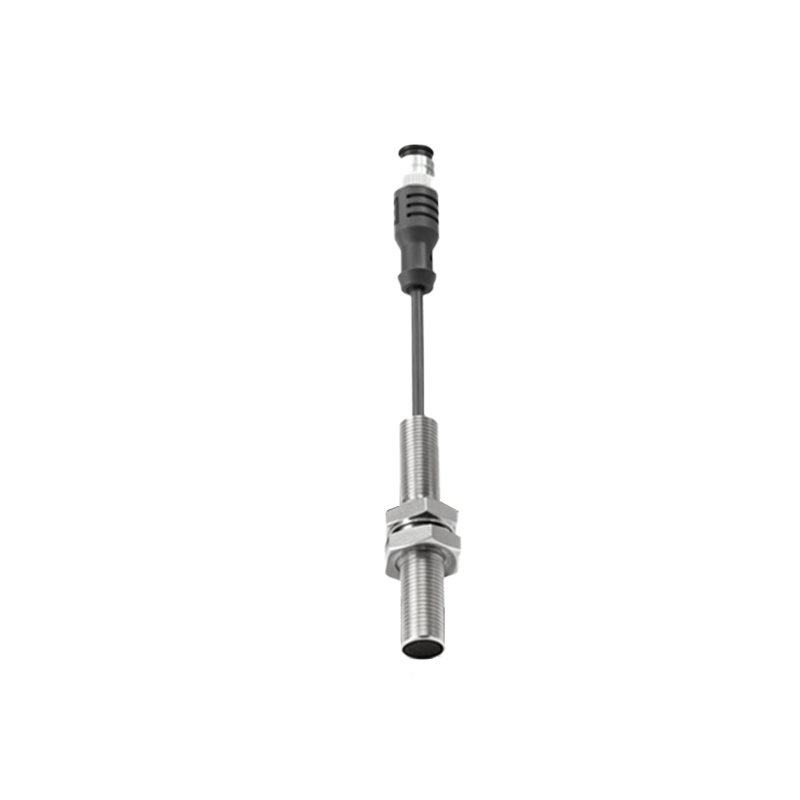
Capacitive: Capable of detecting both metallic and non-metallic materials (liquids, plastics, wood). They function by generating an electrostatic field. The presence of any material with a different dielectric constant than air alters the capacitance of the field, triggering detection.
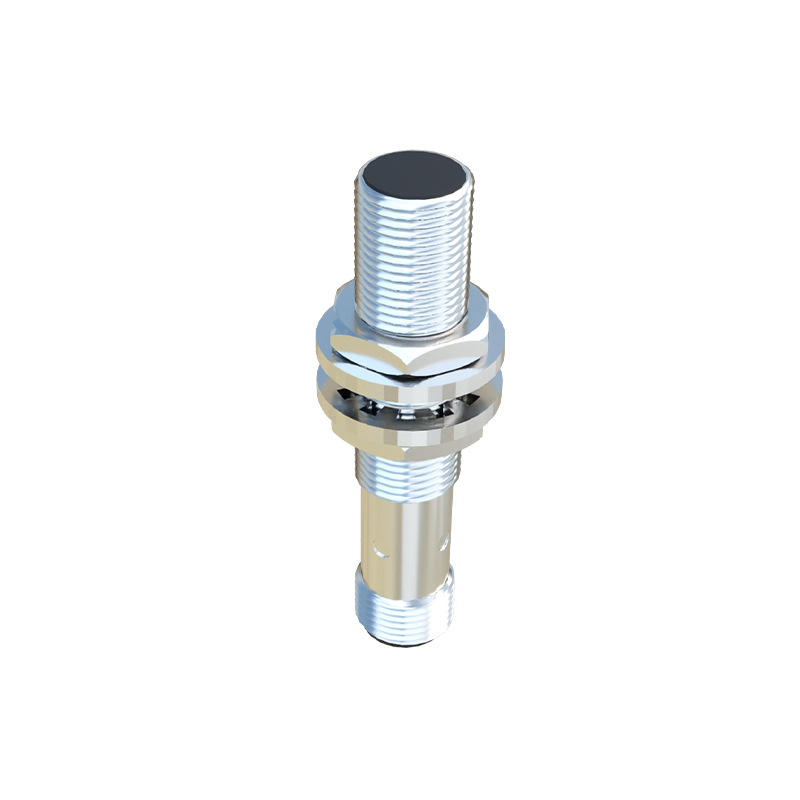
Photoelectric: Utilize a light emitter (usually LED) and a receiver. They detect objects by interpreting changes in the received light signal. Sub-types include:
Through-beam (Opposed): Consists of separate emitter and receiver units. Detection occurs when the target object interrupts the light beam.
Retro-reflective: Uses a single unit housing both emitter and receiver, along with a reflector. Detection occurs when the target breaks the beam reflected back from the reflector.
Diffuse (Proximity mode): The emitter and receiver are in the same housing. Detection relies on light reflecting off the target object itself.
Ultrasonic: Operate by emitting high-frequency sound waves and measuring the time for the echo to return. They can detect a wide variety of objects regardless of material, color, or transparency, and can often provide distance information.
Critical Performance Specifications:
Sensing Distance (Sn): The nominal operating distance at which a standard target is reliably detected under specified conditions. It is not the maximum possible distance.
Hysteresis (H): The difference between the switch-on point (as the target approaches) and the switch-off point (as the target recedes). Hysteresis prevents output chatter when a target is positioned at the exact sensing limit.
Repeatability: The ability of the sensor to consistently detect a target at the same distance under unchanged conditions. It is typically a small percentage of the sensing distance.
Response Time: The time delay between the sensing event (target entering/leaving) and the change in the output state. Includes both on-delay and off-delay.
Switching Frequency: The maximum number of on/off cycles the sensor can perform per second (Hz).
Standard Target: A defined object (usually a square of specified material and dimensions) used to measure the sensor's rated sensing distance under test conditions.
Electrical and Construction Terms:
Output Type:
PNP (Sourcing): The output switch connects the load to the positive supply voltage when active.
NPN (Sinking): The output switch connects the load to ground (0V) when active.
Analog Output: Provides a continuous signal (e.g., 0-10V, 4-20mA) proportional to the distance to the target.
IO-Link: A digital point-to-point communication protocol that enables detailed parameter setting, diagnostics, and process data exchange.
Normally Open (NO) / Normally Closed (NC): Defines the output state when no target is present. NO is off (open circuit), NC is on (closed circuit).
Short-Circuit Protection: A built-in feature that protects the sensor's output circuit from damage if the output is accidentally shorted to supply or ground.
Reverse Polarity Protection: Protects the sensor from damage if the power supply wires are connected incorrectly.
IP Rating (Ingress Protection): A two-digit code (e.g., IP67) defining the level of protection against solid objects (first digit) and liquids (second digit). Critical for determining suitability for harsh environments.
Shielded (Flush-mountable) vs. Unshielded (Non-flush): Inductive sensors are classified as such. Shielded sensors