In the realm of indoor air quality monitoring and industrial safety, the detection of formaldehyde (HCHO) has become increasingly critical. Traditional electrochemical and semiconductor sensors, while useful, often face challenges with selectivity, long-term stability, and cross-sensitivity to other volatile organic compounds (VOCs). This is where laser-based formaldehyde sensors emerge as a superior technological solution, offering unparalleled precision and reliability. This article delves into the operating principles, key applications, and distinct advantages of these advanced sensing devices.
At the core of a laser formaldehyde sensor is the principle of Tunable Diode Laser Absorption Spectroscopy (TDLAS). This technique exploits the unique absorption characteristics of formaldehyde molecules when exposed to specific wavelengths of infrared light. Formaldehyde molecules have distinct vibrational-rotational absorption lines in the mid-infrared spectrum, typically around the 3.6 μm wavelength region. The sensor employs a tunable diode laser, whose wavelength can be precisely scanned over a narrow range encompassing one of these absorption lines. As the laser beam passes through a gas sample cell containing ambient air, formaldehyde molecules absorb light at their specific resonant wavelength. A photodetector on the opposite side measures the intensity of the transmitted light. By analyzing the degree of light attenuation at the precise absorption wavelength—a method known as wavelength modulation spectroscopy (WMS)—the sensor can calculate the concentration of formaldehyde with high accuracy. The system often incorporates reference cells or advanced algorithms to compensate for background interference, ensuring the signal is specific to formaldehyde.
The architecture of a typical laser formaldehyde sensor comprises several key components. The tunable diode laser source is the heart, often a quantum cascade laser (QCL) or an interband cascade laser (ICL) capable of emitting in the crucial mid-IR range. The optical path includes a sample gas cell, which may be a multi-pass cell to increase the absorption path length for enhanced sensitivity. High-quality photodetectors, such as mercury cadmium telluride (MCT) detectors, convert the optical signal into an electrical one. Sophisticated electronics then process this signal, applying modulation techniques and digital signal processing (DSP) to extract the concentration data from the noise. The entire system is designed for robustness, often housed in a compact, industrial-grade enclosure.
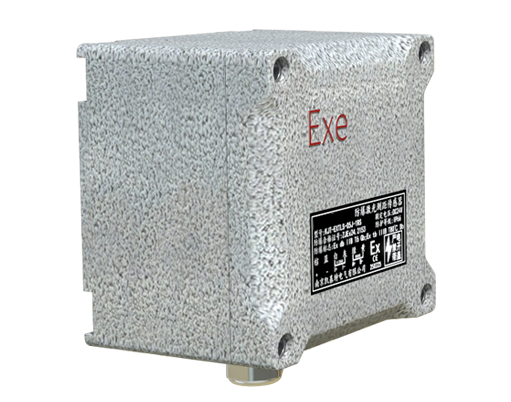
The applications for laser-based formaldehyde sensors are vast and growing. In indoor air quality (IAQ) monitoring, they are deployed in smart buildings, schools, hospitals, and homes to ensure compliance with health standards, as formaldehyde is a common off-gas from building materials and furniture. In industrial settings, they are essential for worker safety in industries involving resin production, chemical manufacturing, and textile processing. Furthermore, they play a vital role in environmental monitoring stations and research laboratories for atmospheric studies. Their high speed and accuracy also make them suitable for process control and leak detection in industrial plants, providing real-time data for automated safety systems.

The advantages of laser technology over conventional sensor types are significant. Firstly, they offer exceptional selectivity, as the laser targets only the specific absorption line of formaldehyde, minimizing false positives from other gases like ethanol, toluene, or water vapor. Secondly, they provide superior accuracy and a wide dynamic range, capable of detecting concentrations from parts-per-billion (ppb) to parts-per-million (ppm) levels. Thirdly, they exhibit excellent long-term stability with minimal drift, reducing the need for frequent calibration—a common drawback of electrochemical sensors. They have a fast response time, delivering real-time readings crucial for safety applications. Lastly, as they are optical devices with no consumable parts (unlike some electrochemical sensors), they generally require lower maintenance and have a longer operational lifespan.
Despite their higher initial cost compared to simpler sensors, the total cost of ownership for laser-based formaldehyde sensors can be favorable due to their durability, reliability, and minimal maintenance needs. Ongoing advancements in laser diode technology and photonic integration are steadily reducing the size and cost of these systems, making them more accessible for broader deployment. As regulations on formaldehyde exposure tighten globally and the demand for precise air quality data increases, laser-based formaldehyde sensors are poised to become the gold standard for critical monitoring applications, safeguarding health and enabling smarter environmental management.