Inductive proximity sensors are non-contact electronic devices designed to detect the presence of metallic objects without physical contact. Their operation is rooted in fundamental principles of electromagnetism, offering reliability and durability in industrial environments. Understanding their working principle is key to selecting and applying them effectively.
At the heart of an inductive proximity sensor lies a coil of wire wound around a ferrite core, which together form an oscillator circuit. When powered, this circuit generates a high-frequency alternating electromagnetic field that radiates from the active face of the sensor. This field is typically confined to a short range, defining the sensor's nominal sensing distance.
In the absence of a target, the oscillator operates at a constant amplitude. The crucial interaction occurs when a conductive metal object enters this oscillating electromagnetic field. According to Faraday's law of electromagnetic induction, the changing magnetic field induces circulating currents on the surface of the conductive target. These currents are known as "eddy currents."
The generation of these eddy currents represents an energy transfer from the sensor's coil to the target object. This energy loss manifests as a load on the oscillator circuit. As the target moves closer, more eddy currents are induced, drawing more energy from the oscillator. This increased loading causes a measurable decrease in the amplitude of the oscillation.
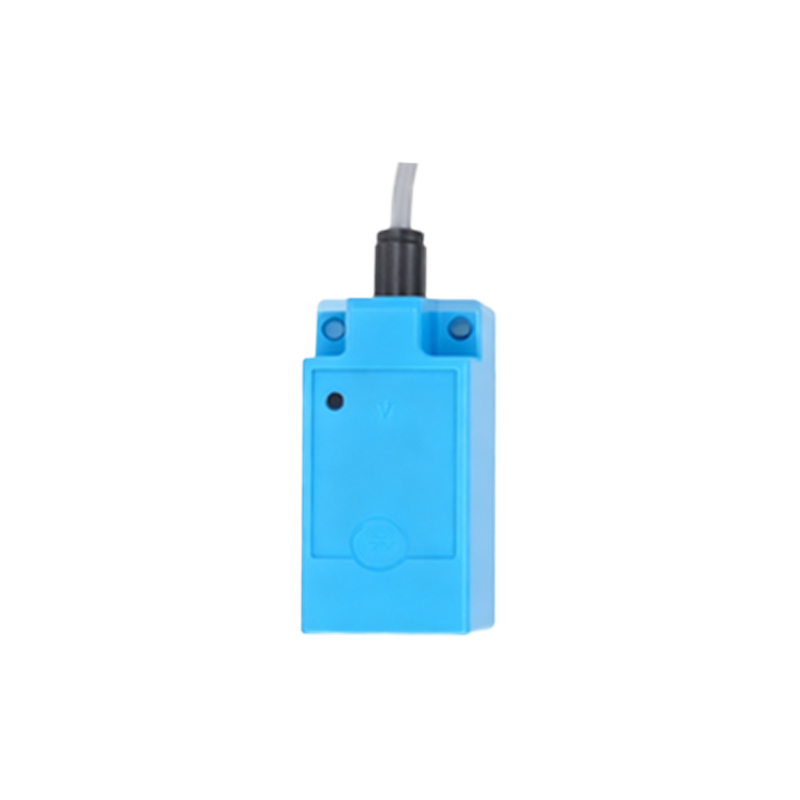
The sensor's internal electronics continuously monitor this oscillation amplitude. A dedicated evaluation circuit, often a Schmitt trigger, is set to detect when the amplitude drop reaches a specific threshold corresponding to the nominal sensing distance. Once this threshold is crossed, the circuit triggers a change in the sensor's output state. For a normally open (NO) sensor, this means switching the output signal on (e.g., from 0V to 24V DC). When the target moves away, the oscillation amplitude recovers, and the output switches back to its original state.
Several factors influence the performance and sensing range. The most significant is the target material's properties. Ferrous metals like iron and steel, being both conductive and magnetic, produce the strongest eddy current effect and thus have the longest sensing distance. Non-ferrous metals like aluminum, brass, or copper are conductive but non-magnetic, resulting in a shorter effective range, often requiring a correction factor. The target's size and shape also matter; ideally, the target should be at least as large as the sensor's sensing face and of a standard thickness to ensure consistent eddy current formation.
Key characteristics define these sensors. The "rated operating distance" or "Sn" is the nominal sensing range under standardized conditions. A crucial specification is the "hysteresis," which is the difference between the switch-on point as the target approaches and the switch-off point as it recedes. This hysteresis prevents output chatter when a target is positioned at the exact sensing limit, ensuring a clean, stable signal. Modern sensors are also shielded, meaning their electromagnetic field is concentrated at the front, allowing for flush mounting in metal without false triggering. Unshielded types have a longer range but require non-metallic surroundings.
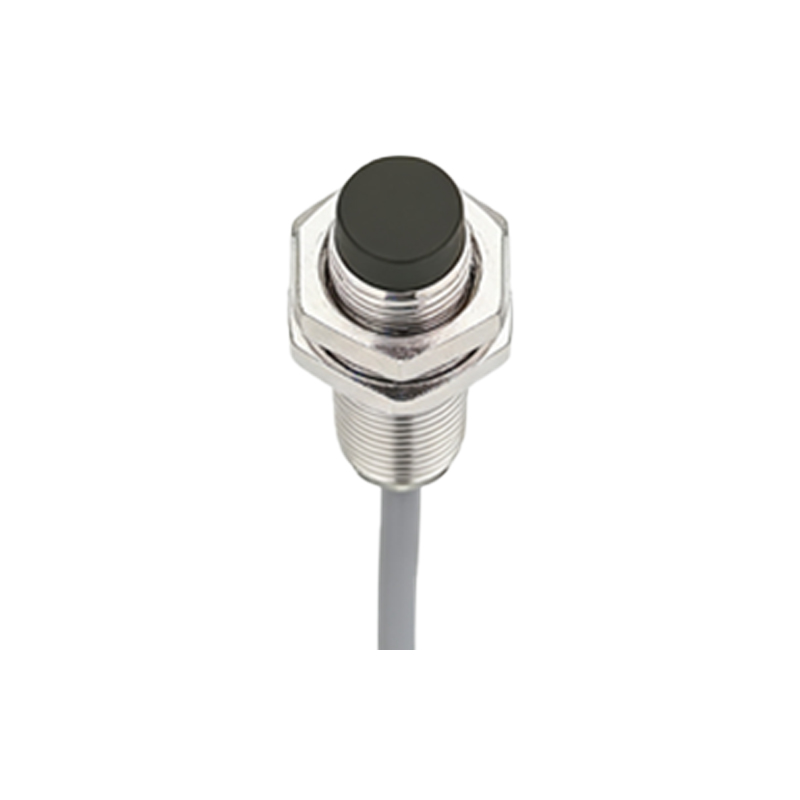
The advantages of inductive sensors are numerous. Their non-contact nature eliminates mechanical wear and tear, granting an exceptionally long operational life. They are immune to contaminants like dust, oil, and moisture, making them ideal for harsh factory floors. They offer high switching speeds, capable of detecting thousands of targets per minute. Furthermore, they provide precise and repeatable detection, which is critical for positioning and counting applications.
These features lead to widespread use across automation and manufacturing. Common applications include position verification of machine parts, end-of-travel detection on cylinders, high-speed counting of metal components on conveyors, and monitoring rotation by detecting gear teeth or bolt heads. They serve as the fundamental "eyes" of machinery for detecting the presence, absence, or position of metal objects in systems ranging from simple assembly lines to complex robotic cells.
In summary, the inductive proximity sensor functions by generating an electromagnetic field, detecting the eddy currents induced in a metal target, and converting the resulting energy loss into a clear electrical signal. This robust and straightforward principle makes it an indispensable, maintenance-free workhorse in industrial automation, providing reliable detection where physical contact is undesirable or impractical.