Laser sensors have become indispensable tools across various industrial sectors due to their precision, speed, and reliability. Understanding how to effectively deploy these devices is crucial for optimizing performance in automation, quality control, and safety systems. This guide outlines key steps and best practices for using laser sensors in industrial environments.
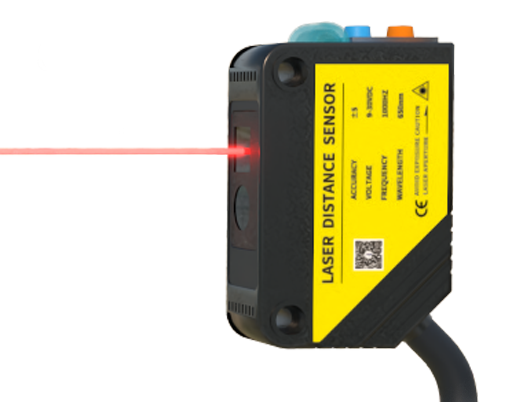
First, selecting the appropriate laser sensor is foundational. Consider factors such as measurement range, resolution, response time, and environmental conditions. For instance, in high-temperature settings, sensors with robust housings and thermal stability are essential. Common types include triangulation sensors for distance measurement, time-of-flight sensors for long-range applications, and confocal sensors for high-resolution surface inspection. Always refer to manufacturer specifications to match the sensor to your specific task.
Installation requires careful attention to alignment and mounting. Ensure the sensor is securely fixed to minimize vibrations, which can affect accuracy. The laser beam should be perpendicular to the target surface to avoid skewed readings. For reflective or dark surfaces, adjust the sensor’s sensitivity or use models with background suppression features. Proper wiring and connection to control systems, such as PLCs (Programmable Logic Controllers), are vital—follow industry standards like IP ratings for dust and water resistance to ensure durability.
Calibration is a critical step post-installation. Use certified calibration tools to set reference points, accounting for ambient light and temperature variations. Many modern laser sensors offer auto-calibration functions, but manual verification is recommended periodically. Establish a maintenance schedule to clean lenses and check for wear, as contamination can lead to signal degradation.

In operation, integrate laser sensors with data acquisition systems for real-time monitoring. Applications include position detection in assembly lines, thickness measurement in manufacturing, and obstacle detection in automated guided vehicles (AGVs). Implement error-handling protocols, such as signal filtering algorithms, to reduce noise and enhance reliability. Safety precautions are paramount: always use laser sensors compliant with international standards (e.g., IEC 60825) to prevent eye damage, and install protective housings in hazardous areas.
Troubleshooting common issues involves checking power supply stability, verifying optical path obstructions, and updating firmware. Document performance metrics to identify trends and preempt failures. As technology advances, leveraging smart sensors with IoT capabilities can enable predictive maintenance and efficiency gains.
In summary, successful use of laser sensors hinges on thoughtful selection, precise installation, regular calibration, and adherence to safety norms. By mastering these aspects, industries can harness laser technology to boost productivity and accuracy in demanding applications.
