In the world of industrial automation and smart systems, proximity sensors stand as silent sentinels, enabling machines to perceive their environment without physical contact. Distance detection, a core function of these devices, is fundamental to countless applications, from robotic assembly lines to consumer electronics. This article delves into the operational principles, key technologies, and practical considerations for utilizing proximity sensors in precise distance measurement.
At its core, a proximity sensor detects the presence or absence of an object within a specified range and, crucially for many models, determines the distance to that object. This non-contact operation eliminates mechanical wear and tear, allowing for high-speed, reliable detection. The working principle varies significantly based on the underlying technology. The most common types used for distance detection are inductive, capacitive, ultrasonic, and photoelectric sensors.
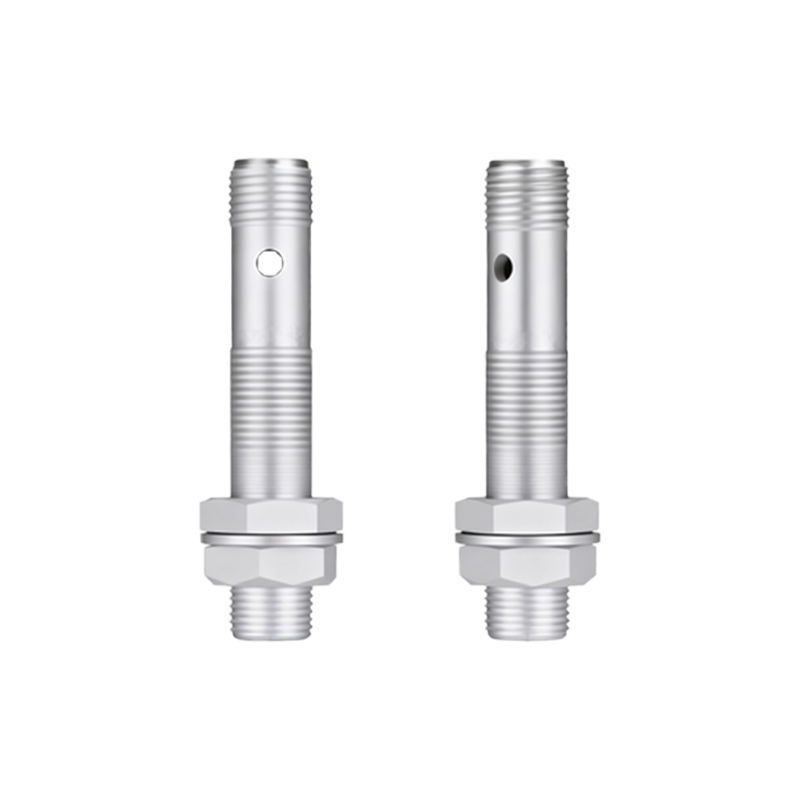
Inductive proximity sensors are the workhorses of metal detection. They generate an electromagnetic field. When a metallic object enters this field, it induces eddy currents within the object, which in turn affect the sensor's oscillation amplitude. The sensor's electronics measure this change. While primarily used for presence detection, specialized analog inductive sensors provide a voltage or current output proportional to the distance to the target, offering precise short-range measurement, typically up to 70mm.
Capacitive sensors operate on a different principle, detecting changes in capacitance. They generate an electrostatic field. Any object, metallic or non-metallic (like plastic, wood, or liquid), that enters this field alters the capacitance. This change is measured to determine both presence and distance. Analog capacitive sensors are excellent for detecting material levels, thickness, or the position of non-metallic objects over short distances.
For longer-range and more versatile distance measurement, ultrasonic sensors are often the tool of choice. These sensors emit high-frequency sound waves (ultrasound) and calculate distance by measuring the time delay between the emitted pulse and the received echo. This time-of-flight (ToF) principle allows for accurate detection of objects regardless of color, transparency, or material (though absorbent surfaces can be challenging). They are ideal for applications like tank level monitoring, collision avoidance in AGVs (Automated Guided Vehicles), and parking assistance systems, with ranges easily extending to several meters.
Photoelectric sensors, particularly those using laser triangulation or time-of-flight methods, offer the highest precision for distance measurement. A laser triangulation sensor projects a laser spot onto the target. The reflected light is focused onto a position-sensitive detector (like a CCD or PSD). The position of the light spot on this detector shifts depending on the target's distance, allowing for micron-level resolution at close ranges. Laser ToF sensors, similar to ultrasonic but with light, are used for longer-range, high-speed applications like warehouse logistics and volume measurement.
Selecting the right sensor for a distance detection task requires careful analysis of several parameters. The sensing range is paramount—ensure the sensor's specified range accommodates the minimum and maximum distances in your application. Repeatability and linearity are critical for precision; they define how consistently and accurately the output signal corresponds to distance. Environmental factors cannot be ignored. Consider the target material, color, and surface finish, as these affect the reflection of sound or light. Ambient conditions such as dust, moisture, temperature extremes, or electromagnetic interference can severely impact sensor performance. For instance, an inductive sensor is immune to dust but useless for plastic, while an ultrasonic sensor performs well in dusty environments but may be affected by temperature gradients affecting sound speed.
The output signal is another key decision point. Digital (switch) outputs simply indicate when an object is within a set threshold. For continuous distance measurement, an analog output (e.g., 4-20mA, 0-10V) or a digital communication interface (like IO-Link, Profinet) is necessary. IO-Link, in particular, has revolutionized sensor integration by providing detailed parameterization, real-time diagnostic data, and precise measured value transmission all over a standard 3-wire cable.
In application, proper installation and configuration are as important as the sensor choice itself. Mounting must be secure and vibration-free. For ultrasonic and photoelectric sensors, ensuring a clear, unobstructed path to the target is essential. The sensor should be aligned perpendicular to the target surface for optimal signal return. Background objects or highly reflective surfaces nearby can cause false echoes or signal saturation, requiring careful shielding or parameter adjustment like setting a background suppression window.
From positioning robotic grippers and controlling roll diameters in web handling to ensuring precise fill levels in bottling plants, the ability to detect distance without contact is a cornerstone of modern efficiency and safety. As technology advances, sensors are becoming smarter, smaller, and more integrated with industrial networks, providing not just raw distance data but actionable intelligence for predictive maintenance and process optimization. Understanding the