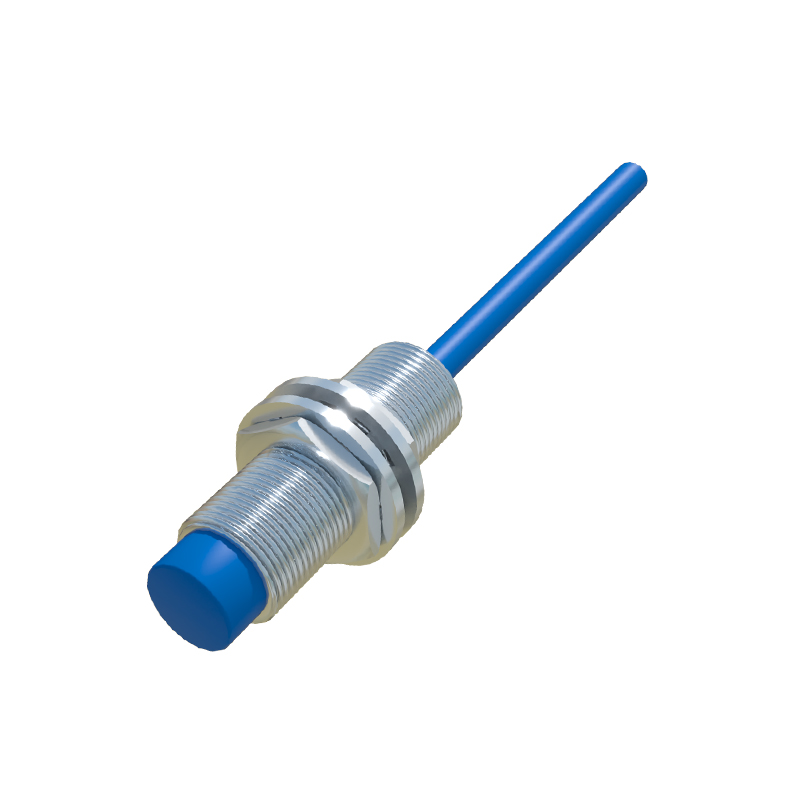
In the realm of industrial automation and control systems, metal proximity sensors stand as fundamental components for non-contact detection. These devices, crucial for enhancing efficiency and safety, operate by generating an electromagnetic field and detecting changes caused by the presence of a metallic target. Unlike mechanical limit switches, they have no moving parts, leading to higher reliability, longer service life, and faster response times. This article delves into the core principles, common types, key applications, and essential factors for selecting the right sensor for a given task.
The fundamental operating principle of most metal proximity sensors is based on electromagnetic induction. Inside the sensor, an oscillator generates a high-frequency alternating magnetic field that radiates from the sensing face. When a metallic object enters this active field, eddy currents are induced on the surface of the metal. These currents absorb energy from the oscillator, causing a reduction in its amplitude. This change is detected by a threshold circuit, which subsequently triggers a solid-state output switch (typically PNP or NPN). It is important to note that different metals affect the sensor's sensing distance. Ferrous metals like iron and steel generally allow for the longest nominal sensing range, while non-ferrous metals such as aluminum, copper, or brass reduce the effective range, a factor specified as a correction factor in datasheets.
Several primary types of metal proximity sensors dominate the market, each with specific characteristics. Inductive proximity sensors are the most common, used for detecting all metals, with performance variations based on material. Within this category, shielded (flush-mountable) sensors have a restricted lateral magnetic field, allowing them to be embedded in metal without false triggering, but with a shorter range. Unshielded (non-flush) sensors offer a longer sensing distance but require non-metallic surroundings. For specialized applications, analog output sensors provide a continuous voltage or current signal proportional to the distance to the target, useful for precision positioning or monitoring wear. Additionally, factors like housing material (e.g., nickel-plated brass, stainless steel for harsh environments), output configuration, and connection type (pre-wired or quick-disconnect) define their suitability.
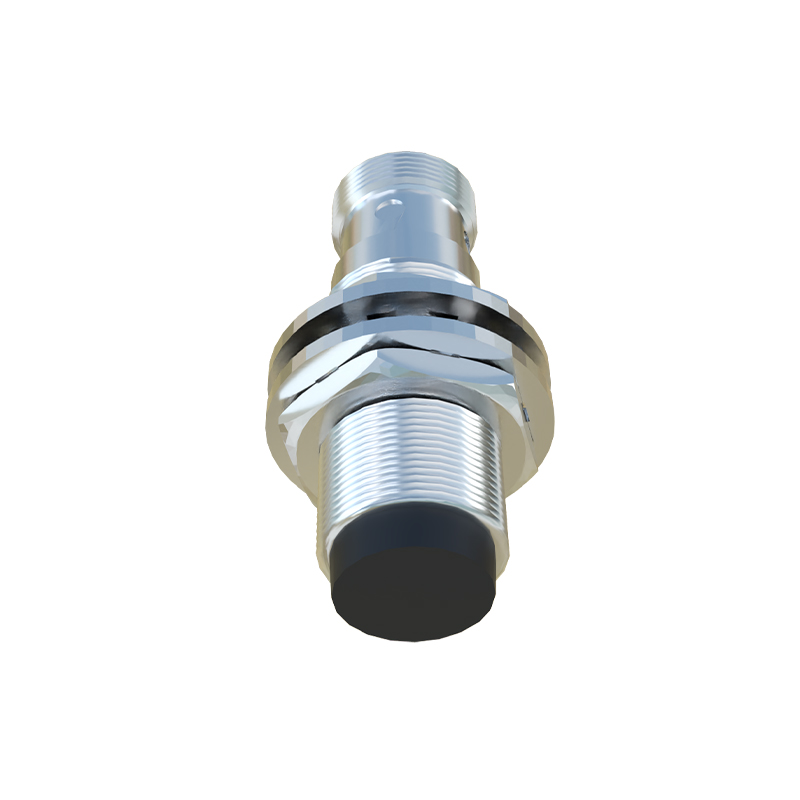
The applications for these sensors are vast and integral to modern manufacturing. A primary use is in position sensing and end-of-travel detection on automated machinery, such as verifying the open/closed status of a valve or the presence of a part in a fixture. They are essential in counting and sorting operations on conveyor lines, where they detect metal parts for inventory control or to trigger sorting actuators. In machine safety, they can serve as part of interlock systems, ensuring guards are in place before machine operation. Furthermore, they play a critical role in speed monitoring by detecting gear teeth or encoder marks, and in automated assembly for verifying component presence before a process step, preventing costly errors or damage.
Selecting the appropriate metal proximity sensor requires careful consideration of several technical parameters. The nominal sensing distance (Sn) is the first criterion, but it must be derated for non-ferrous targets and for installation in metal. The mounting style—flush or non-flush—must match the mechanical design. The operating voltage (commonly 10-30V DC) and output type (PNP sourcing, NPN sinking, or complementary) must be compatible with the controller's input module. Environmental factors are paramount: sensors rated IP67 or IP69K are necessary for washdown or outdoor use, while high-temperature models are needed for foundries or welding areas. Electrical characteristics like switching frequency (for high-speed applications), short-circuit and overload protection, and the presence of an LED status indicator also influence the decision. Consulting detailed manufacturer specifications and application notes is always recommended to ensure optimal performance and longevity.
In conclusion, metal proximity sensors are indispensable tools for reliable, non-contact detection in demanding industrial environments. Their versatility, from simple binary detection to complex analog measurement, makes them a cornerstone of automation. A thorough understanding of their operating principles, types, and key selection criteria enables engineers and technicians to implement robust and efficient sensing solutions, directly contributing to increased productivity, enhanced quality control, and improved operational safety across countless industries.