In the realm of industrial automation and electronic control systems, Hall Effect proximity sensors have established themselves as indispensable components. These non-contact devices detect the presence or absence of a magnetic field, translating it into a precise electrical signal. Their operation is rooted in the Hall Effect, a fundamental physical principle discovered by Edwin Hall in 1879. When a current-carrying conductor is placed within a magnetic field, a voltage—known as the Hall voltage—is generated perpendicular to both the current and the field. This voltage is directly proportional to the strength of the magnetic field. Modern Hall Effect sensors integrate this sensitive element with signal conditioning circuitry, such as amplifiers and Schmitt triggers, to produce a clean, digital output signal suitable for interfacing with microcontrollers, PLCs, and other control logic.
The core advantages of Hall Effect proximity sensors are numerous. Firstly, their non-contact nature ensures virtually infinite operational life, as there is no mechanical wear from physical interaction with the target. They are immune to environmental contaminants like dust, oil, and moisture, making them exceptionally reliable in harsh industrial settings—from automotive assembly lines to food processing plants. Furthermore, they offer high switching frequencies, capable of detecting rapidly moving targets, such as gear teeth or motor rotor blades, with remarkable accuracy and repeatability. Their output is typically independent of the speed of the target's approach, providing consistent performance.
There are several primary types of Hall Effect sensors, each suited to specific applications. The most common is the digital or switch-type sensor. This device provides a simple ON/OFF output. When the magnetic flux density exceeds a predefined threshold, the output switches states. These are widely used for position sensing (e.g., detecting a door open/closed state), speed sensing (by counting pulses from a rotating magnet), and limit switching. Analog or linear Hall Effect sensors, in contrast, produce a continuous output voltage that varies linearly with the strength of the magnetic field. This makes them ideal for applications requiring precise measurement, such as current sensing, potentiometer replacement, or detecting subtle changes in position. A third category, the latch or bipolar sensor, requires both positive and negative magnetic fields to switch states and remains in its last state until the opposite pole is presented. This feature is crucial for brushless DC motor commutation and directional counting.
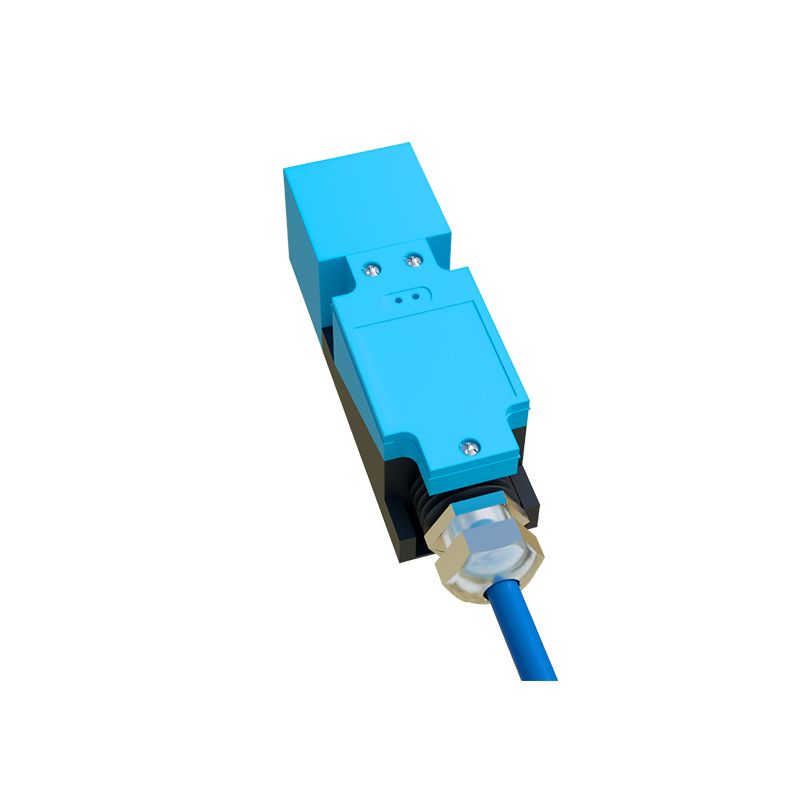
Selecting the right Hall Effect proximity sensor for an application requires careful consideration of several key parameters. The sensing distance is paramount and is influenced by the strength of the target magnet. Engineers must ensure the selected sensor's specified operating point and release point are compatible with the application's mechanical tolerances. The type of output (NPN sinking, PNP sourcing, push-pull, or analog) must match the input requirements of the controller. Supply voltage range, current consumption, and output current capability are critical for electrical compatibility. Environmental factors dictate the required housing material and ingress protection (IP) rating; for instance, stainless steel housings with IP67 or IP69K ratings are standard for washdown environments. Temperature range is another vital spec, especially for applications near engines or in outdoor settings. Finally, the physical form factor—tubular, rectangular, or ring-shaped—must fit the mechanical design constraints.
In practice, Hall Effect sensors are the workhorses of modern engineering. In the automotive industry, they are embedded in crankshaft and camshaft position sensors, wheel speed sensors for ABS systems, and seatbelt buckle detection. In industrial automation, they provide feedback on cylinder piston position, monitor conveyor belt speed, and ensure robotic end-effectors are correctly positioned. Consumer electronics utilize miniature Hall sensors for laptop lid closure detection and smartphone flip cover sensing. Their robustness, reliability, and versatility continue to drive innovation, enabling smarter, safer, and more efficient systems across countless sectors. As magnetic materials and integrated circuit technology advance, future Hall Effect sensors promise even greater sensitivity, smaller footprints, and enhanced intelligence with integrated diagnostics, solidifying their critical role in the evolving landscape of sensing technology.