In the realm of industrial automation and precision measurement, the selection between image sensors and laser sensors is a critical decision that impacts efficiency, accuracy, and overall system performance. Both technologies offer distinct advantages and are suited to specific applications, making it essential for engineers and system integrators to understand their fundamental principles, operational characteristics, and practical use cases.
Image sensors, primarily based on CCD (Charge-Coupled Device) or CMOS (Complementary Metal-Oxide-Semiconductor) technologies, capture visual information by converting light into electronic signals. These sensors excel in applications requiring detailed visual inspection, pattern recognition, and color analysis. For instance, in quality control processes within manufacturing, image sensors can detect surface defects, verify assembly completeness, or read barcodes and labels with high resolution. Advanced algorithms, often integrated with machine vision systems, enable real-time processing and decision-making, enhancing automation in sectors like electronics, pharmaceuticals, and food production. The versatility of image sensors allows them to adapt to varying lighting conditions through software adjustments, though they may struggle in low-light or highly reflective environments without additional illumination.
On the other hand, laser sensors utilize focused laser beams to measure distance, displacement, or profile with exceptional precision. Operating on principles such as triangulation or time-of-flight, these sensors emit laser light and analyze the reflected signal to calculate parameters like thickness, position, or vibration. Laser sensors are renowned for their high-speed response and sub-micron accuracy, making them ideal for non-contact measurement tasks in harsh industrial settings. Applications include alignment in robotics, thickness monitoring in rolling mills, or vibration analysis in machinery maintenance. Unlike image sensors, laser sensors are less affected by ambient light and can perform reliably in dusty or oily conditions, though they may face challenges with transparent or highly absorptive materials.
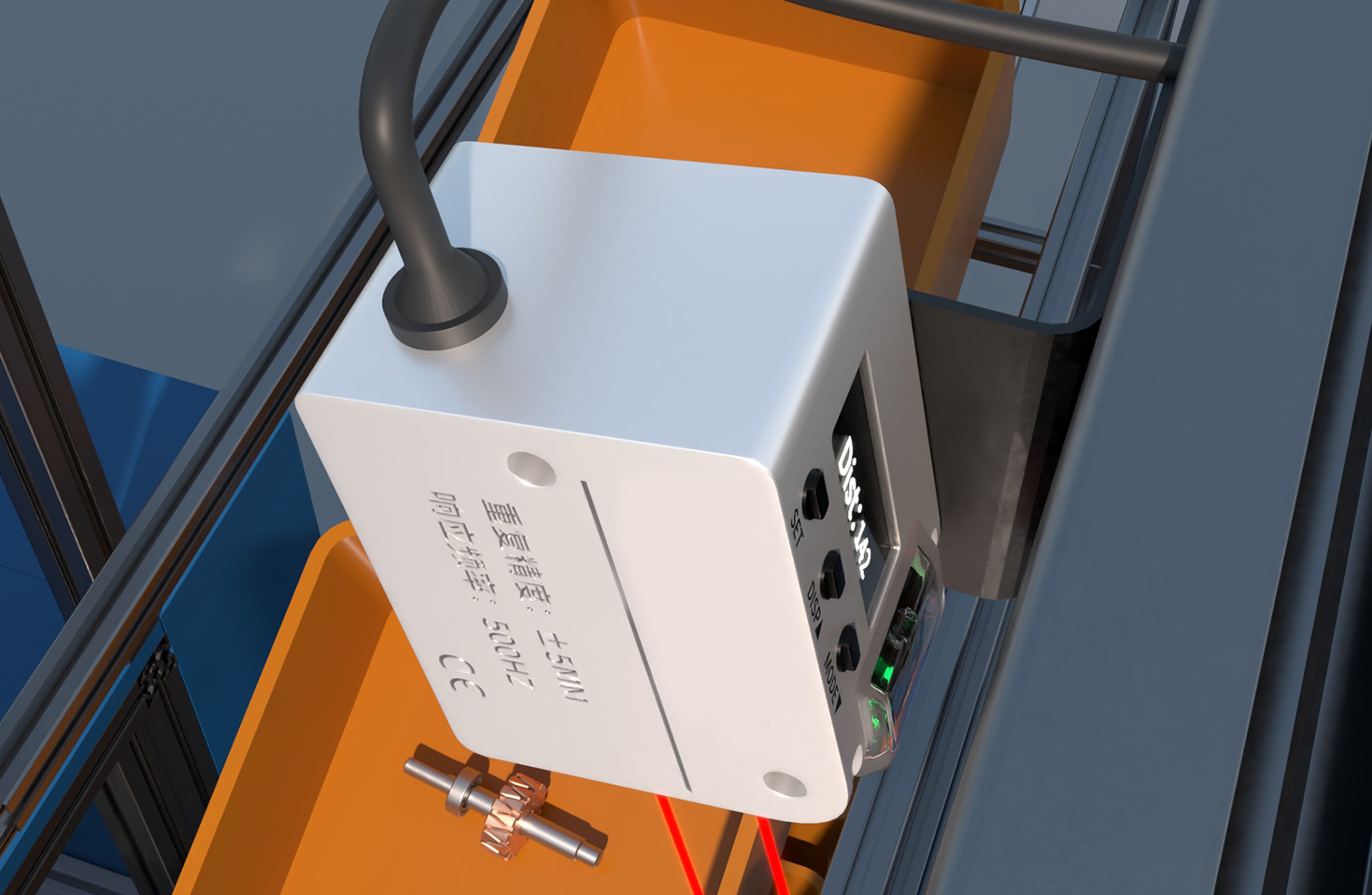
When comparing the two, key factors include resolution, speed, environmental robustness, and cost. Image sensors provide richer data through 2D or 3D imaging, enabling complex inspections but often at slower processing speeds due to data volume. Laser sensors offer faster, more direct measurements with minimal data processing, suited for high-throughput lines. In terms of integration, image sensors typically require more sophisticated software and calibration, while laser sensors are simpler to set up but may need precise alignment.
Industry trends show a growing convergence of these technologies, with hybrid systems combining image and laser sensing for comprehensive solutions. For example, in automotive manufacturing, image sensors might inspect paint quality while laser sensors measure panel gaps, ensuring both aesthetic and functional standards. As Industry 4.0 advances, the integration with IoT and AI further enhances their capabilities, allowing predictive maintenance and adaptive control.
Ultimately, the choice between image and laser sensors depends on specific application requirements. Engineers must consider factors like target material, required accuracy, environmental conditions, and budget. By leveraging the strengths of each technology, industries can optimize processes, reduce downtime, and improve product quality, driving innovation in the ever-evolving landscape of industrial automation.