In the intricate world of industrial automation, where precision, reliability, and safety are paramount, a silent class of components operates tirelessly, often unseen but fundamentally indispensable. Non-contact proximity sensors stand as these invisible guardians, enabling machines to perceive their environment without physical touch. Unlike their mechanical limit switch predecessors, these electronic sentinels detect the presence or absence of target objects through various field-based phenomena, eliminating wear and tear and opening new frontiers in control and monitoring.
The operational principle hinges on the generation of an electromagnetic or electrostatic field. When a target object enters this sensing field, it causes a detectable change in the field's state—such as eddy currents, capacitance variation, or magnetic flux disturbance. This change is processed by the sensor's internal oscillator and switching circuit, resulting in a clean, rapid output signal. The absence of mechanical contact means no moving parts to jam, lubricate, or fatigue, granting these sensors exceptional longevity, often measured in millions of operating cycles. This core advantage makes them ideal for harsh environments plagued by dust, moisture, vibration, and extreme temperatures, where traditional switches would falter.
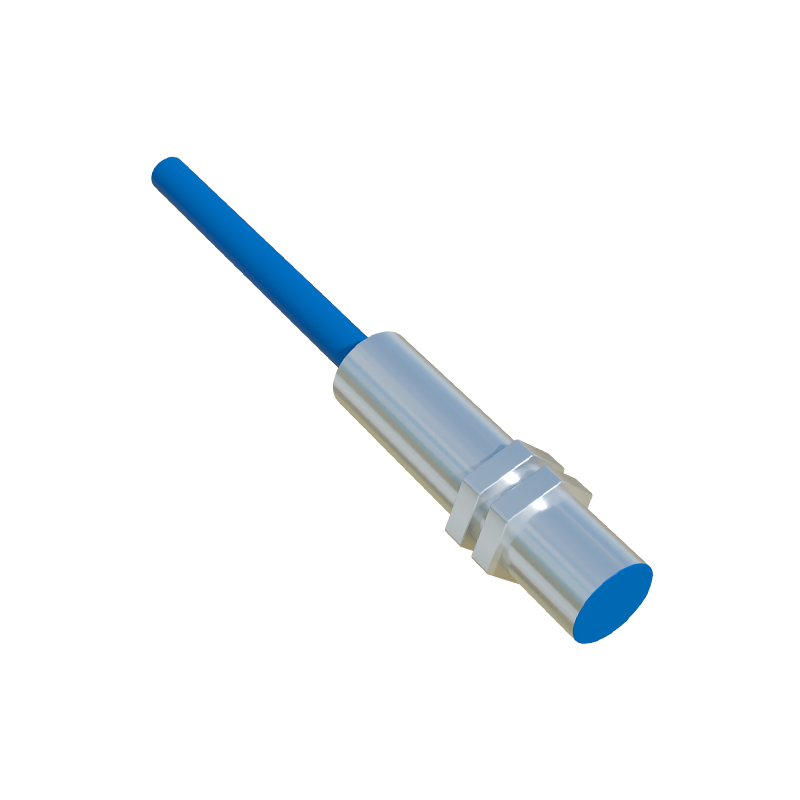
Several primary technologies dominate the landscape, each with distinct strengths. Inductive proximity sensors are the workhorses for detecting metallic objects, typically ferrous metals like steel. They generate an oscillating electromagnetic field and are highly reliable for position sensing of machine parts, counting, and end-of-travel detection in metalworking, packaging, and automotive assembly. Capacitive sensors, on the other hand, can detect nearly any material—metals, plastics, wood, liquids, and even granular substances—by sensing changes in capacitance. This versatility makes them perfect for level detection in tanks, presence sensing of non-metallic products, and handling delicate materials.
For longer-range detection or sensing of all materials, including transparent objects, photoelectric sensors use a beam of light. While a distinct category, their non-contact operation shares the same philosophical core. Magnetic sensors, or reed switches activated by a magnet, offer another robust, low-power solution for position detection. The choice among these depends critically on the target material, required sensing distance, environmental conditions, and the needed response speed and output type (e.g., NPN/PNP, NO/NC).
The applications are as diverse as industry itself. On a high-speed bottling line, capacitive sensors verify liquid levels without contact, while inductive sensors confirm cap placement. In robotic welding cells, they provide precise joint location data. Within automated warehouses, they ensure pallets are correctly positioned for robotic retrieval. Their role in safety is equally critical; they form the backbone of many safety interlock systems, halting machinery when a guard door is opened, thereby protecting personnel.
Selecting the right sensor requires a meticulous analysis of the application. Engineers must consider the nominal sensing distance (Sn), accounting for reduction factors for different metals in inductive sensing. The housing material—often nickel-plated brass, stainless steel, or PBT plastic—must withstand chemical exposure and physical impact. Output configuration must seamlessly integrate with the PLC's input card. Furthermore, factors like switching frequency, temperature rating, and protection class (IP67/IP69K for washdown environments) are non-negotiable specifications.
Looking ahead, the evolution of non-contact proximity sensors is intertwined with Industry 4.0. Modern sensors are becoming smarter, equipped with IO-Link communication that provides diagnostic data like operational health, temperature warnings, and switch cycle counts, enabling predictive maintenance. Their miniaturization continues, allowing installation in spaces once deemed impossible, while enhanced noise immunity ensures stable operation in electromagnetically chaotic environments.
In conclusion, non-contact proximity sensors are far more than simple switches. They are fundamental enablers of efficiency, quality, and safety in automated systems. By providing a reliable, wear-free interface between the physical and control worlds, they allow machinery to operate faster, smarter, and with greater autonomy. For any engineer designing a modern automated system, a deep understanding of these components' capabilities and nuances is not just an advantage—it is an essential pillar of effective and innovative machine design.