In the realm of industrial automation, the reliable detection of objects is paramount. Among the various sensing technologies available, inductive proximity sensors stand out as a robust, non-contact solution specifically designed for detecting metallic objects. These sensors are ubiquitous in manufacturing, packaging, material handling, and automotive assembly lines, offering unparalleled durability and precision in harsh environments. This article delves into the operational principles, key characteristics, application considerations, and selection criteria for inductive metal-sensing proximity sensors.
The fundamental working principle of an inductive proximity sensor is based on electromagnetic induction. The core component is a coil wound around a ferrite core, which forms part of an oscillator circuit. When an alternating current is applied, it generates an oscillating electromagnetic field at the active face of the sensor. In the absence of a conductive metal target, the oscillator operates at a specific amplitude. When a metallic object enters this electromagnetic field, eddy currents are induced on the surface of the target. These eddy currents draw energy from the oscillator circuit, causing a reduction in its oscillation amplitude. This change is detected by a threshold circuit, which subsequently triggers a solid-state output switch (typically PNP or NPN). The sensor thus provides a discrete signal indicating the presence or absence of the target metal. It is crucial to note that these sensors are primarily sensitive to conductive materials, with detection capability varying significantly based on the target's material properties. Ferrous metals like steel and iron generally offer the longest sensing ranges, while non-ferrous metals like aluminum, copper, or brass have shorter ranges, often specified by a reduction factor.
Key performance characteristics define the suitability of an inductive sensor for a given task. The rated operating distance (Sn) is a nominal value indicating the theoretical sensing range under standardized conditions. The effective sensing distance (Sr) accounts for manufacturing tolerances and temperature variations, typically ranging from 90% to 110% of Sn. For reliable operation, the assured operating distance (Sa) is used, which is often 0 to 81% of Sn, guaranteeing switching under all permitted conditions. Hysteresis is the difference between the switch-on and switch-off points, expressed as a percentage of Sn. This feature prevents output chatter when a target is positioned at the exact sensing limit. Other critical specifications include switching frequency (how many times per second the sensor can detect a target), repeat accuracy, environmental ratings like IP67/IP69K for protection against dust and water, and temperature range. The housing material, often nickel-plated brass, stainless steel, or PBT plastic, is chosen for mechanical strength and chemical resistance.
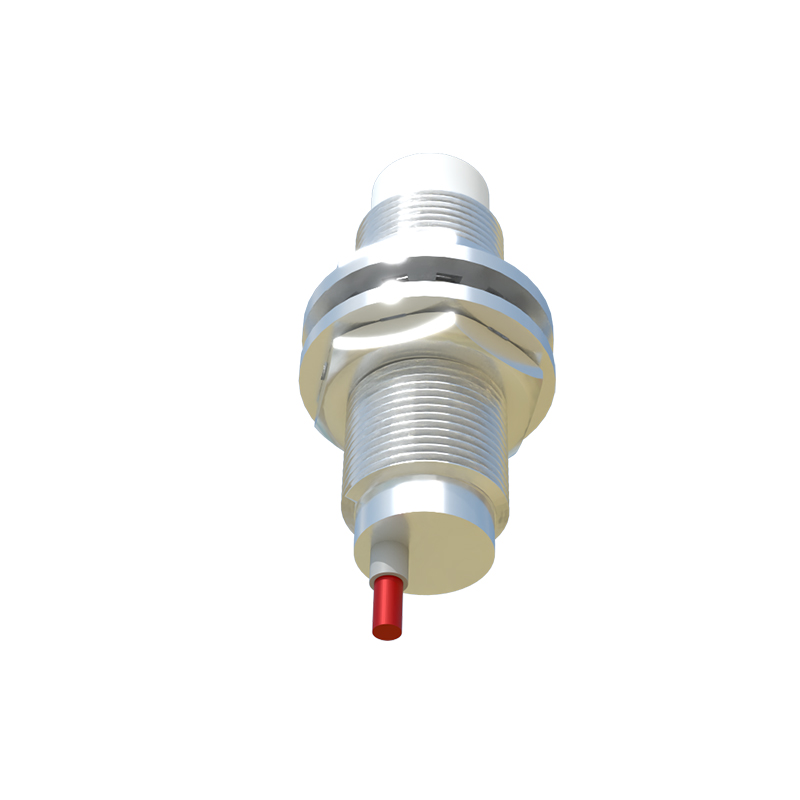
The applications for inductive proximity sensors are vast and varied. They are commonly used for position verification (e.g., confirming a cylinder is fully extended or retracted), end-of-travel detection on linear actuators, part counting on conveyor lines, and presence checking in assembly jigs. In metal machining, they detect broken tools or monitor workpiece positioning. Their non-contact nature eliminates mechanical wear, making them ideal for high-cycle operations. A significant advantage is their insensitivity to non-metallic substances like dust, oil, coolants, and chips, which would easily foul mechanical limit switches.
Selecting the right inductive sensor requires careful analysis of the application parameters. First, identify the target material (steel, aluminum, stainless steel, etc.) and its approximate size. The target must be large enough to interact effectively with the sensor's field; a rule of thumb is that the target side length should be equal to or greater than the sensor's face diameter or three times the rated sensing distance for standard applications. Next, consider the required sensing distance. Always choose a sensor with a rated distance greater than the required physical gap to account for installation tolerances and ensure reliable operation within the assured operating distance. The sensor housing style is dictated by mounting constraints: cylindrical threaded barrels (e.g., M8, M12, M18, M30) are common for through-hole mounting, while rectangular or block-style housings offer alternative form factors. Output configuration is another vital choice: a 3-wire DC sensor with PNP (sourcing) or NNP (sinking) output is standard, with 2-wire AC/DC and analog (4-20 mA, 0-10V) outputs available for specific needs. The output function can be normally open (NO), normally closed (NC), or programmable. Finally, the operating environment dictates the required ingress protection (IP) rating and any need for specialized features like weld-field immunity (for resistance welding applications), extended temperature ranges, or resistance to specific chemicals.
In conclusion, inductive proximity sensors are a cornerstone of modern industrial sensing. Their simple yet effective principle of operation