In the rapidly evolving landscape of industrial automation and quality control, precision laser sensors have emerged as indispensable tools, offering unparalleled accuracy, speed, and reliability. These sophisticated devices utilize laser technology to perform non-contact measurements of distance, displacement, thickness, and profile with micron-level precision. Their operation is fundamentally based on the principles of triangulation, time-of-flight, or interferometry, where a focused laser beam is projected onto a target surface. The reflected or scattered light is then captured by a high-resolution receiver, and advanced onboard processors analyze the data to calculate precise dimensional values.
The applications of precision laser sensors span a vast array of sectors. In automotive manufacturing, they are critical for inspecting engine components, measuring body panel gaps with exacting tolerances, and ensuring the precise alignment of robotic welding arms. The electronics industry relies on them for solder paste inspection, wafer thickness measurement, and the placement of micro-components on printed circuit boards, where even a fraction of a micron can determine product functionality. In aerospace, these sensors verify the contour of turbine blades and monitor structural deformation under stress. Furthermore, in logistics and packaging, they ensure correct fill levels, detect label placement, and guide automated sorting systems with exceptional speed.
Key advantages driving their adoption include their non-contact nature, which eliminates mechanical wear and prevents damage to delicate surfaces. They provide high-speed, real-time data acquisition, enabling 100% inline inspection rather than slower, statistical sampling methods. Modern sensors are increasingly robust, designed to withstand harsh industrial environments featuring dust, vibration, and variable temperatures. Integration with Industry 4.0 frameworks is seamless; sensors output digital data directly to PLCs (Programmable Logic Controllers) and SCADA (Supervisory Control and Data Acquisition) systems, facilitating predictive maintenance and data-driven process optimization.
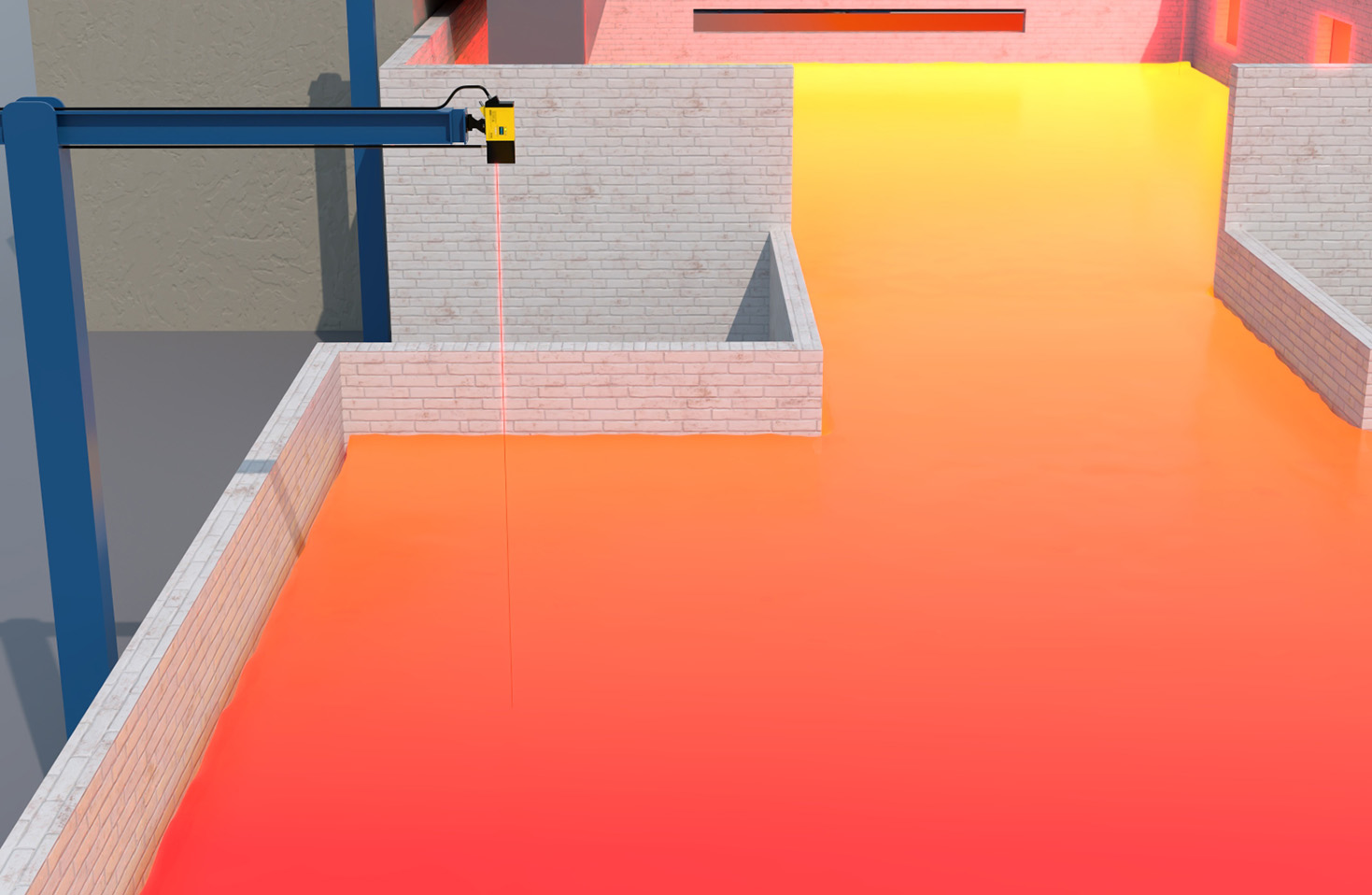
When selecting a precision laser sensor, engineers must consider several parameters. Measurement range and standoff distance define the operational envelope. Spot size determines the minimum feature that can be resolved. Linearity error indicates the deviation from a perfect straight-line response across the range. Sampling rate, or frequency, dictates how quickly measurements can be taken, which is vital for high-speed production lines. Environmental ratings, such as IP67 for dust and water ingress protection, are crucial for longevity. Leading manufacturers continue to innovate, developing models with integrated CMOS/CCD arrays for profile scanning, enhanced algorithms for measuring challenging surfaces (e.g., transparent glass or shiny metals), and compact form factors for integration into tight spaces.
Looking ahead, the convergence of precision laser sensing with artificial intelligence and machine vision is set to unlock new capabilities. AI algorithms can interpret complex point cloud data for 3D shape analysis and defect classification beyond simple dimensional checks. The demand for higher precision, faster response times, and greater connectivity will continue to grow, solidifying the role of the precision laser sensor as a cornerstone technology in smart factories and advanced metrology. Their ability to deliver trustworthy, quantitative data is fundamental to achieving the goals of zero-defect manufacturing and fully autonomous production systems, making them not just a measurement tool, but a critical enabler of industrial excellence and innovation.