In the world of industrial automation, proximity sensors stand as unsung heroes, enabling seamless and efficient operations across countless applications. These non-contact detection devices are engineered to sense the presence or absence of an object without physical contact, relying on electromagnetic fields, light, or sound. Their ability to operate in harsh environments—amid dust, moisture, and extreme temperatures—makes them indispensable in modern manufacturing, robotics, and safety systems.
Proximity sensors are broadly categorized based on their sensing technology. Inductive proximity sensors, for instance, detect metallic objects by generating an electromagnetic field. When a metal target enters this field, it induces eddy currents, causing a change in the sensor’s oscillation amplitude, which triggers an output signal. These sensors are ideal for detecting ferrous and non-ferrous metals in machinery, conveyor systems, and automotive assembly lines. Capacitive proximity sensors, on the other hand, can detect both metallic and non-metallic materials, including liquids, plastics, and wood. They work by measuring changes in capacitance when an object enters their electrostatic field. This versatility makes them suitable for level detection, material handling, and packaging industries.
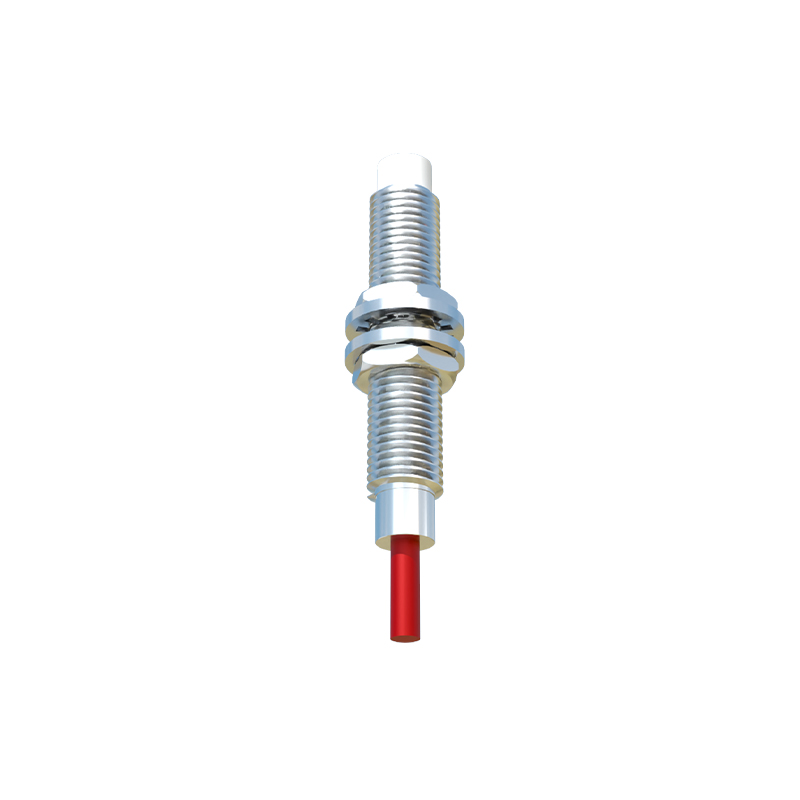
Ultrasonic proximity sensors use sound waves to detect objects, measuring the time taken for an echo to return after emitting a high-frequency pulse. They excel in applications requiring long-range detection or where target materials vary widely, such as in logistics and bulk material monitoring. Photoelectric sensors, though sometimes grouped separately, function as proximity devices by using light beams to sense objects. They offer high precision and are commonly used in clean environments like electronics manufacturing.
The selection of a proximity sensor depends on several factors: the material of the target object, required sensing range, environmental conditions, and output type (e.g., digital or analog). For example, in a high-vibration setting like a stamping press, an inductive sensor with a rugged housing would be preferred. In contrast, a capacitive sensor might be chosen for monitoring fluid levels in a chemical tank. Installation and alignment are critical; improper mounting can lead to false triggers or reduced sensitivity. Most modern sensors feature LED indicators for easy diagnostics and adjustable sensing ranges to fine-tune performance.
Advancements in technology have led to smarter proximity sensors with integrated IO-Link communication, allowing for real-time data exchange and remote configuration. This connectivity supports predictive maintenance, reducing downtime by alerting operators to potential failures before they occur. Additionally, miniaturization has enabled their use in compact spaces, such as in medical devices or small-scale robotics.
In safety applications, proximity sensors play a vital role in machine guarding and access control. By detecting unauthorized entry into hazardous zones, they help prevent accidents and ensure compliance with international standards like ISO 13849. Their reliability and fast response times are crucial in emergency stop systems.
Despite their robustness, proximity sensors are not immune to challenges. Electrical noise from nearby equipment can interfere with signals, necessitating shielded cables and proper grounding. Regular calibration and cleaning are recommended to maintain accuracy, especially in dusty or oily environments. Understanding these limitations allows engineers to implement effective solutions, such as using sensors with higher immunity ratings or protective enclosures.
In summary, proximity sensors are foundational components in automation, offering precision, durability, and adaptability. As industries evolve toward Industry 4.0, their integration with digital networks will continue to enhance efficiency and innovation. Whether in a simple counting task or a complex robotic cell, these devices prove that sometimes, the most impactful technology works quietly in the background.