Inductive proximity switches are fundamental components in industrial automation, widely used for non-contact detection of metallic objects. As a senior electrical engineer, I will explain the working principle, construction, and key applications of these robust sensors.
At its core, an inductive proximity sensor operates on the principle of electromagnetic induction. The primary components include an oscillator coil, a ferrite core, a signal evaluator, and an output switching circuit, all housed in a robust, often metal, casing. The oscillator generates a high-frequency alternating electromagnetic field that radiates from the active face of the sensor.
When a conductive metal target enters this electromagnetic field, eddy currents are induced on the surface of the target. These eddy currents draw energy from the oscillator, causing a reduction in the amplitude of its oscillations. The sensor's internal evaluation circuit continuously monitors this amplitude. Once the amplitude drop reaches a predetermined threshold—corresponding to a specific sensing distance—the circuit triggers a change in the output state. This change typically involves switching a solid-state transistor (for DC sensors) or a triac (for AC sensors) from an OFF to an ON state, or vice-versa, providing a clear signal to the connected controller like a PLC.
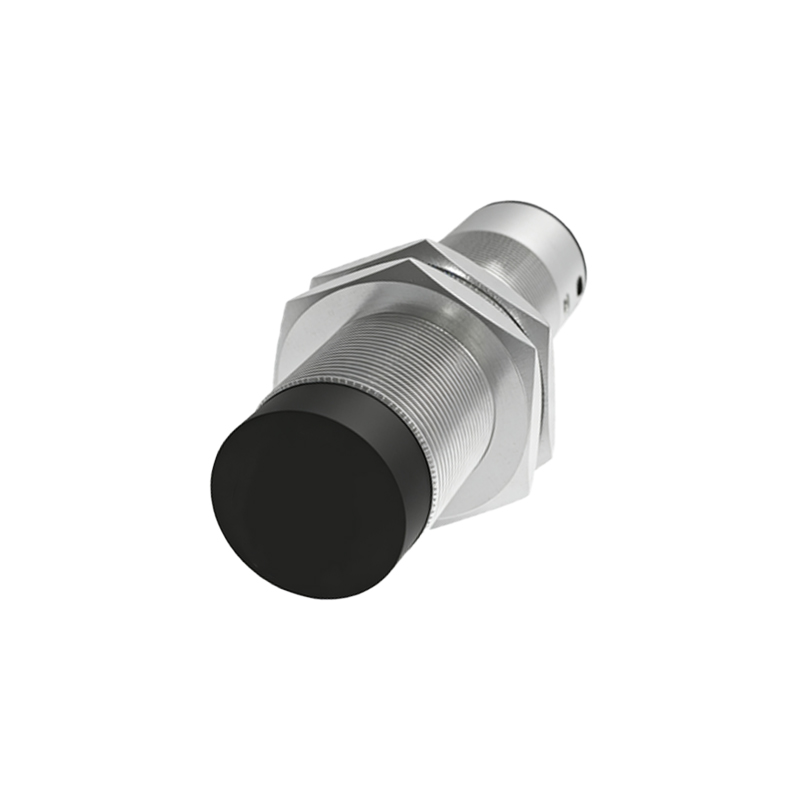
A critical specification is the nominal sensing distance (Sn), defined for a standard target of mild steel. This distance is not adjustable and is determined by the sensor's design. Factors like target material, size, and shape significantly influence the actual sensing range. For instance, steel is detected at 100% of Sn, while stainless steel might be detected at 85-90%, brass at 40-50%, and aluminum at 35-40%, due to differences in electrical conductivity and magnetic permeability. The target must also be large enough to fully interact with the electromagnetic field; a minimum target size is usually specified relative to the sensor's face.
These switches are categorized by their output type: NPN (sinking) or PNP (sourcing), and normally open (NO) or normally closed (NC) configurations. The choice depends on the control system's input card requirements. Their key advantages are remarkable. They offer non-contact, wear-free operation, leading to exceptionally long service life. They feature high switching frequencies, often up to several kHz, enabling detection of very fast-moving objects on production lines. Their construction is inherently rugged, with many models featuring IP67 or IP69K ratings, making them resistant to dust, water, oils, and coolants common in harsh industrial environments like machining centers, material handling systems, and automotive assembly lines.
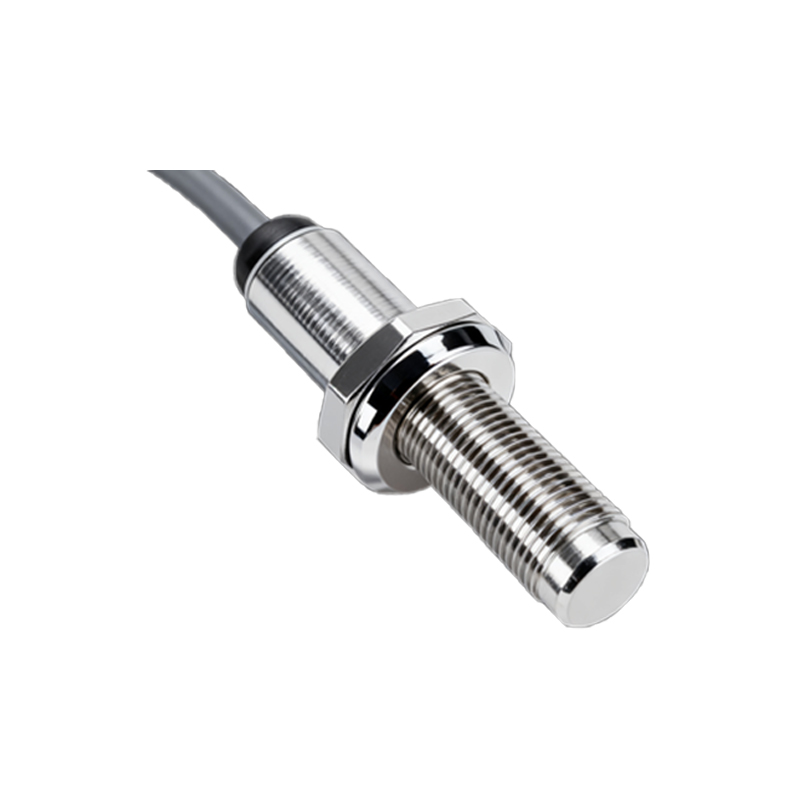
Typical applications include position verification (e.g., checking if a cylinder is fully extended or retracted), end-of-travel limit sensing on linear actuators, part presence detection on conveyor belts, and rotational speed monitoring using a gear tooth as a target. When installing, engineers must consider the mounting style (flush or non-flush), ensure adequate clearance from surrounding metal to prevent false triggering, and select the correct voltage supply. Non-flush mountable sensors offer a longer sensing range but require more lateral clearance from adjacent metal.
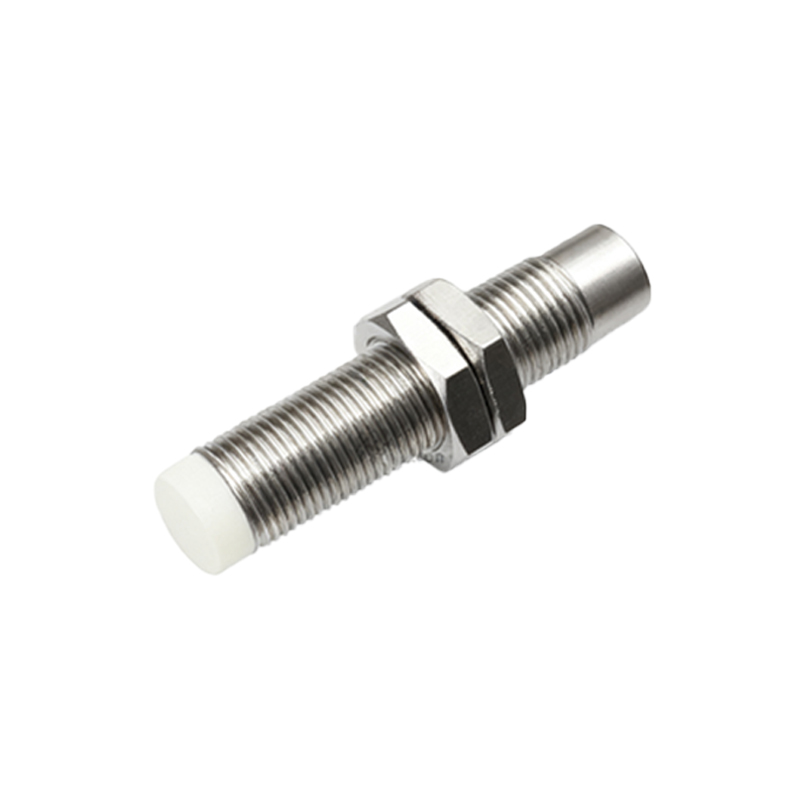
In summary, the inductive proximity switch is a reliable, maintenance-free workhorse of factory automation. Its operation, based on the disturbance of an electromagnetic field by eddy currents in a metal target, provides a robust solution for countless detection tasks where durability, speed, and precision are paramount. Understanding its principle allows for optimal selection and integration into complex control systems, ensuring reliable machine operation and process efficiency.