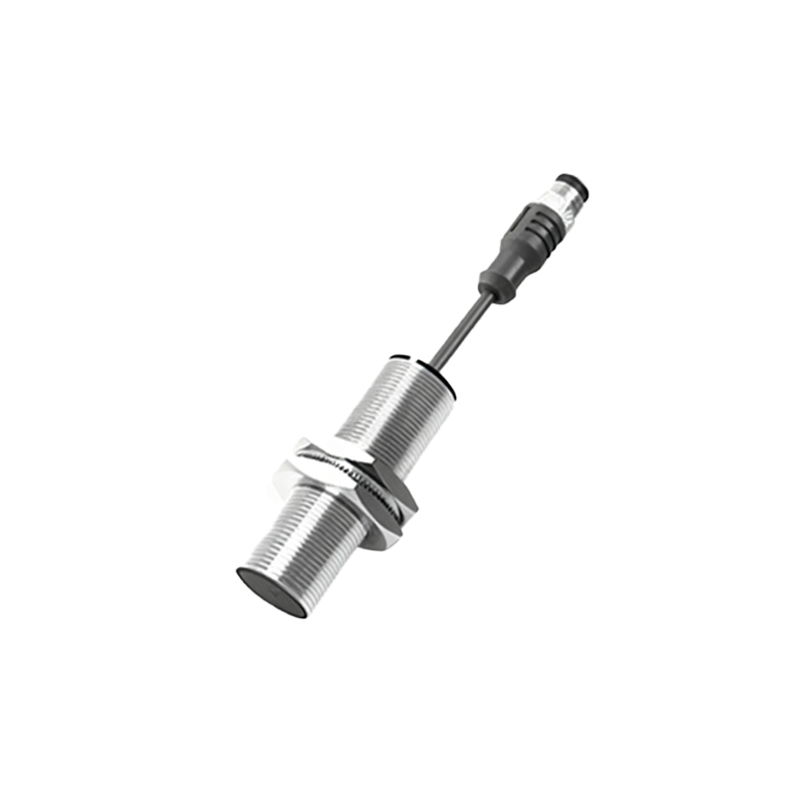
Proximity sensors are indispensable components in modern industrial automation, offering non-contact detection of objects with high precision and reliability. Among various types, inductive proximity sensors, often referred to as "proximity switches" or "proximity detectors," are widely utilized in manufacturing, robotics, and machinery systems. These sensors operate on the principle of electromagnetic induction, generating an oscillating magnetic field. When a metallic object enters this field, eddy currents are induced, causing a change in the sensor's oscillation amplitude. This alteration is detected by the internal circuitry, triggering an output signal—typically a switching action—without any physical contact.
The design of inductive proximity sensors includes a coil wound around a ferrite core, an oscillator, a detection circuit, and an output stage. Key advantages include robustness in harsh environments, resistance to dust, oil, and moisture, and long operational life due to the absence of moving parts. Common applications involve position sensing, object counting, speed monitoring, and end-of-travel detection in conveyor systems, CNC machines, and automotive assembly lines. For instance, in automated packaging lines, these sensors ensure precise placement of items, while in metalworking, they detect the presence of tools or workpieces.
When selecting a proximity sensor, engineers must consider factors such as sensing distance, material type, and environmental conditions. Standard sensing ranges vary from a few millimeters to several centimeters, with factors like target material (e.g., steel, aluminum) affecting performance. Aluminum, being non-ferrous, typically requires a reduced sensing distance compared to ferrous metals. Additionally, sensors are classified by output types, including NPN (sinking) and PNP (sourcing) configurations, which interface with PLCs (Programmable Logic Controllers) and other control systems.
Installation and maintenance are straightforward but critical for optimal functionality. Proper mounting, alignment, and avoidance of interference from adjacent metal objects or electrical noise are essential. Regular calibration checks help sustain accuracy, especially in high-vibration settings. Innovations in sensor technology have led to miniaturized designs, enhanced sensitivity, and integration with IoT (Internet of Things) platforms, enabling real-time monitoring and predictive maintenance. For example, smart sensors can transmit data on operational status, facilitating proactive adjustments in production processes.
In summary, proximity sensors play a pivotal role in enhancing efficiency and safety across industries. Their ability to detect objects swiftly and accurately contributes to streamlined operations, reduced downtime, and improved quality control. As automation evolves, these sensors will continue to adapt, offering greater versatility and connectivity for future industrial challenges.