Proximity sensors are fundamental components in modern industrial automation, enabling non-contact detection of objects to trigger control actions. These sensors operate by emitting electromagnetic fields, infrared light, or ultrasonic waves to sense the presence, absence, or position of metallic or non-metallic targets without physical contact. Proper control of proximity sensors is essential for ensuring reliable system performance, safety, and efficiency in applications ranging from assembly lines to robotic systems.
The control of proximity sensors primarily involves their integration into control circuits, typically interfacing with programmable logic controllers (PLCs), microcontrollers, or relay systems. The most common types include inductive sensors for detecting metallic objects, capacitive sensors for non-metallic materials, and photoelectric sensors using light beams. Each type requires specific considerations for wiring, power supply, and signal processing.
For inductive and capacitive sensors, control begins with correct power connection. Most industrial proximity sensors operate on DC (10-30V DC) or AC (90-250V AC) power. The sensor's output can be configured as normally open (NO) or normally closed (NC), determining the signal state when an object is detected. In a typical three-wire DC sensor, wires include positive (brown), negative (blue), and output (black). When a target enters the sensing range, the output switches, sending a signal to the control device.
PLC integration is a standard control method. The sensor output connects to a PLC input module, where ladder logic or structured text programming defines the response. For instance, when a sensor detects a part on a conveyor, the PLC may activate a pneumatic cylinder or record a count. Shielding and proper grounding are critical to prevent electrical noise interference, especially in environments with motors or frequency drives.
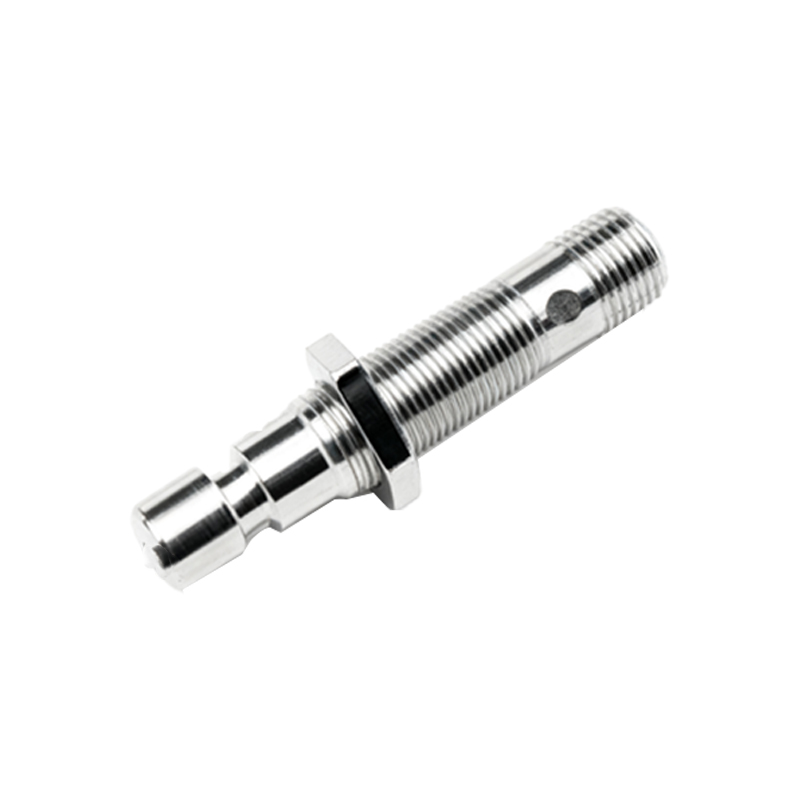
Adjusting sensing distance and hysteresis is vital for stable control. The rated operating distance specifies the ideal detection range, but environmental factors like temperature or material composition may require calibration. Hysteresis—the difference between the switch-on and switch-off points—prevents output oscillation when a target is near the threshold. Many sensors feature potentiometers or teach-in functions for fine-tuning.
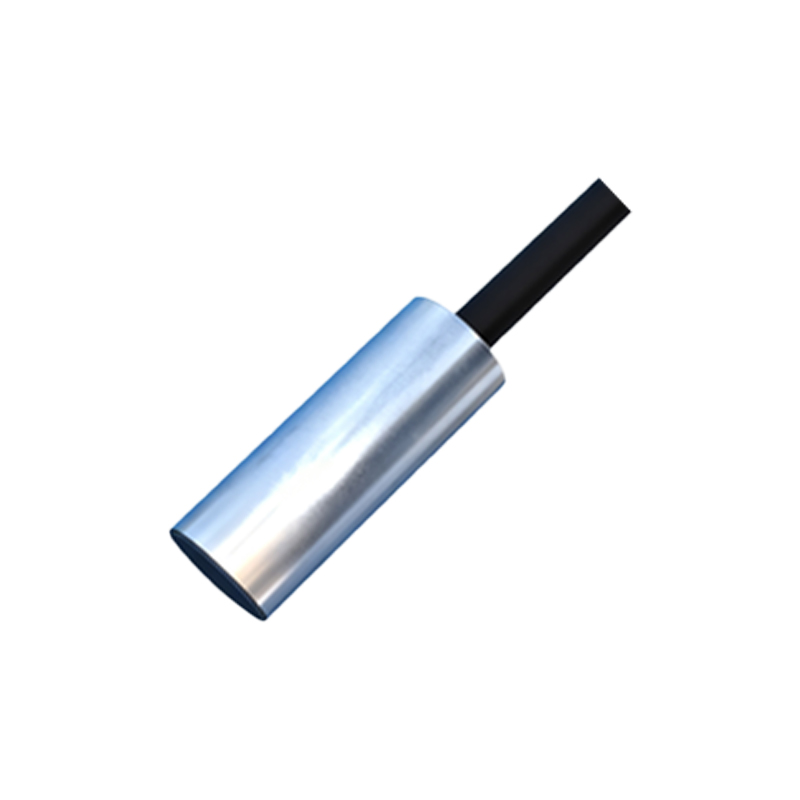
For complex applications, such as position feedback in servo systems, analog proximity sensors provide continuous voltage or current signals proportional to distance. These enable precise control, like monitoring fill levels or guiding robotic arms. Communication protocols like IO-Link further enhance control by allowing digital parameter setting, diagnostics, and real-time data exchange with controllers.
Safety considerations include using fail-safe circuits and redundant sensors in critical processes. For example, in automated machinery, dual sensors with cross-checking logic can prevent accidents. Regular maintenance, such as cleaning sensing surfaces and checking alignment, ensures long-term reliability.
In summary, controlling proximity sensors involves selecting the appropriate type, integrating them into robust electrical circuits, programming logical responses in controllers, and optimizing parameters for the operating environment. Mastery of these principles allows engineers to build responsive and resilient automation systems that enhance productivity while minimizing downtime.