In modern industrial automation systems, proximity sensors play a critical role as primary input devices for Programmable Logic Controllers (PLCs). These non-contact sensors detect the presence or absence of objects within their sensing range, converting physical proximity into electrical signals that PLCs can process. The integration of proximity sensors with PLCs forms the backbone of automated control in manufacturing, packaging, material handling, and assembly lines.
Proximity sensors are categorized based on their detection principles, with inductive, capacitive, and photoelectric types being the most common. Inductive proximity sensors are ideal for detecting metallic objects, utilizing electromagnetic fields to sense ferrous and non-ferrous metals without physical contact. Capacitive sensors can detect both metallic and non-metallic materials, including liquids and granular substances, by measuring changes in capacitance. Photoelectric sensors use light beams to detect objects, offering long-range sensing capabilities suitable for diverse applications. Each type provides unique advantages, allowing engineers to select the appropriate sensor based on factors like target material, environmental conditions, and required sensing distance.
When connected to a PLC, proximity sensors typically operate as digital inputs, sending a discrete signal (ON/OFF) to the controller. The sensor's output is wired to the PLC's input module, often using standard interfaces such as PNP (sourcing) or NPN (sinking) configurations. Upon detecting an object, the sensor activates, closing or opening the circuit to send a voltage signal—commonly 24V DC in industrial settings—to the PLC. The PLC's input module then converts this signal into a logical state (e.g., 1 for ON, 0 for OFF), which the control program processes to trigger actions like starting a motor, activating a solenoid valve, or updating a counter.
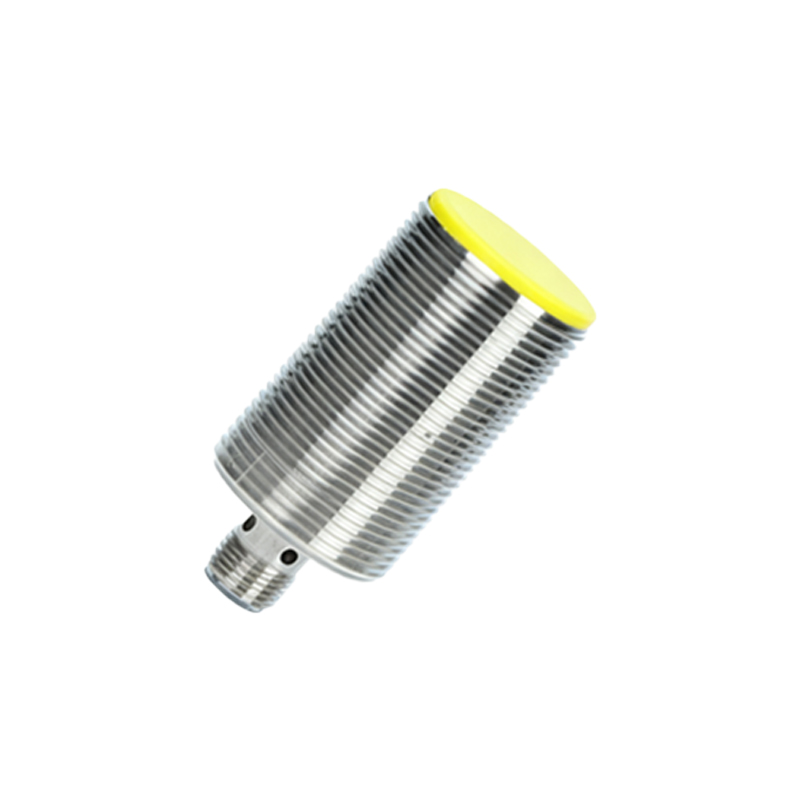
The reliability of proximity sensors enhances system performance by providing fast, accurate feedback. For instance, in a conveyor system, inductive sensors can detect metal components on a moving belt, signaling the PLC to sort or route items accordingly. In liquid filling applications, capacitive sensors monitor tank levels, preventing overflows by alerting the PLC to stop pumps. Photoelectric sensors are widely used in packaging lines to verify product presence, ensuring proper sealing and labeling. These examples underscore how proximity sensors enable precise control, reduce downtime, and improve safety by minimizing mechanical wear and eliminating contact-based detection.
However, integrating proximity sensors with PLCs requires careful consideration of several factors. Electrical compatibility is paramount; mismatched voltage levels or incorrect wiring can damage components or cause erratic behavior. Environmental conditions like temperature extremes, humidity, dust, or chemical exposure may affect sensor performance, necessitating enclosures or specialized models. Additionally, interference from nearby electrical equipment—such as motors or frequency drives—can induce noise, potentially leading to false triggers. Shielding, proper grounding, and using sensors with noise immunity features mitigate these risks.
Programming the PLC to handle sensor inputs involves configuring the input channels and writing logic that responds to sensor states. Ladder logic, a common PLC programming language, uses contacts to represent sensor inputs, with rungs executing actions based on input conditions. For example, a sensor detecting a part might energize a coil symbolizing a conveyor motor. Advanced functions, like debouncing timers or filtering algorithms, can be implemented to enhance signal stability, especially in high-vibration environments. Diagnostics are also crucial; many modern sensors and PLCs support diagnostic features, such as LED indicators or network alerts, to facilitate troubleshooting and maintenance.
In summary, proximity sensors are indispensable for providing reliable input to PLCs in automated systems. Their non-contact operation, versatility, and durability make them suitable for harsh industrial environments. By understanding sensor types, wiring practices, and programming techniques, engineers can design robust control systems that optimize efficiency and productivity. As Industry 4.0 advances, smart sensors with integrated communication protocols (e.g., IO-Link) are emerging, offering enhanced data exchange and predictive maintenance capabilities, further strengthening the synergy between sensors and PLCs in the evolving industrial landscape.