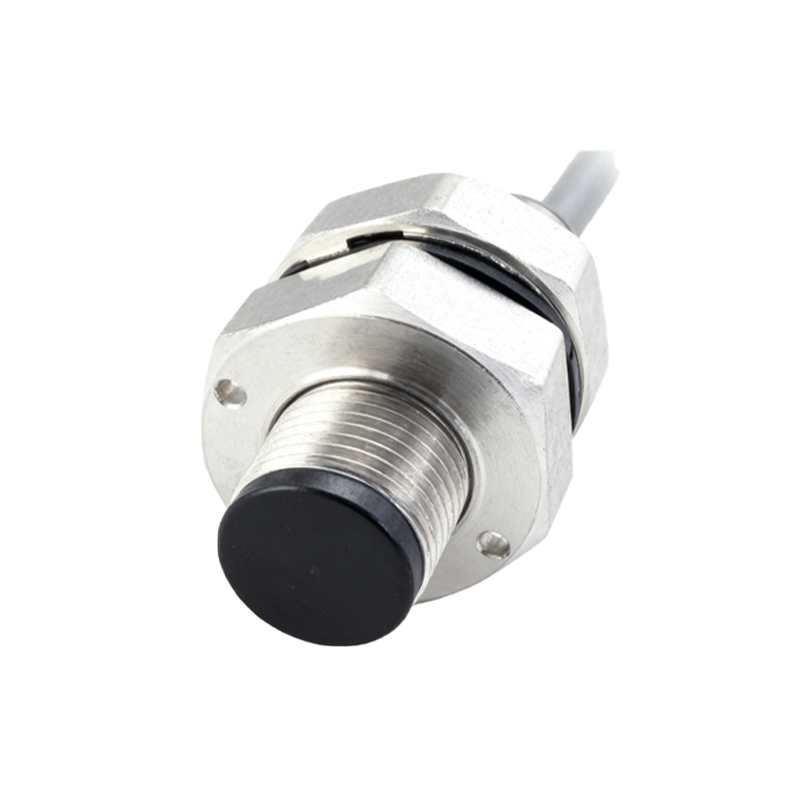
In the realm of industrial automation and machinery safety, proximity sensor safety belts represent a critical advancement in ensuring operational security and preventing workplace accidents. These systems integrate non-contact sensing technology with restraint mechanisms to create a reliable safety solution for environments where human workers interact with moving equipment. Proximity sensors, typically based on inductive, capacitive, or magnetic principles, detect the presence or absence of objects without physical contact. When embedded into safety belts worn by personnel, these sensors communicate with machinery control systems to enforce safe distances or halt operations if a worker enters a hazardous zone.
The core functionality hinges on real-time monitoring. As an operator approaches a dangerous area—such as a robotic arm's path or a conveyor belt—the sensor triggers an alert or initiates a machine stop. This immediate response reduces the risk of entanglement, crushing, or impact injuries. Unlike traditional physical barriers or manual emergency stops, proximity sensor safety belts offer dynamic protection, adapting to varying operational scenarios without impeding productivity unnecessarily. For instance, in assembly lines where workers frequently move between stations, the system allows seamless movement while maintaining a safety perimeter.
From an engineering perspective, the design considerations are multifaceted. Sensor selection depends on factors like detection range, environmental conditions (e.g., exposure to dust, moisture, or electromagnetic interference), and response time. Inductive sensors are favored in metallic environments for their durability, while capacitive variants can detect non-metallic objects. The safety belt itself must be ergonomic, durable, and integrated with fail-safe electronics to ensure continuous operation. Redundancy is often incorporated—using multiple sensors or backup power supplies—to mitigate failure risks. Compliance with international safety standards, such as ISO 13849 for machinery safety or IEC 62061 for functional safety, is paramount to validate system reliability.
In practice, industries like automotive manufacturing, material handling, and heavy machinery have adopted these systems to enhance safety protocols. For example, in automotive plants where robots weld car frames, workers wearing sensor-equipped belts can operate nearby without fear of accidental collisions. The belts connect to programmable logic controllers (PLCs) that process sensor data and execute safety functions, often integrated with broader safety networks like light curtains or emergency stop circuits. Maintenance and calibration are routine to ensure sensor accuracy, as false triggers or missed detections could lead to downtime or hazards.
Despite their advantages, challenges exist. Cost can be a barrier for small-scale operations, and training personnel to use the belts correctly is essential. Interference from nearby equipment or metal debris may affect sensor performance, requiring careful installation and shielding. Future trends point toward smart sensor belts with IoT connectivity, enabling data logging for safety analytics and predictive maintenance. As automation evolves, proximity sensor safety belts will likely become more adaptive, using AI to assess risk levels in real-time and customize responses.
Ultimately, these systems embody a proactive approach to industrial safety. By merging sensor technology with personal protective equipment, they create an invisible shield that safeguards workers while supporting efficient workflows. Engineers and safety managers must prioritize thorough risk assessments to deploy such solutions effectively, ensuring that technology serves as a guardian rather than a gadget. In high-stakes industrial settings, the integration of proximity sensor safety belts isn't just an innovation—it's a responsibility toward preserving human well-being amid mechanized progress.