In the rapidly evolving landscape of electrical engineering, sensor laser matrix technology has emerged as a pivotal innovation, driving advancements across industries from manufacturing to telecommunications. At its core, a sensor laser matrix integrates multiple laser-based sensors into a coordinated array, enabling high-precision detection, measurement, and data acquisition. This system leverages the principles of optics, photonics, and digital signal processing to create a robust framework for real-time monitoring and control.
The fundamental operation of a sensor laser matrix involves emitting laser beams in a structured pattern, which interact with target objects or environments. Each sensor within the matrix captures reflected or transmitted light, converting it into electrical signals. These signals are then processed using advanced algorithms to generate detailed spatial, thermal, or spectral information. For instance, in industrial automation, such matrices are deployed for quality inspection, where they detect minute defects on production lines with sub-millimeter accuracy. Similarly, in autonomous vehicles, they facilitate LiDAR (Light Detection and Ranging) systems, mapping surroundings in three dimensions to ensure safe navigation.
One of the key advantages of sensor laser matrices is their scalability and adaptability. Engineers can configure arrays to suit specific applications, adjusting parameters like wavelength, power, and beam divergence. This flexibility allows for deployment in diverse scenarios, from medical imaging—where non-invasive diagnostics rely on infrared laser matrices—to environmental monitoring, tracking atmospheric pollutants with laser absorption spectroscopy. Moreover, the integration of artificial intelligence and machine learning has enhanced these systems, enabling predictive analytics and autonomous decision-making. For example, smart grids utilize sensor laser matrices to monitor power line integrity, predicting failures before they occur and optimizing energy distribution.
However, implementing sensor laser matrix technology presents challenges, including high initial costs, complexity in calibration, and sensitivity to environmental factors like dust or humidity. To address these, ongoing research focuses on miniaturization, cost reduction, and improved robustness. Innovations such as MEMS (Micro-Electro-Mechanical Systems) lasers and quantum dot sensors are paving the way for more compact and efficient designs. Additionally, standardization efforts in data protocols, like IEEE 1451, aim to streamline integration with existing industrial networks.
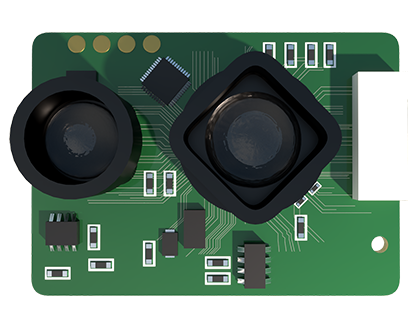
In practice, electrical engineers must consider several factors when designing sensor laser matrices. These include selecting appropriate laser types (e.g., diode, fiber, or gas lasers), ensuring alignment accuracy, and managing thermal dissipation to maintain performance. Safety is also paramount, as high-power lasers can pose risks; thus, compliance with standards like IEC 60825 is essential. Case studies from sectors like aerospace demonstrate successful applications, where matrices monitor structural health in aircraft, detecting fatigue cracks through laser ultrasonics.
Looking ahead, the future of sensor laser matrix technology is intertwined with trends like the Internet of Things (IoT) and 5G connectivity. As devices become more interconnected, these matrices will enable smarter, data-driven ecosystems. For instance, in smart cities, they could manage traffic flow by detecting vehicle movements in real time, reducing congestion and emissions. Furthermore, advancements in photonic integrated circuits promise to revolutionize the field, allowing for on-chip laser arrays that are cheaper and more energy-efficient.
In conclusion, sensor laser matrix technology represents a cornerstone of modern electrical engineering, offering unparalleled precision and versatility. By understanding its principles, applications, and challenges, professionals can harness its potential to innovate across domains. As research continues to push boundaries, this technology is set to redefine how we interact with the physical world, making systems safer, more efficient, and intelligent.
