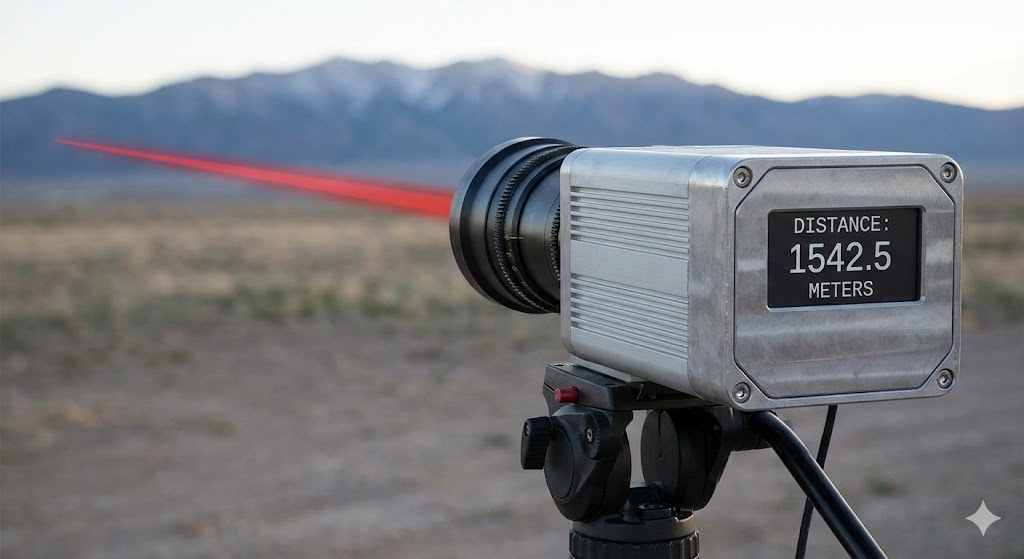
In the realm of industrial automation and precision measurement, tracking laser sensors have emerged as a cornerstone technology, enabling unparalleled accuracy and reliability in a multitude of applications. These sophisticated devices operate on the principle of emitting a focused laser beam and precisely detecting its reflection from a target object. By analyzing the properties of the returned light—such as time-of-flight, phase shift, or triangulation—the sensor can determine critical parameters including distance, position, displacement, and even surface profile with micron-level precision. Unlike conventional photoelectric sensors, tracking laser sensors are designed to maintain a continuous lock on a moving target, dynamically adjusting their measurement point to follow its path. This capability is fundamental in processes where the target is not static, such as on high-speed assembly lines, robotic guidance systems, or during the inspection of components on a conveyor.
The core technology behind these sensors often involves advanced methods like laser triangulation or confocal measurement. In a triangulation setup, the laser emitter, the point of reflection on the target, and the receiving element (typically a CCD or CMOS array) form a triangle. Any change in the target's distance causes a proportional shift in the position of the laser spot on the receiver, allowing for precise distance calculation. For tracking moving objects, sophisticated algorithms process this data stream in real-time, predicting the target's trajectory and adjusting the sensor's internal parameters or external scanning mirrors to keep the laser spot centered. This real-time feedback loop is what defines a true "tracking" sensor, distinguishing it from simple scanning or single-point measurement devices.
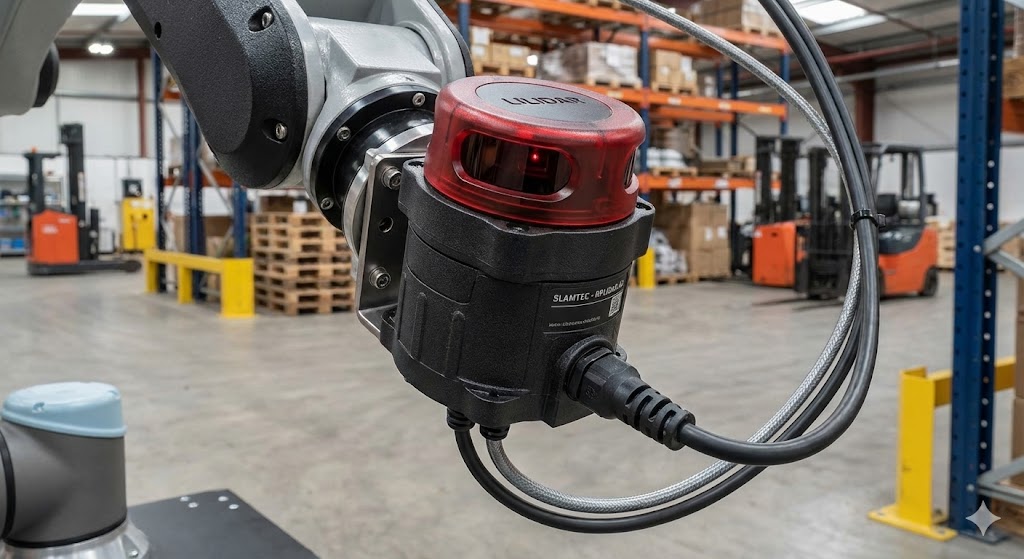
The applications for tracking laser sensors are vast and transformative across industries. In automotive manufacturing, they are indispensable for robotic welding and sealing, where the robot arm must follow the exact contour of a car body seam with consistent standoff distance. Any deviation can lead to weld defects or poor sealant application. In the electronics sector, these sensors ensure precise component placement by tracking the position of circuit boards as they vibrate or shift during high-speed pick-and-place operations. Furthermore, in logistics and warehousing, they facilitate automated dimensioning systems that track parcels on moving belts to calculate their size and volume for shipping optimization. The non-contact nature of laser measurement also makes it ideal for inspecting delicate, hot, or rotating surfaces that would be damaged or inaccessible to tactile probes.
Selecting the appropriate tracking laser sensor for a specific application requires careful consideration of several key technical parameters. First, the required measurement range and resolution must be evaluated. A sensor designed for long-range tracking of large objects on a gantry system will differ fundamentally from one needed for micron-level displacement measurement on a small vibrating part. Second, the tracking speed and update rate are critical. The sensor's data output frequency must be high enough to accurately capture the fastest movements of the target without aliasing. For instance, tracking a rapidly oscillating component may require an update rate in the kilohertz range. Third, environmental factors cannot be overlooked. Industrial settings often present challenges like ambient light interference, dust, oil mist, or significant temperature variations. Sensors with robust housings (IP67 ratings are common), specialized optical filters to reject ambient light, and temperature compensation circuits are essential for reliable operation. Finally, the interface and integration capabilities are paramount. Modern sensors offer digital outputs like Ethernet/IP, PROFINET, or EtherCAT, allowing for seamless integration into larger Industrial Internet of Things (IIoT) and Industry 4.0 frameworks, enabling not just data collection but also predictive analytics and centralized process control.
Looking ahead, the evolution of tracking laser sensor technology is closely tied to advancements in artificial intelligence and miniaturization. Embedded AI algorithms are beginning to allow sensors to not only track position but also classify target objects or identify defects in real-time, moving beyond simple measurement to intelligent perception. Furthermore, the development of more compact, energy-efficient laser diodes and processing units is enabling their integration into smaller mobile robots and portable inspection devices. As industries continue to push the boundaries of precision, speed, and automation, the role of the tracking laser sensor as a critical enabler of quality, efficiency, and innovation will only become more pronounced. Engineers and system integrators must stay abreast of these developments to leverage the full potential of this transformative technology in designing the smart factories of the future.