In the world of industrial automation, robotics, and smart devices, proximity sensors are the silent workhorses that enable machines to "sense" their environment without physical contact. These devices detect the presence or absence of an object within a specified range, triggering an output signal. Their applications are vast, from counting items on a conveyor belt and ensuring machine safety to enabling touchless faucets and smartphone screen blanking. Understanding the different types of proximity sensors is crucial for selecting the right technology for a specific application. Each type operates on a distinct physical principle, offering unique advantages, limitations, and ideal use cases.
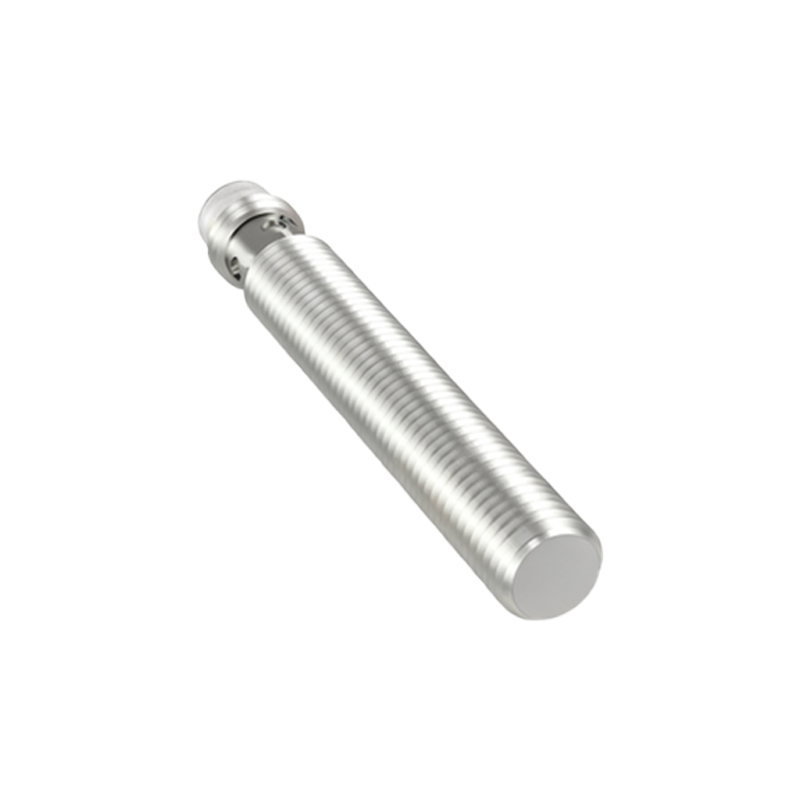
One of the most common and versatile types is the Inductive Proximity Sensor. This sensor generates an electromagnetic field. When a metallic object (ferrous or non-ferrous) enters this field, it induces eddy currents within the object, causing a change in the sensor's oscillation amplitude. This change is detected and converted into a switching signal. Inductive sensors are renowned for their robustness, high switching frequency, and immunity to environmental factors like dust, dirt, or oil. They are ideal for harsh industrial environments for detecting metal parts, position sensing in machinery, and speed monitoring of gears. However, their fundamental limitation is that they only detect metals.
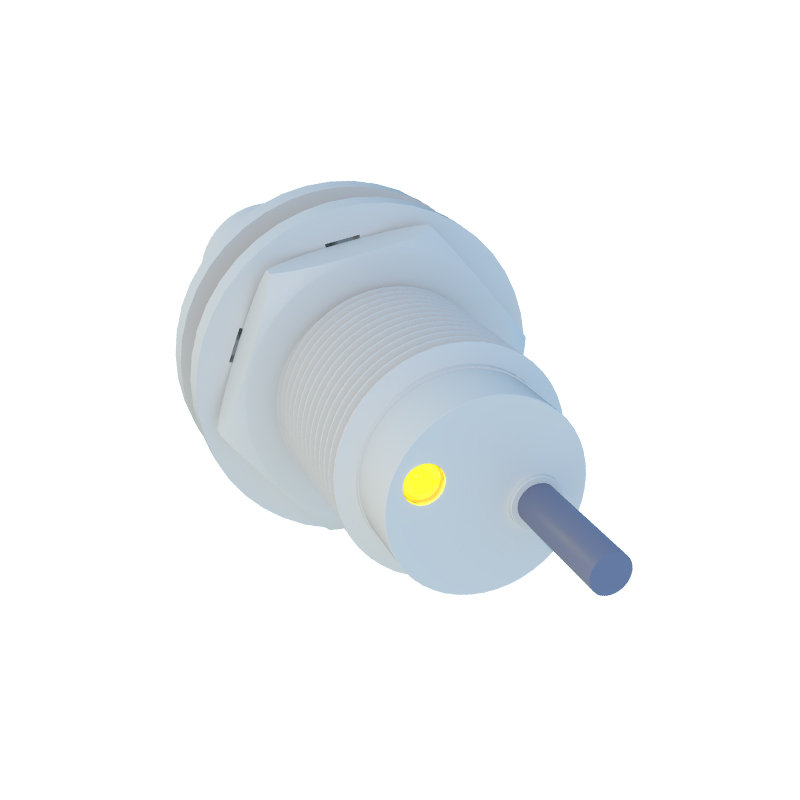
For detecting non-metallic objects, Capacitive Proximity Sensors are the go-to solution. These sensors function like an open capacitor. One plate is the sensor's face, and the other is the external object (ground). When an object enters the sensing field, it alters the dielectric constant, changing the capacitance and triggering the output. Capacitive sensors can detect a wide variety of materials: plastics, glass, wood, liquids, and even granular substances. This makes them perfect for level detection in tanks (liquid or powder), material handling, and presence detection of non-metallic containers. They can also detect objects through thin non-metallic walls. Their sensitivity can be adjusted, but they can be susceptible to environmental humidity and temperature variations.
Ultrasonic Proximity Sensors operate on a principle similar to sonar. They emit high-frequency sound waves (ultrasound) and evaluate the echo reflected back from a target object. By measuring the time between emission and reception of the sound wave (time-of-flight), the sensor can determine both the presence and the distance to the object. This ability to provide precise distance measurement sets them apart. They are excellent for detecting objects of virtually any material, shape, or color, including transparent items that confuse optical sensors. Common applications include pallet detection, loop control, and distance measurement in automated guided vehicles (AGVs). Their performance can be affected by temperature, air turbulence, and the object's sound-absorbing properties.
Photoelectric Sensors, or photo eyes, use light to detect objects. They consist of a light emitter (usually an LED) and a receiver. There are three main sub-types based on their operating mode. The Through-beam type has separate emitter and receiver units. An object is detected when it breaks the light beam. This type offers the longest sensing range and high reliability. The Retro-reflective type uses a single unit and a reflector; detection occurs when the beam to the reflector is interrupted. The Diffuse (or proximity) type has the emitter and receiver in one housing and detects light reflected directly off the target object. Photoelectric sensors are highly flexible, can detect almost any material, and offer fast response times. They are used in packaging, material handling, and door systems. Their main drawbacks are potential interference from ambient light and reduced performance with highly reflective or absorbent surfaces.
Magnetic Proximity Sensors (often called reed switches or Hall effect sensors) detect the presence of a magnetic field, typically from a permanent magnet. Reed switches use two ferromagnetic reeds sealed in a glass tube; a nearby magnet causes the reeds to attract and make contact. Hall effect sensors produce a voltage output proportional to the magnetic field strength. These sensors are extremely reliable for detecting the position of a moving part with an attached magnet, such as in cylinder position sensing, door/window security alarms, and speed sensing in automotive applications. They are simple, cost-effective, and can operate in dirty or wet conditions where other sensors might fail. Their range is typically very short and limited to magnetic targets.
Choosing the correct proximity sensor depends on several key factors: the target material (metal, plastic, liquid), the required sensing distance, the operating environment (temperature, contaminants), the needed output type (digital on/off, analog distance), and installation constraints. For instance, an inductive sensor is pointless for detecting plastic bottles, just as an ultrasonic sensor may be overkill for simply detecting a metal gear tooth at close range.
In conclusion, the diverse family of proximity sensors—