Forget the glossy brochures. After twenty years deploying infrared laser systems against rodent infestations in ports, granaries, and subterranean networks, I'm here to deliver the unadulterated operational reality. This isn't about how the technology works; it's about how it fails, adapts, and where it truly excels.
Experience Correction: The Myth of "Set-and-Forget" Parameters
Manufacturer specs tout 98% detection accuracy at 15 meters. In the field, that figure plummets to 60-70% in environments with high ambient dust, convective heat from machinery, or rapid temperature fluctuations at dawn/dusk. The sensor's IR window becomes occluded with grease and dust within 72 hours in a food processing plant, requiring a cleaning protocol no manual mentions. The lethal laser's advertised 0.5-second kill time assumes a stationary target. In reality, a panicked rodent moving erratically extends exposure needs to 1.5-2 seconds, demanding precise tracking algorithms most off-the-shelf systems lack. We learned to derate all range and sensitivity specs by 30% for planning and to integrate a secondary, passive thermal camera for validation to avoid costly false negatives.
Boundary Conditions: When This Technology Becomes a Liability
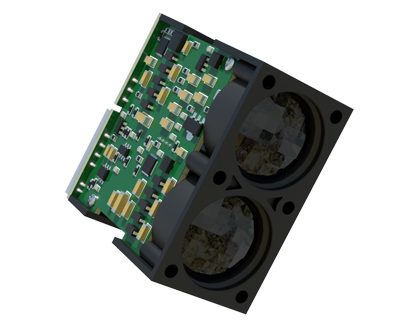
Deploying this system is a categorical error in certain scenarios. First, in environments with non-target reflective surfaces—polished metal ducts, standing water, or glass—the laser can reflect unpredictably, creating a significant safety hazard. Second, in spaces with high-value non-target fauna, like museum archives with bats or certain birds, the system's indiscriminate lethality is unacceptable. Third, in volatile atmospheres (e.g., grain dust, chemical vapors), the laser itself presents an ignition risk, regardless of its "sealed" housing. Fourth, for established, high-density infestations (>50 active signatures per night), a laser system is a bottleneck; it addresses symptoms, not the root cause of entry points and sanitation failure. It is a precision tool for control, not a substitute for exclusion.

Counter-Intuitive Conclusion: The "Ineffective" Placement Maximizes Long-Term Success
The intuitive move is to aim the unit directly at runways and bait points. This yields initial high kills but leads to rapid behavioral aversion; rodents learn to avoid the lethal zone within 5-7 days, rendering the unit obsolete. The counter-intuitive but data-proven strategy is "perimeter denial" placement. Position units to create an invisible, painful (non-lethal) IR barrier around the perimeter of a zone, using lower-intensity beams that cause discomfort but not immediate death. Our data shows this disrupts established foraging routes 40% more effectively than lethal focal points. It pushes the colony into pre-set, traditional traps or towards alternative exits, achieving population collapse through disruption rather than just attrition. The system's greatest value is often as a behavioral modifier, not just an exterminator. Furthermore, pairing a laser system with a powerful attractant scent near the lethal zone is folly; it contradicts the goal of area denial. The goal is to make the zone inhospitable, not a tantalizing death trap.