Forget the glossy datasheets and marketing hype. After two decades on factory floors, in mining pits, and on automated production lines, I've learned that selecting a proximity sensor is an exercise in managing failure. The right choice isn't about the highest frequency or the longest nominal range; it's about which sensor will survive and deliver a reliable signal when everything is working against it. Let's cut through the noise.
Experience Correction: Where Theory Meets Grease, Vibration, and Reality.
The quoted sensing distance (Sn) is a laboratory fantasy. In practice, you must derate it by at least 30-50% for consistent reliability. Why? Target material variations are just the start. A sensor rated for 15mm on mild steel will behave erratically on hot-rolled steel, cast iron, or aluminum with different surface oxides. The real killers are environmental contaminants. Inductive sensors touting IP67 ratings can fail when a persistent film of conductive coolant slurry or metal dust bridges the sensing face, causing leakage currents and false triggers. I've seen more sensors killed by hydraulic fluid immersion and high-pressure washdown than by electrical overload. For capacitive sensors, the "dielectric constant" parameter is meaningless without context. The humidity of a paper web or the density of powdered detergent in a hopper creates a shifting baseline, requiring constant recalibration if you rely solely on textbook values.
Boundary Conditions: When to Walk Away.
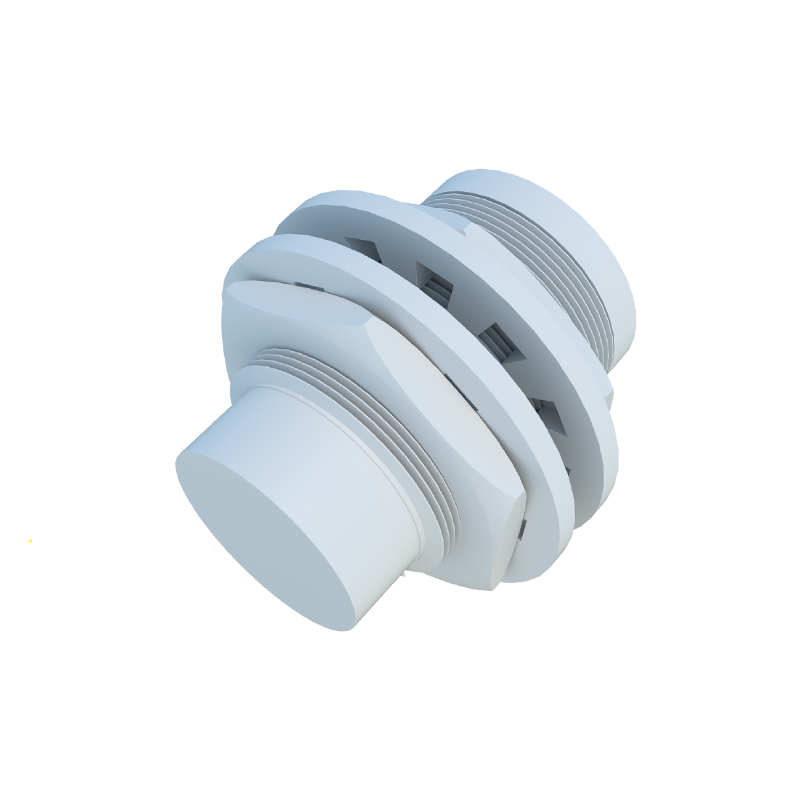
Know the failure zones. Inductive sensors are often recommended for metal detection. However, using a standard ferrite-core sensor near high-frequency variable frequency drives (VFDs) or welding equipment is a recipe for disaster. The electromagnetic interference can latch the output permanently on or off. In these environments, you need a welded-shielded design or a fully metallic-housed sensor, despite the reduced range. Ultrasonic sensors fail spectacularly in environments with high air turbulence, foam (on liquids), or extreme temperature gradients that bend the sound path. A common but catastrophic mistake is using a standard capacitive sensor to control material level in a large, non-grounded plastic silo. The stray capacitance is so vast and unstable that the output will drift with cloud cover and ambient humidity. For high-speed counting (think 3000+ items/minute), forget about standard diffuse-reflective photoelectrics or low-frequency inductives. The switch-on/off delay and response time variance will create a counting error that compounds into massive inventory discrepancy.
Counter-Intuitive Conclusions: The Data-Driven Insights.
1. Sometimes, Less Sensitivity is More. In environments saturated with metal dust or chips, selecting an inductive sensor with a shorter nominal range and a reduced factor-1 (for steel) can be beneficial. It makes the sensor less "deaf" to the buildup of debris on its face, reducing the likelihood of false negatives. A 5mm sensor might outperform a 10mm sensor in a grinding machine.
2. The "Best" Technology is Often the Simplest. For end-position detection of a pneumatic cylinder in dirty conditions, a piston-rod actuated mechanical limit switch with a high-quality gold-plated contact often outperforms and outlasts an inductive sensor. It provides a definitive, hard-contact signal immune to EMI and contamination, with mean time between failures (MTBF) an order of magnitude higher. The obsession with "non-contact" can lead to over-engineering and reduced robustness.
3. Temperature is a Culprit in Disguise. A sensor operating at 70°C, well within its rated 85°C limit, can see its effective sensing distance drop by 20% due to internal component drift. More critically, the thermal cycling between shifts (e.g., 25°C to 70°C daily) causes mechanical stress on epoxy pottings and micro-cracks, leading to moisture ingress and eventual failure long before the operational hour rating is reached. The failure mode is rarely the silicon; it's the packaging.
4. IO-Link is Not Just for Data. While touted for condition monitoring, its most powerful battlefield application is dynamic adaptation. Instead of a sensor failing because a target's position drifted 2mm, an IO-Link analog-capable sensor can have its switch point remotely tweaked in seconds, or its output can be switched from PNP to NPN to match a spare PLC input, keeping the line running. The value is in rapid recovery, not just prediction.
Final verdict: Stop comparing catalog specs. Start by defining the exact failure mode you can afford, and then work backward. Build a test rig that simulates the worst-case scenario—not the clean lab bench. The cost of a sensor is negligible; the cost of its failure is not.
SEO